WhatsApp: +86 16626708626
 Email:
  Phone: +86 16626708626
Description
Key Technical Specifications
- Manufacturer: Metso Automation / Valmet
- Part Number: D201832
- Module Designation: IPSP
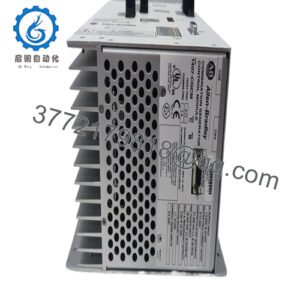
- Product Type: Intelligent Power Supply Panel power-supply unit
- System Application: Metso ACN and related DDC automation assemblies
- Power-Supply Classification: 3B-4
- Nominal Input Voltage: 380–480 V AC
- Nominal Output Voltage: 24 V DC
- Maximum Output Current: Up to 40 A
- Primary Function: Converts incoming AC power to regulated DC power for control equipment
- Typical Load: Controllers, distributed I/O, field-interface electronics, and connected control circuits
- Protection Functions: Confirm overcurrent, short-circuit, thermal, and fault-indication behavior from the applicable OEM manual before commissioning
- Installation Requirement: Confirm compatible base, controller assembly, mains protection, cabinet wiring, and grounding arrangement
Secondary-market documentation identifies the Metso D201832 as an IPSP power-supply unit with a 3B-4 configuration, 380–480 V AC nominal input, 24 V DC nominal output, and output capability up to 40 A. A related D201832L assembly is listed with an ACN MR D202275 controller and D202214 base, so the exact suffix and physical assembly must be verified before ordering.
Product Introduction
Metso D201832 IPSP is an Intelligent Power Supply Panel module used to provide regulated 24 V DC control power in Metso ACN and DDC automation installations. The 3B-4 version is identified for 380–480 V AC mains input and can supply up to 40 A for controllers, I/O assemblies, and associated control circuits.
This is a specific legacy-system replacement, not a generic DIN-rail power supply. Match the full D201832 label, supply voltage, base or cabinet mounting arrangement, and output distribution wiring before purchase. A D201832L may be part of a larger controller-and-base assembly, so suffix verification matters.
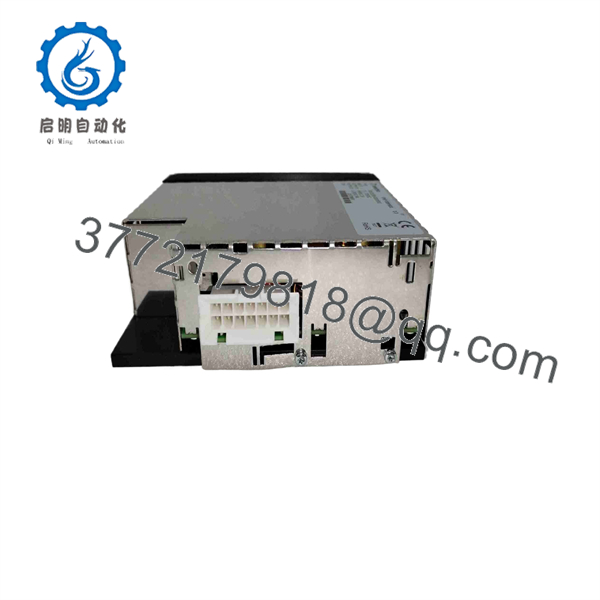
D201832
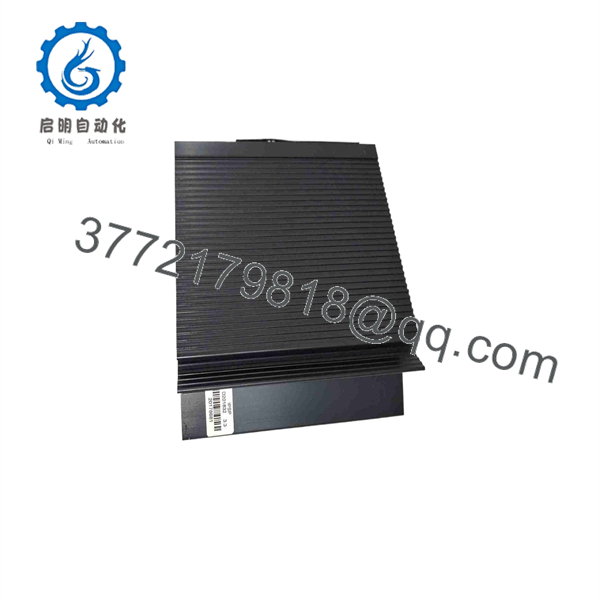
D201832
Troubleshooting Quick Reference
| Symptom | Possible Cause | Relevance to This Part | Quick Check Method | Recommendation |
|---|---|---|---|---|
| No 24 V DC output | Incoming AC supply absent, upstream breaker open, blown fuse, failed IPSP, or loose mains termination | ✅ High | Use an approved CAT-rated meter to measure phase-to-phase voltage at the D201832 input terminals. Confirm the required 380–480 V AC supply before measuring output. | Check upstream disconnects, fuses, contactors, and mains terminals before replacing the IPSP. |
| Controller and multiple I/O modules are dead | Loss of 24 V DC distribution, failed power supply, tripped protection device, or broken output wiring | ✅ High | Measure 24 V DC at the IPSP output and again at the controller/I/O distribution point. A good supply voltage at the IPSP but low voltage downstream indicates wiring or distribution trouble. | Trace the 24 V DC distribution circuit before ordering a replacement module. |
| 24 V DC output drops when I/O load starts | Output overload, short circuit, overloaded field circuit, loose connection, undersized conductors, or supply degradation | ✅ High | Measure output voltage with normal load, then compare with voltage under controlled load reduction. Use a DC clamp meter where appropriate to measure total current draw. | Identify the downstream overload first. Replacing the power supply without removing a shorted load can damage the replacement. |
| 24 V DC output is present but system will not boot | Controller fault, backplane/base fault, communication issue, incorrect configuration, or poor ground reference | ❌ Low | Confirm stable 24 V DC at the controller input during startup. Then inspect controller LEDs, rack diagnostics, and communication status. | Do not replace D201832 just because the controller will not start. Prove the power remains within required limits under startup load. |
| Intermittent resets during motor starts | AC supply dip, poor ground, shared control power, loose terminals, contactor noise, or excessive inrush | ✅ Medium | Trend or record the 24 V DC supply while starting the affected equipment. Inspect cabinet earthing and check whether inductive loads share the same DC source. | Separate sensitive controls from noisy loads where the system design permits. Tighten terminals and investigate upstream voltage sags. |
| Output has excessive ripple or unstable voltage | Aging power components, excessive loading, bad AC input phase, failing rectifier stage, or measurement error | ✅ Medium | Measure output with a meter rated for DC ripple or an isolated oscilloscope under load. Compare measurements at the IPSP output and downstream load. | Verify all input phases and downstream loading. Replace the IPSP if ripple remains excessive on a known-good load. |
| Cabinet breaker trips immediately | Output short circuit, input wiring fault, failed rectifier, incorrect supply connection, or insulation damage | ✅ Medium | With power isolated and locked out, inspect output wiring for shorts to ground and verify input terminals against the wiring diagram. Perform insulation testing only after disconnecting sensitive electronics. | Do not repeatedly reset the breaker. Find the short or wiring error before applying power again. |
| IPSP runs hot or has discoloration | Overload, restricted cabinet airflow, loose high-current terminal, harmonic stress, or internal component degradation | ✅ High | Isolate power, inspect terminals for heat damage, then use thermal imaging under load if permitted. Measure output current and compare it with the system demand. | Correct loose connections and excessive loading. Replace the unit if heat damage or unstable output is confirmed. |
❗ High-voltage warning: The is associated with 380–480 V AC input. Treat all input terminals and connected conductors as hazardous energy. Apply site lockout/tagout procedures, verify absence of voltage with an approved meter, and use personnel qualified for the facility’s electrical category.
❗ Do not guess at the supply input. A 24 V DC control issue can tempt people to treat this as a low-voltage component. It is not. Verify the specific 3B-4 input arrangement and cabinet wiring before connecting replacement hardware.
If diagnosis remains uncertain, provide technical support with photos of the label, cabinet wiring, input-voltage readings, output-voltage readings under load, controller diagnostics, and any evidence of overheated terminals or protection trips.
Frequently Asked Questions (FAQ)
What is the Metso IPSP used for?
The Metso IPSP is a power-supply unit that provides regulated 24 V DC power for Metso automation equipment, including control electronics and related I/O circuits. A secondary-market source identifies the unit as a 3B-4 power supply with 380–480 V AC nominal input, 24 V DC output, and up to 40 A capacity.
Is the same as D201832L?
Do not assume so. Both part numbers relate to Metso IPSP hardware, but D201832L is also listed as part of a specific ACN MR controller assembly containing a D202275 controller and D202214 base. Verify the entire label, including every suffix, as well as the installed base, controller arrangement, and connector style before ordering.
Can I replace with a generic 24 V DC, 40 A power supply?
Not as a direct drop-in replacement. The voltage and current headline numbers may look similar, but the may have specific mounting, protective behavior, fault signaling, grounding, connector, and system-integration requirements. A generic supply might power a bench test yet create grounding faults, monitoring alarms, wiring issues, or commissioning delays in the machine or process cabinet.
If you are considering a retrofit, compare the exact input range, output rating, peak-current capacity, isolation, grounding scheme, physical mounting, protective coordination, and system diagnostics. That is an engineering change, not a spare-part substitution.
Does the support a 480 V AC supply?
The 3B-4 variant is identified with a nominal 380–480 V AC input range. Confirm the actual unit label and the site’s line-to-line voltage before installation. Never connect a replacement based only on a web listing or the broad family number.
Why does the power supply show 24 V DC but the controller still resets?
A no-load meter reading does not prove the supply is healthy. The voltage may sag when the controller, I/O modules, relays, solenoids, or field interfaces draw current. Check the 24 V DC output during controller startup and during the event that causes resets. Also inspect downstream shorts, high-resistance terminals, bad grounds, and AC-input dips.
I have seen power supplies measure a perfect 24 V DC with no load, then collapse the moment a bank of outputs energizes. Always test under realistic load before declaring the IPSP defective.
Is hot-swappable?
Do not treat it as hot-swappable unless the applicable Metso OEM documentation and your site procedure specifically authorize that action. It handles hazardous AC input and supports common control loads. Removing or inserting it energized can expose personnel to electrical hazards, arc damage, connector damage, controller resets, and unintended process actions.
Shut down the controlled load safely, isolate the incoming supply, verify zero energy, discharge stored energy as required, and then replace the unit using an approved maintenance procedure.
Is this New Surplus or Refurbished, and why is it less expensive than factory supply?
The exact condition must be stated for the individual unit. New Original/New Surplus means unused legacy inventory, often from an OEM, distributor, project overstock, or warehouse liquidation. Refurbished (tested) means a previously used unit that has been inspected and functionally tested. Never accept “new” without current photos of the actual label, housing, terminals, packaging, and included accessories.
Legacy parts can cost less than factory supply because they may be surplus stock rather than current-production equipment. They can also cost more during an outage when verified units are scarce. Buy based on identity, condition, test evidence, warranty, and lead time—not on the lowest listing price.
What test evidence should I request before buying a ?
Request evidence for the exact serial-numbered or photographed unit being shipped:
- Incoming visual inspection for cracked housings, terminal damage, corrosion, burn marks, rework traces, and altered labels
- Verification of model label, suffix, connector layout, and available traceability records
- Controlled power-up using the correct input-voltage arrangement
- Regulated 24 V DC output measurement at no load and under a documented load
- Load test approaching the required site demand without output collapse or abnormal heating
- Protection verification where the test procedure safely supports it
- Thermal inspection of high-current terminals and housing during a sustained test
- QC sign-off, ESD-safe packaging, and a dated test report
Ask for output voltage, output current, input voltage, duration of the loaded test, and photos or video. If a seller says “tested” but cannot describe the test load or input supply, the result is not detailed enough for a critical spare.