 WhatsApp: +86 16626708626
 Email:
 Phone: +86 16626708626
Description
Core Product Summary
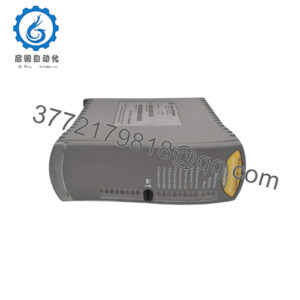
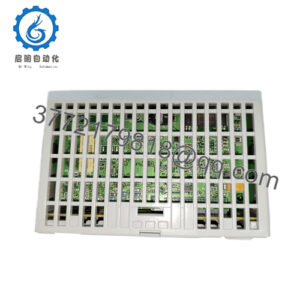
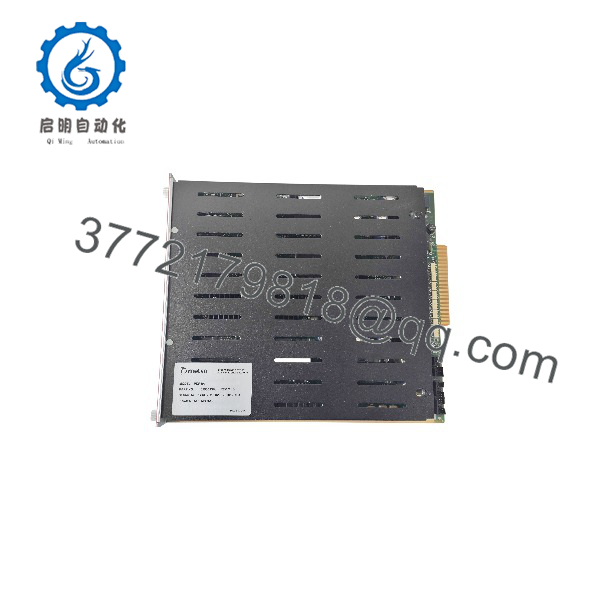
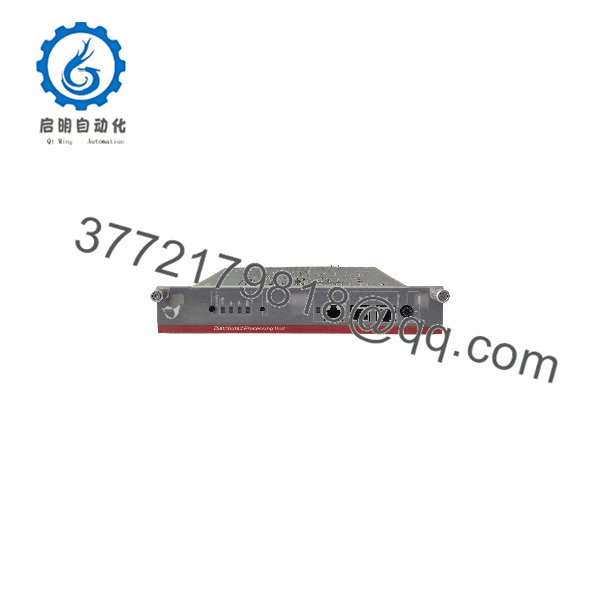
The Metso PDP401 is a Distributed Processing Unit (DPU), also designated maxDPU4F assembly #181550, that serves as the hardware processing engine of the Metso maxDNA distributed control system. It runs under the Windows CE.net real-time multitasking operating system and executes primary data acquisition, control, and data processing functions within Remote Processing Unit cabinets.
The unit occupies a single slot on an 8-wide maxPAC backplane and continuously scans Model IOP I/O modules while supporting communication with PLCs and remote terminal units. Key capabilities include comprehensive alarming and calculations, Sequence of Events logging at 1 ms resolution, trend data acquisition, and execution of up to 8,500 Function Blocks across multiple time classes from 10 ms to 0.5 s. Dual independent 10/100Base-T Ethernet ports provide maxNET connectivity, and the module draws power from the system’s redundant 24 Vdc supply.
Key Technical Specifications
| Parameter | Specification |
|---|---|
| Product Type | Distributed Processing Unit (DPU / maxDPU4F) |
| System Family | Metso maxDNA DCS |
| Assembly Number | #181550 |
| Operating System | Windows CE.net real-time multitasking |
| Control Processor | Pentium-class with dedicated I/O micro-controller |
| I/O Bus Processor | Motorola 68332 32-bit + FPGA |
| Memory | 64 MB CompactFlash socket; 128 MB DRAM socket |
| Function Block Capacity | Up to 8,500 control objects |
| Execution Time Classes | 10 ms to 0.5 s (three classes) |
| SOE Capability | Up to 512 discrete inputs; 1,000 scans/s; 1 ms resolution; 10,000-event buffer |
| Network Interfaces | Dual independent 10/100Base-T Ethernet (maxNET A/B) |
| Optional Interfaces | RS-232 serial (RJ45); IRIG-B (BNC on higher variants) |
| Power Requirement | 24 Vdc ±4 Vdc; 0.9 A @ 24 Vdc |
| Operating Temperature | 0 to 60 °C |
| Storage Temperature | –25 to 70 °C |
| Relative Humidity | 5 to 90 % non-condensing |
| Mounting | Single slot, 8-wide maxPAC backplane |
Engineering Selection Highlights
- Occupies a single slot on an 8-wide maxPAC backplane in a Remote Processing Unit cabinet, requiring left-most positioning for optimal airflow.
- Continuously scans Model IOP I/O modules (up to 60 per electrical bus) and supports remote I/O expansion via Bus Expander Module links up to 2 000 m.
- Built-in SOE recorder monitors up to 512 discrete inputs at 1 000 scans per second with 1 ms time-stamping, suitable for high-resolution event capture.
- Dual independent 10/100Base-T Ethernet ports form the maxNET interface; network configuration is set via CompactFlash using the DPU4FSetup utility.
- Supports hot-standby redundancy when paired with a second unit connected by the designated backup cable (#050292), enabling automatic failover and manual takeover.
- Draws power from the cabinet’s redundant 24 Vdc system and can be inserted or removed with power applied.
- Executes up to 8 500 Function Blocks across three configurable time classes from 10 ms to 0.5 s for flexible control strategy sizing.
PDP401
PDP401
System Compatibility & Integration Requirements
| Item / Dependency | Verified Compatibility or Requirement | Practical Note |
|---|---|---|
| Control System | Metso maxDNA DCS | Operates as a station on maxNET |
| Backplane / Chassis | 8-wide maxPAC; also supports earlier Model 564 with adapter | Left-most slot preferred for airflow |
| I/O Modules | Metso Model IOP series | Up to 60 modules per electrical bus; remote expansion via BEM |
| Network | Dual 10/100Base-T Ethernet (maxNET A and B) | Independent networks; configuration via CompactFlash |
| Redundancy | Second PDP401/maxDPU4F + backup cable #050292 | Secondary unit mounted vertically beneath primary |
| Power | Redundant 24 Vdc system supply in maxDNA cabinets | 0.9 A nominal; hot-swappable |
| Software Tools | DPU4FSetup utility for CompactFlash configuration | Required for IP address, network speed, and software loading |
| External Devices | PLCs and RTUs via optional RS-232 serial port | Serial port active only when DPU is in Active state |
Applications & System Role
Within the maxDNA architecture the PDP401 functions as the distributed processing engine that sits between the plant’s I/O modules and the higher-level maxNET network. It continuously scans local and remote Model IOP I/O, executes Function Block control strategies, performs alarming and calculations, records Sequence of Events data, and makes processed information available to operator stations and other system devices.
The unit’s self-describing object-oriented database stores tag data, tuning constants, alarm limits, and graphical configuration information locally, ensuring consistency between engineering tools and the running controller. Dual independent Ethernet links and optional serial connectivity allow integration with both maxNET peers and external PLCs or RTUs. Redundant pairs provide automatic failover for applications requiring continuous control availability.
Detailed Product Overview
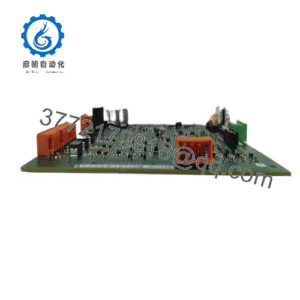
The Metso PDP401 (maxDPU4F assembly #181550) is the core hardware processing unit of the maxDNA distributed control system. It combines a Pentium-class control processor with a dedicated Motorola 68332-based I/O processor on a single printed-circuit board that occupies one slot in a maxPAC chassis. Running under Windows CE.net, the unit performs the full suite of distributed control tasks: continuous scanning of Model IOP I/O modules, execution of Function Block algorithms, comprehensive alarming and calculations, trend acquisition, and high-resolution Sequence of Events recording.
Up to 8 500 Function Blocks can be loaded and executed across three independent time classes ranging from 10 ms to 0.5 s. A data-point management system tracks object size and execution loading so that real-time performance remains predictable. The built-in SOE engine monitors as many as 512 discrete inputs at 1 000 scans per second, time-stamps state changes to 1 ms resolution, and stores events in a 10 000-event buffer, each input having its own configurable digital filter for contact debouncing.
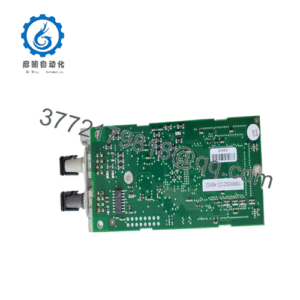
Communication with the rest of the maxDNA system occurs over dual independent 10/100Base-T Ethernet ports that form the maxNET A and B networks. Because the two networks operate separately, a fault on one path does not force a processor failover. An optional RS-232 serial port supports direct connection to PLCs or RTUs, while higher-order variants (PDP406/PDP408) add an IRIG-B interface for external time synchronization. Redundant operation is achieved by pairing two units with a dedicated 100 Mbps backup Ethernet link; the secondary unit receives continuous database updates and can assume control automatically or by manual takeover.
Power is drawn from the cabinet’s redundant 24 Vdc supply (24 Vdc ±4 Vdc, 0.9 A nominal). The module is designed for live insertion and removal. Configuration and software loading are performed by writing the CompactFlash card with the DPU4FSetup utility, after which the card is re-inserted into the DPU. All operational data—including tag names, descriptions, tuning constants, alarm limits, and graphical configuration—are stored in the unit’s self-describing object-oriented database, eliminating discrepancies between the engineering view and the running controller.
The PDP401 therefore serves as a self-contained, field-installable processing node that integrates local and remote I/O, executes control strategies, provides high-resolution event recording, and participates in both network and redundant architectures within the maxDNA system.
Dimensions, Mounting & Connection Notes
The PDP401 mounts in a single slot of an 8-wide maxPAC chassis within a Remote Processing Unit cabinet. The left-most position is specified for best airflow. Ethernet and backup cables should be dressed to the left side of the chassis with a minimum 1-inch bend radius.
For redundant pairs the secondary unit is mounted vertically beneath the primary unit and connected by the two-foot backup cable (#050292). The module can be installed or removed while the +24 Vdc supply remains energized. Front-panel connections include dual RJ-45 Ethernet ports, a backup-link RJ-45, optional RS-232 serial (RJ45), and optional IRIG-B (BNC on equipped variants). No internal switches or jumpers require setting during installation.
FAQ
What is the Metso PDP401?
The Metso PDP401 is a Distributed Processing Unit (also called maxDPU4F, assembly #181550) that functions as the hardware processing engine of the maxDNA distributed control system.
Which system does the PDP401 belong to?
It belongs to the Metso maxDNA DCS family and operates as a station on the maxNET network.
What primary functions does the PDP401 perform?
It performs data acquisition, continuous scanning of Model IOP I/O modules, execution of Function Block control algorithms, comprehensive alarming and calculations, trend acquisition, and Sequence of Events logging at 1 ms resolution.
What are the key processing and memory specifications?
The unit contains a Pentium-class control processor, sockets for 64 MB CompactFlash and 128 MB DRAM, and can execute up to 8 500 Function Blocks across three time classes from 10 ms to 0.5 s.
Which rack and backplane does the PDP401 require?
It occupies a single slot on an 8-wide maxPAC backplane inside a Remote Processing Unit cabinet; the left-most position is preferred for airflow.
What network interfaces does the PDP401 provide?
Dual independent 10/100Base-T Ethernet ports for maxNET (Networks A and B), plus an optional RS-232 serial port for external PLC or RTU connection.
How is redundancy implemented with the PDP401?
Two units form a hot-standby pair connected by backup cable #050292; the secondary unit is mounted vertically beneath the primary and supports automatic failover or manual takeover.
What power and environmental limits apply?
The module requires 24 Vdc ±4 Vdc at 0.9 A, operates from 0 to 60 °C, stores from –25 to 70 °C, and tolerates 5 to 90 % non-condensing relative humidity.