WhatsApp: +86 16626708626
 Email:
  Phone: +86 16626708626
Description
Key Technical Specifications
- Valve Type: Type 683B Smart Exhaust Throttle Valve
- Port Size: 3 in nominal
- Flapper Style: F-cup flapper
- Communication Interface: DeviceNet fieldbus
- Control Type: Closed-loop motorized throttle positioning (“smart” valve — onboard position control, not a passive pneumatic gate)
- Confirmed Host Platforms: Applied Materials Producer SE CVD system, AMAT 3870-series tools
- Documentation Status: No standalone public datasheet located; specs drawn from OEM tool system manuals and matching reseller listings, not a single MKS-published sheet
- Source Condition: Predominantly available as surplus/pulled semiconductor fab equipment, not current new production
Product Introduction
The MKS 683B-23795 is a Type 683B Smart Exhaust Throttle Valve, a motorized, DeviceNet-controlled valve that modulates exhaust conductance to maintain chamber pressure in semiconductor CVD process tools. It’s a confirmed component on Applied Materials Producer SE and AMAT 3870-series systems, sitting in the foreline between the process chamber and the vacuum pump.
Fabs replace this part because it’s function-critical to process pressure stability, and a “smart” throttle valve with onboard positioning and DeviceNet feedback isn’t something you substitute with a generic pneumatic gate valve — the tool’s process recipe depends on the valve’s closed-loop response characteristics.
Troubleshooting Quick Reference
| Symptom | Possible Cause | Relevance to this Part | Quick Check Method | Recommendation |
|---|---|---|---|---|
| Chamber pressure won’t stabilize during process | Flapper mechanism sticking or position feedback drift | ✅ High | Cycle the valve through its full range via the tool’s manual control screen, watch for hesitation | If motion is uneven or slow, the valve’s actuator/feedback is the likely cause |
| DeviceNet communication fault reported for this valve | Network wiring, node address conflict, or valve controller fault | ✅ Moderate | Check DeviceNet cable, termination resistors, and node address settings | Rule out network wiring before condemning the valve electronics |
| Valve won’t respond to commands at all | Loss of power to the valve controller or backplane fault | ✅ High | Verify power at the valve’s connector with a multimeter | Confirm supply voltage before replacing the valve |
| Pressure control works but is noisy/oscillating | Worn flapper seal or degraded position sensor, not necessarily total failure | ❌ Moderate | Log pressure stability over several wafer cycles, compare to a known-good chamber | Consider valve rebuild/replacement if oscillation is valve-specific |
| Pressure fault appears tool-wide, multiple chambers affected | Upstream vacuum pump or foreline issue, not this valve | ❌ Low | Check pump performance and foreline pressure independent of this valve | Investigate the shared vacuum system before replacing the valve |
If the fault persists, contact technical support with the DeviceNet fault code (if any), a pressure trend log from the affected chamber, and photos of the valve’s nameplate.
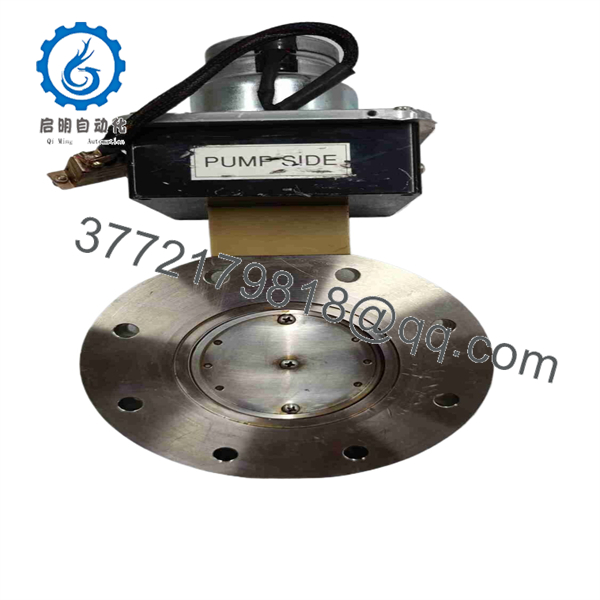
683B-23795
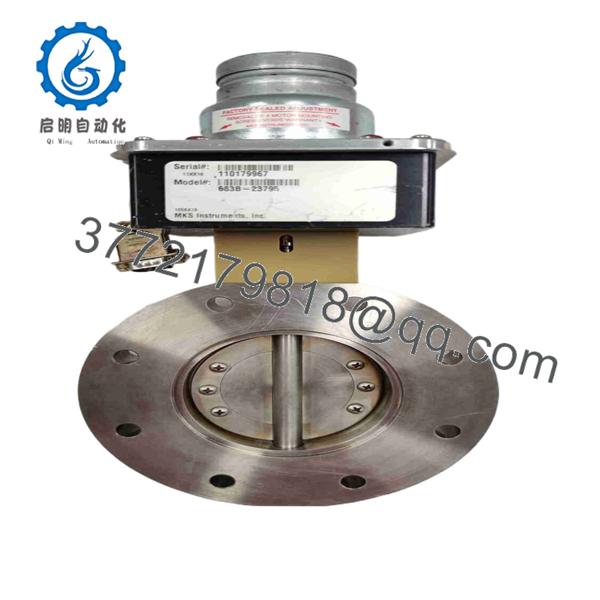
683B-23795
Frequently Asked Questions (FAQ)
Is this a passive gate valve or does it have onboard control?
It’s a “smart” valve with onboard motorized positioning and DeviceNet feedback, not a simple pneumatic on/off gate. That’s an important distinction — a generic throttle valve won’t integrate with your tool’s process control loop the same way.
Will this drop in as a direct replacement on my AMAT tool?
It’s confirmed compatible with Producer SE and AMAT 3870-series systems specifically. If your tool is a different Applied Materials platform, verify the exact valve part number called out in your tool’s parts manual before assuming fit — throttle valve variants aren’t universal across AMAT chamber types.
Does swapping this valve require recalibration?
Likely yes at some level — position feedback and flapper travel can vary slightly between individual valves even within the same part number. Run your tool’s valve calibration or leak-up/pump-down verification routine after installation rather than assuming plug-and-play accuracy.
Can I hot-swap this while the chamber is under vacuum?
No. This is a mechanical vacuum component tied into the chamber’s foreline — venting and isolating the chamber per your tool’s maintenance procedure is required before removal, not just cutting DeviceNet or electrical power.
Why is this only available as surplus, and is that a problem?
MKS produced this as part of an AMAT-specific tool configuration, and it’s no longer current new production, so surplus and refurbished units are the realistic market. A functionally tested pull is generally fine for this application — ask for the seller’s function test results (valve cycling, DeviceNet communication check) before you commit.
What’s the most common mistake replacing one of these?
Assuming any 3-inch throttle valve with a DeviceNet interface is interchangeable. The flapper design, control firmware, and mechanical mounting are tool-platform specific — match against your AMAT parts manual, not just the physical port size.