WhatsApp: +86 16626708626
 Email:
  Phone: +86 16626708626
Description
Specifications
| Parameter | Specification |
|---|---|
| Model | AS-S911-801 |
| Manufacturer | Schneider Electric / Modicon |
| Product Type | Hot Standby Processor Module |
| PLC Family | Modicon 984 |
| System | 984-8 |
| Primary Function | Hot standby processor / CPU redundancy |
| Compatible Architecture | PC-L984-785 / Modicon 984 hot standby |
| Hot Standby Data Transfer | Up to 9,999 registers |
| Input Registers | Up to 1,000 3x references |
| Discrete Outputs | Up to 8,192 0x references |
| Discrete Inputs | Up to 8,192 1x references |
| RIO Processor Requirement | S908-1xx with E908-131 Executive PROM 1006 or higher |
| Hot Standby Loadable | Revision C or later |
| Alternate Part Number | AS-9441-801 |
| Manufacturer Status | Discontinued |
The available Modicon documentation specifically states that hot standby operation with the AS-S911-801 supports transfers of up to 9,999 registers, including the listed limits for input registers, discrete outputs, and discrete inputs. It also specifies requirements for the remote I/O processors and the Hot Standby Loadable revision.
Product Introduction
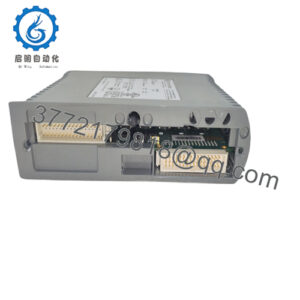
The Modicon AS-S911-801 is a legacy Hot Standby Processor Module used in Modicon 984-8 control architectures. Its primary job is processor redundancy: two compatible controller paths can exchange control information so the standby processor can assume control when the active processor path encounters a fault.
This is a legacy component, and Radwell identifies the AS-S911-801 as discontinued by the manufacturer. Replacement work therefore requires more than matching the part number. The existing 984 architecture, processor firmware/PROM revisions, Remote I/O processors, Hot Standby Loadable revision, and application configuration should all be checked before installation.
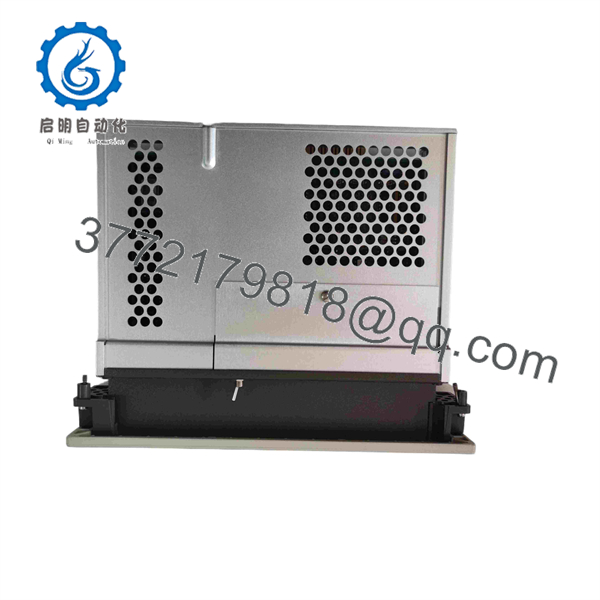
AS-S911-801
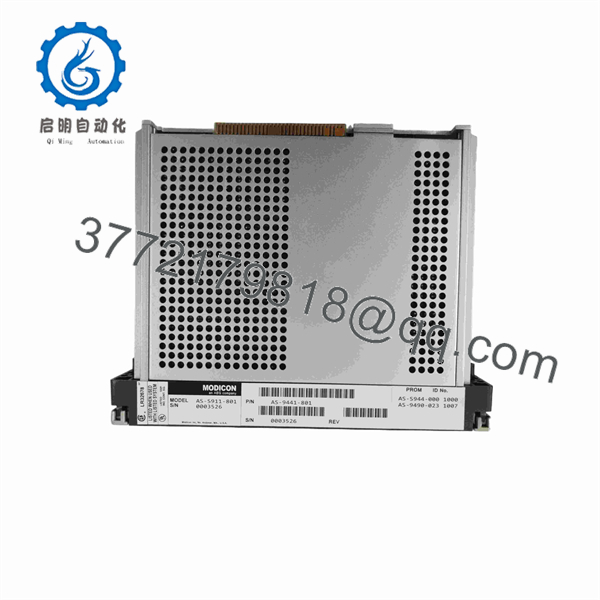
AS-S911-801
Installation Guide
Stage 1 — Pre-Installation
- Place the PLC system in a controlled maintenance state and apply the site’s lockout/tagout (LOTO) procedure.
- Back up the existing PLC application and document the current processor configuration.
- Record processor revision information, Hot Standby configuration, and Remote I/O processor revisions.
- Photograph rack positions, connectors, switches, labels, and wiring before removing the existing module.
- Confirm that the replacement is specifically AS-S911-801 or an OEM-documented compatible part.
- For a surplus or refurbished unit, inspect the connector, housing, PCB condition, labels, and mounting hardware before installation.
Stage 2 — Remove the Existing Processor
- Verify that the system is safely shut down or placed into the approved maintenance state.
- Remove the processor cover or retaining hardware as required by the 984 rack design.
- Label communication and interconnection wiring before disconnecting anything.
- Release the module from the rack without forcing the card or backplane connector.
- Inspect the backplane connector for bent contacts, oxidation, contamination, or mechanical damage.
- Compare the removed module’s identification label against the replacement unit.
Stage 3 — Install the AS-S911-801
- Verify the replacement model and hardware revision before insertion.
- Check configuration elements against the original installation; do not assume that a physically identical module has identical firmware or configuration.
- Carefully seat the processor into the correct rack position.
- Reconnect wiring and communication connections according to the original documentation.
- Verify processor-to-processor and Remote I/O connections before applying power.
- Confirm that the associated Hot Standby Loadable and Remote I/O processor revisions meet the documented requirements. The available documentation specifies Hot Standby Loadable Rev. C or later and S908-1xx Remote I/O processors with E908-131 Executive PROM 1006 or higher.
Stage 4 — Power-Up and Functional Test
- Check for shorts, loose conductors, incorrect connections, and foreign material before energizing the rack.
- Power the system and observe processor and Hot Standby status indications.
- Confirm that the active and standby processors establish the expected redundant relationship.
- Verify application communication and Remote I/O operation.
- Confirm that the transferred data is consistent with the existing application requirements.
- Perform a controlled standby-to-active transfer test if the plant’s commissioning procedure permits it.
- Check all critical inputs and outputs after the transfer.
- Preserve the validated PLC configuration and document the installed module’s serial number and revision.
Technical pitfall: The should not be treated as a drop-in replacement simply because the connector and part number match. Firmware/PROM revision, Hot Standby Loadable revision, Remote I/O processor revision, and the existing 984 architecture can affect system compatibility. The OEM documentation specifically identifies revision requirements for the hot standby system.
For surplus inventory, a proper supplier QC procedure should include visual inspection, connector inspection, power-up/POST verification, processor communication checks, Hot Standby handshake testing where the test setup permits it, configuration/firmware verification, and final packaging inspection. These are recommended verification steps unless a supplier provides an actual test report; they should not be represented as tests already performed on a particular unit.
FAQ
1. What is the Modicon used for?
It is a Hot Standby Processor Module for legacy Modicon 984-8 control systems. Its purpose is processor redundancy rather than ordinary standalone I/O processing.
2. Is the still manufactured?
Radwell identifies the as discontinued by the manufacturer. Procurement today generally involves new-surplus, used/refurbished, or repair-service inventory.
3. Is a direct replacement for AS-9441-801?
Classic Automation lists AS-9441-801 as an alternate part number for. Before substitution, verify the complete system configuration and OEM documentation rather than relying solely on the alternate number.
4. What Hot Standby capacity does the support?
The available Modicon documentation specifies a maximum of 9,999 registers transferred in the Hot Standby system, with separate limits for input registers, discrete outputs, and discrete inputs.
5. Can the existing PLC program be retained when replacing the module?
The replacement hardware does not by itself guarantee application retention. Back up the existing application and verify the processor, firmware/PROM, Hot Standby Loadable, and system configuration before commissioning.
6. What should I verify before buying a surplus?
Confirm the exact part number, hardware/revision information, condition, connector condition, configuration/firmware status, and whether the supplier has performed functional testing. Do not treat a supplier’s “refurbished” designation as proof of a specific test unless supporting documentation is provided.
7. Is the suitable for a new PLC project?
It is primarily a legacy Modicon 984 component. For an existing 984-8 installation, maintaining the original architecture may be necessary to avoid an immediate controls migration. For a new control system, compatibility with the required legacy hardware and software should be evaluated before specifying this discontinued module.