 WhatsApp: +86 16626708626
 Email:
 Phone: +86 16626708626
Description
Core Product Summary
Molex PCU-DPIO is a PROFIBUS-DP master/slave network interface card in the BradCommunications applicomIO range. It connects PC-based control applications to PROFIBUS-DP field devices through one isolated RS485 port. The card supports simultaneous DP-V0 master and slave operation, together with DP-V1 Master Class-1 and Class-2 services. An onboard AMD SC520 processor executes the communication layers, while the applicomIO software provides configuration, diagnostics, and application access to network I/O data.
The PCU-DPIO uses a universal PCI 3.3 V / 5 V interface with PCI-X compatibility and supports PROFIBUS transmission rates from 9.6 kbps to 12 Mbps. Its network connection is a female 9-pin D-Sub connector, with a separate 10/100 Mbps RJ45 Ethernet port for remote configuration and diagnostics. Ordering identifiers are DRL-DPM-PCU and 112011-0008.
Key Technical Specifications
| Parameter | Verified Specification |
|---|---|
| Manufacturer / product family | Molex BradCommunications applicomIO |
| Model | PCU-DPIO |
| Product type | PROFIBUS-DP master/slave PC network interface card |
| Part number | DRL-DPM-PCU |
| SAP order number | 112011-0008 |
| Host bus | Universal PCI 3.3 V / 5 V; PCI-X compatible |
| Processor | AMD SC520, 133 MHz |
| SDRAM | 16 MB |
| Flash memory | 4 MB |
| Dual-port RAM allocation | 32 KB; hardware-assigned |
| PROFIBUS ports | 1 |
| PROFIBUS connector | Female 9-pin D-Sub |
| Network electrical interface | RS485 with 500 V optical isolation |
| PROFIBUS transmission rate | 9.6 kbps to 12 Mbps |
| DP-V0 operation | Master Class-1 and Class-2; simultaneous master/slave operation; passive slave mode |
| DP-V1 operation | Master Class-1 and Class-2 |
| I/O data-image capacity | Up to 8 KB for the universal PCI configuration |
| Remote configuration interface | 10/100 Mbps Ethernet, RJ45 |
| Auxiliary discrete input | 1 optocoupled input; +10 to +30 V DC or 24 V AC, 50–60 Hz |
| Watchdog output | 1 potential-free contact; 24 V DC, 0.25 A |
| Power consumption | 5.5 W; maximum current listed as 1.2 A |
| Board dimensions | 168 × 107 mm, L × W |
| Operating temperature | 0 to +65°C |
| Storage temperature | −40 to +85°C |
The listed values apply to the PCU-DPIO universal PCI configuration.
Engineering Selection Highlights
- Universal PCI 3.3 V / 5 V, PCI-X-compatible host interface → the computer must provide a matching expansion bus; a PCI Express slot is not the specified interface.
- Simultaneous DP-V0 master/slave operation → the card can exchange data with field slaves while also presenting a local slave interface to another master.
- DP-V1 Master Class-1 and Class-2 services → supports applications requiring acyclic data-block access in addition to cyclic DP-V0 I/O exchange.
- PROFIBUS operation from 9.6 kbps to 12 Mbps → match the configured rate to the connected network and devices.
- Separate Ethernet configuration and diagnostic port → provides a maintenance access path distinct from the PROFIBUS process-data connection.
- One optocoupled input and one watchdog contact → these are auxiliary hardware functions, not a multichannel field-wiring I/O bank.
- Configuration retained in flash memory with auto-boot capability → the network configuration can reside on the card rather than existing solely in a host configuration file.
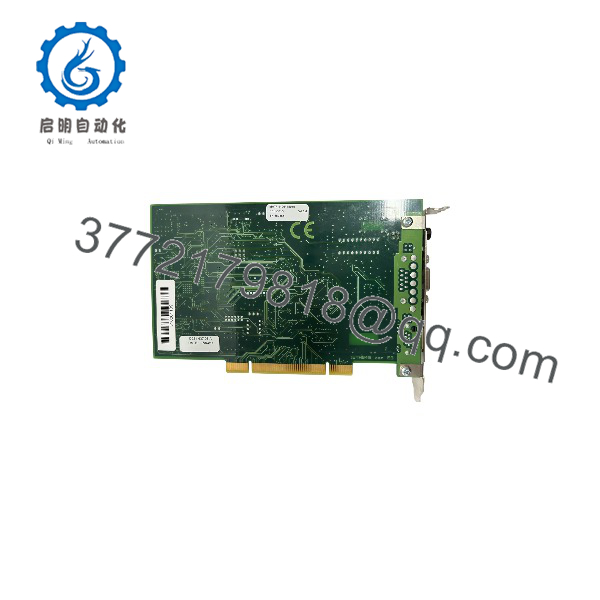
PCU-DPIO
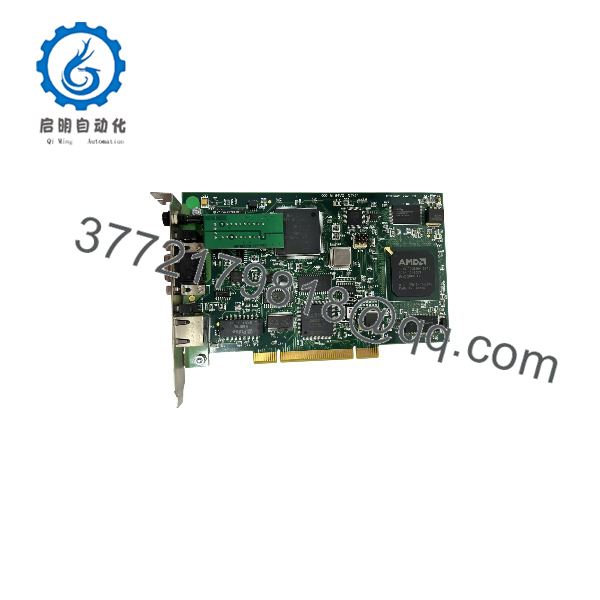
PCU-DPIO
System Compatibility & Integration Requirements
| Item / Dependency | Verified Compatibility or Requirement | Practical Note |
|---|---|---|
| PC expansion interface | Universal PCI 3.3 V / 5 V; PCI-X compatible | Match the host slot to the card’s bus format. |
| PROFIBUS network | PROFIBUS-DP over isolated RS485 | Connect using compatible PROFIBUS cabling and a mating D-Sub connector. |
| Cyclic communication | DP-V0 Master Class-1 and Class-2; slave operation | Select the required network role during configuration. |
| Acyclic communication | DP-V1 Master Class-1 and Class-2 | Supports documented read/write data-block services. |
| Engineering software | applicomIO Console | Configures the card, network, devices, and application data-access items. |
| Device descriptions | GSD library managed through the Console | Supports adding and removing device-description files. |
| Application interfaces | OPC DA 3.0 and 2.05, DAServer, FastDDE/SuiteLink, development libraries | Match the application architecture to the appropriate software interface. |
| Remote maintenance | RJ45 Ethernet, 10/100 Mbps | Used for remote configuration and diagnostics. |
| Local slave configuration | Configurable input and output data, each from 0 to 244 bytes | Define the data exchange required by the other network master. |
These integration relationships are documented for the applicomIO PROFIBUS-DP platform covering PCU-DPIO.
Dimensions, Mounting & Connection Notes
| Installation Item | Specification or Connection Note |
|---|---|
| Board size | 168 × 107 mm, L × W |
| Mounting arrangement | Internal universal PCI expansion card |
| PROFIBUS connection | Female 9-pin D-Sub |
| PROFIBUS isolation | 500 V optical isolation |
| Network status indicators | Two bicolor LEDs for bus fault and communication status |
| Maintenance connection | RJ45 Ethernet, 10/100 Mbps |
| Ethernet indicators | TX, RX, Link, and 100 Mbps indications |
| Auxiliary input | Optocoupled; +10 to +30 V DC or 24 V AC at 50–60 Hz |
| Watchdog contact limit | 24 V DC, 0.25 A |
| Operating environment | 0 to +65°C |
The dimensions are board length and width, not a three-axis enclosure measurement.
Cyclic control and acyclic access
DP-V0 Master Class-1 operation handles cyclic input/output exchange with slaves. Class-2 services provide additional access, including slave diagnostics, reading I/O and configuration information, and changing a slave address. DP-V1 Master Class-1 and Class-2 support data-block read/write services. These functions distinguish routine process-data exchange from maintenance or parameter-access transactions.
The local DP slave can run alongside master operation. Its input and output areas are independently configurable from 0 to 244 bytes, allowing the PC application to expose a defined data exchange to another master. This capability does not remove the need to configure the corresponding master-side device description and data layout.
Configuration, diagnostics, and host integration
The applicomIO Console configures the card, network, and connected devices. It includes card detection, configuration backup and restoration, a GSD library, network scanning, diagnostic monitoring, and card-initialization status. Automatic dual-port RAM mapping organizes network I/O data for application access.
The RJ45 port serves remote configuration and diagnostics; it is separate from the RS485 PROFIBUS connection. Its presence should not be interpreted as an additional Ethernet process-control protocol interface. For hardware identification, DRL-DPM-PCU and order number 112011-0008 identify the universal PCI PCU-DPIO configuration.
Applications & System Role
PCU-DPIO provides the fieldbus communication layer between a PC-based control application and PROFIBUS-DP devices. In master operation, it exchanges cyclic I/O data with network slaves and provides access to diagnostic and configuration services. In slave operation, it exchanges a configured input/output data area with another master. Both roles can operate simultaneously.
A suitable technical-fit scenario is a PC-based controller managing distributed PROFIBUS-DP I/O while sharing selected data with a supervisory master. Another is an application requiring cyclic process data together with DP-V1 acyclic read/write services. These scenarios follow from the card’s documented communication functions rather than representing customer deployment claims.
Detailed Product Overview
Dedicated fieldbus processing inside the PC
PCU-DPIO is a communication interface rather than a rack-mounted digital I/O module. Its main function is to move process data between a host application and devices connected to PROFIBUS-DP. The onboard processor runs the communication layers, and the card exposes I/O data through its dual-port RAM architecture and applicomIO software interfaces.
The distinction between communication hardware and physical I/O is important for selection. The card has one auxiliary optocoupled input and one watchdog contact, but its network I/O capacity comes from exchanging data with PROFIBUS devices. These auxiliary connections should therefore be considered separately from the distributed I/O represented in the application’s data image.
FAQ
What is Molex PCU-DPIO?
Molex PCU-DPIO is an applicomIO PROFIBUS-DP master/slave interface card for PC-based control applications. It uses a universal PCI host connection and one isolated RS485 fieldbus port.
Is PCU-DPIO a multichannel digital I/O module?
No. Its primary function is PROFIBUS-DP network communication. It includes one auxiliary optocoupled discrete input and one potential-free watchdog output, while distributed process I/O is exchanged over the network.
Which ordering numbers identify the universal PCI model?
The universal PCI PCU-DPIO is identified by part number DRL-DPM-PCU and SAP order number 112011-0008.
Can it operate as a PROFIBUS master and slave simultaneously?
Yes. It supports simultaneous DP-V0 Master Class-1/Class-2 and local slave operation, allowing communication with field slaves and another master on the network.
Does PCU-DPIO support DP-V1?
Yes. PCU-DPIO supports DP-V1 Master Class-1 and Class-2 services, including read and write data-block operations.
What is the Ethernet port used for?
The 10/100 Mbps RJ45 Ethernet port is used for remote configuration and diagnostics. The PROFIBUS process-data connection uses the separate female 9-pin D-Sub RS485 port.
What software configures the card?
The applicomIO Console configures the card, network, and connected devices. It also provides GSD-library management, diagnostic monitoring, and configuration backup and restoration.
What physical size and temperature limits apply?
The board measures 168 × 107 mm, L × W. Its specified operating temperature is 0 to +65°C, and its storage range is −40 to +85°C.
48 个来源