 WhatsApp: +86 16626708626
 Email:
 Phone: +86 16626708626
Description
Core Product Summary
The Molex SST-PB3-PCU-2-B is a PROFIBUS DP network interface card from the SST PB3 series of PC communication cards, originally introduced under the Woodhead/SST brand within the Molex industrial product line. It is built in PCI card format and installs directly into a PCI expansion slot of an industrial computer or PC-based control system, allowing the host PC to act as a PROFIBUS DP Master, a DP Slave, or an FDL (Layer 2) station. The “V1.1” marking identifies the hardware/firmware revision of the card.
The dual-channel configuration provides two independent PROFIBUS interfaces on a single card, so one channel can run a DP Master scan while the other operates as a DP Slave, or the two channels can serve two separate PROFIBUS segments. The card uses a universal PCI interface compatible with both 3.3V and 5V signaling environments and supports all standard PROFIBUS baud rates from 9.6 kbaud up to 12 Mbaud. Software support is provided through DLL/LIB development components, and the card carries diagnostic LEDs for system status, watchdog timeout, and communication status.
Key Technical Specifications
| Parameter | Value |
|---|---|
| Manufacturer / series | Molex (Woodhead/SST), SST PB3 series, part number 1120110027 |
| Product type | PROFIBUS DP Master/Slave PC network interface card, PCI format |
| Order designation | SST PB3 Card, PROFIBUS DP Master/Slave, 2 channels |
| Bus interface | Universal PCI, 3.3V/5V signaling |
| PROFIBUS channels | 2 |
| Operating modes | Simultaneous execution of PROFIBUS DP Master, DP Slave, and FDL (Layer 2) |
| Supported protocols | PROFIBUS DP-V0 Master, DP-V0 Slave, and DP-V1 Master |
| Baud rates | 9.6 kbaud to 12 Mbaud (all standard PROFIBUS rates) |
| Onboard processing | 32-bit CPU with flash memory for onboard firmware |
| Software support | DLL/LIB development libraries; Windows driver support |
| Diagnostics | LEDs for system status, watchdog timeout, and communication status |
| Weight | 140 g |
| Operating temperature | 0 °C to +60 °C |
| Revision marking | V1.1 |
Engineering Selection Highlights
- Two independent PROFIBUS channels on one card — the dual-channel design allows a single PC to participate in two separate PROFIBUS segments simultaneously, reducing the number of expansion slots and cards required in multi-network installations.
- Simultaneous Master and Slave operation — the card can execute DP Master, DP Slave, and FDL (Layer 2) functions at the same time, which suits architectures where the PC both polls downstream I/O and exchanges data with an upstream controller.
- Universal PCI 3.3V/5V compatibility — the card fits both 3.3V and 5V PCI signaling environments, so it can be deployed across a range of industrial PCs and motherboards without matching a specific slot voltage.
- Full PROFIBUS baud range up to 12 Mbaud — support for all standard rates from 9.6 kbaud to 12 Mbaud means the card can be matched to existing network speeds rather than forcing a network reconfiguration.
- Onboard 32-bit CPU and flash memory — bus communication is handled by the card’s own processor, keeping PROFIBUS scanning off the host PC’s CPU, which matters for PCs that also run the control application or supervisory software.
- DLL/LIB software components — integration is done through supplied DLL/LIB development libraries and Windows drivers, so application code and HMI/SCADA packages must be compatible with this programming interface.
- Revision awareness (V1.1) — the revision marking identifies the specific hardware/firmware build; when replacing a card in an existing installation, confirming the revision helps ensure behavior matches the originally deployed configuration.
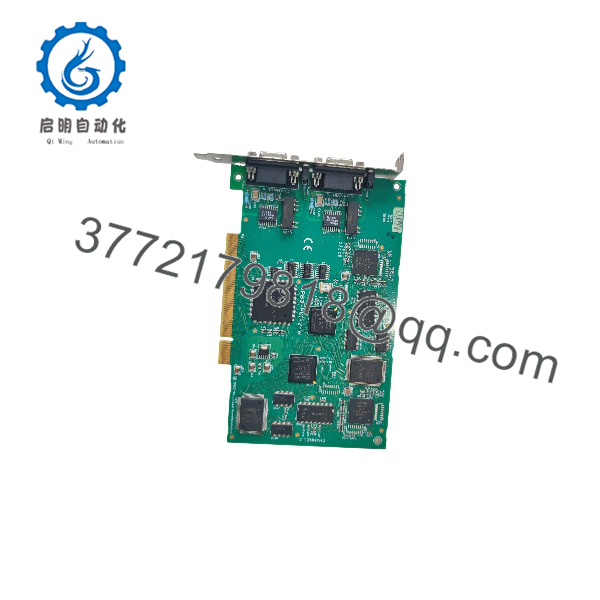
SST-PB3-PCU-2-B
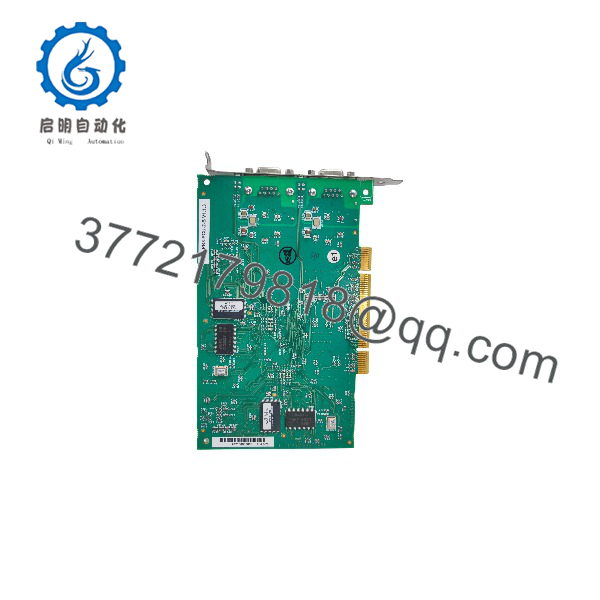
SST-PB3-PCU-2-B
System Compatibility & Integration Requirements
| Item / Dependency | Verified Compatibility or Requirement | Practical Note |
|---|---|---|
| Host platform | Industrial PC or PC-based control system with a PCI expansion slot | The card is installed in a standard PCI slot; the host must expose a compatible PCI interface. |
| PCI signaling | Universal PCI, 3.3V/5V | Works in both 3.3V and 5V PCI slot environments. |
| Network protocol | PROFIBUS DP (EN 50170 family), DP-V0 and DP-V1 Master, DP-V0 Slave, FDL Layer 2 | Mode is selected through configuration; DP-V1 services apply to Master operation. |
| Software integration | DLL/LIB development libraries and Windows drivers | The application or control software must be built against the supplied driver interface; Windows operating systems are supported. |
| Firmware storage | Onboard flash memory | Firmware resides on the card, so the host OS driver and card firmware must be treated as a matched set when upgrading. |
| Diagnostics | LEDs for system status, watchdog timeout, communication status | LED indications support first-line troubleshooting without a software tool. |
Dimensions, Mounting & Connection Notes
- The card mounts in a standard PCI expansion slot inside the host industrial computer; no separate enclosure or power connection is required, as it is powered through the PCI bus.
- Card weight is 140 g.
- Operating temperature range is 0 °C to +60 °C, which should be checked against the internal temperature of the host cabinet, especially in compact enclosures with limited airflow.
- Diagnostic LEDs on the card bracket report system status, watchdog timeout, and communication status, allowing bus and card health to be checked visually during commissioning.
Detailed Product Overview
The Molex SST-PB3-PCU-2-B belongs to the SST PB3 family of PROFIBUS interface cards, a product line developed to give PC-based systems a native, hardware-level connection to PROFIBUS DP networks. Unlike software-based PROFIBUS implementations that depend on a PC serial port and the host CPU’s timing, this card carries its own 32-bit processor and flash-stored firmware. The PROFIBUS stack runs on the card itself, which keeps token timing, slave polling, and bus diagnostics deterministic even when the host PC is busy with other tasks. For engineers integrating a PC into a real-time control loop, that separation of communication processing from application processing is the card’s defining characteristic.
The dual-channel architecture deserves particular attention during selection. Each channel is an independent PROFIBUS interface, and the card supports simultaneous execution of DP Master, DP Slave, and FDL (Layer 2) protocols. In practice, this means one physical card can serve two distinct network roles at once: one channel acting as a DP-V0/V1 Master scanning field I/O, while the other operates as a DP Slave exchanging data with an upstream PLC or DCS master. This removes the need for a second card and a second PCI slot in split-architecture systems, and it also allows two physically separate PROFIBUS segments to terminate in the same computer.
Electrical integration is straightforward because the card uses a universal PCI interface that accepts both 3.3V and 5V signaling. It can therefore be installed in a broad range of industrial PCs, from older 5V-only platforms to newer 3.3V motherboards. On the network side, the card supports all standard PROFIBUS baud rates from 9.6 kbaud to 12 Mbaud, so it can be inserted into an existing segment without adjusting the network’s configured speed. Protocol coverage includes DP-V0 Master, DP-V0 Slave, and DP-V1 Master, meaning both cyclic I/O exchange and acyclic DP-V1 services (such as parameterization and diagnostic reads from intelligent field devices) are available when the card runs as a master.
From a software perspective, the card is integrated through DLL/LIB development libraries with Windows driver support. Applications access the card through this driver interface, and the card’s watchdog and diagnostic LEDs — covering system status, watchdog timeout, and communication status — provide a hardware-level health indication that complements software-based monitoring. The onboard flash memory holds the card firmware, so firmware and driver versions should be managed as a matched pair during system upgrades or card replacement.
The “V1.1” designation identifies the hardware/firmware revision of this specific card build. For maintenance and spares planning, the revision marking is worth recording alongside the order code (Molex part 1120110027), since a system’s tested behavior reflects the interaction of the card revision, driver version, and network configuration. An environmental limit of 0 °C to +60 °C applies to operation, which is consistent with installation inside a ventilated industrial PC or control cabinet rather than in an unconditioned field enclosure.
Applications & System Role
Within an automation architecture, the SST-PB3-PCU-2-B sits between the PC layer and the fieldbus layer. It converts a host computer — typically an industrial PC running control software, supervisory logic, or data-acquisition code — into an active PROFIBUS DP node. In Master mode, the card polls PROFIBUS DP slaves such as remote I/O, drives, and intelligent field devices; in Slave mode, it presents PC data to a higher-level PROFIBUS master such as a PLC or DCS controller; in FDL mode, it handles Layer 2 peer-to-peer communication.
The two channels make the card a practical fit for PC-based systems that must bridge two network roles: for example, a PC that gathers data from a local PROFIBUS I/O segment as a DP Master while simultaneously feeding consolidated data upward to a plant controller as a DP Slave. Because bus scheduling is executed by the card’s onboard processor, the card is suited to applications where deterministic PROFIBUS cycle times must be maintained independently of the host PC’s processing load.
FAQ
What is the Molex SST-PB3-PCU-2-B?
It is a two-channel PROFIBUS DP Master/Slave network interface card in PCI format from the Molex (Woodhead/SST) SST PB3 series, identified by Molex part number 1120110027, that connects a PC directly to PROFIBUS DP networks.
What does the SST-PB3-PCU-2-B do?
It turns a host industrial PC into a PROFIBUS DP node. The card can operate simultaneously as a DP Master, a DP Slave, and an FDL (Layer 2) station, using its onboard 32-bit processor to handle bus communication independently of the host CPU.
What does “V1.1” mean in the part marking?
V1.1 identifies the hardware/firmware revision of the card build, distinguishing it from other revisions within the same order code family.
Which PROFIBUS protocols and baud rates does it support?
It supports PROFIBUS DP-V0 Master, DP-V0 Slave, and DP-V1 Master operation, along with FDL Layer 2 communication, at all standard baud rates from 9.6 kbaud to 12 Mbaud.
What kind of computer slot does it require?
It installs in a standard PCI expansion slot and is a universal PCI card compatible with both 3.3V and 5V signaling environments.
What software is needed to use the card?
Integration uses the supplied DLL/LIB development libraries together with the Windows driver package; the control or HMI application is built against this driver interface.
What are the card’s physical and environmental limits?
The card weighs 140 g, is powered through the PCI bus, and has an operating temperature range of 0 °C to +60 °C, so the internal temperature of the host cabinet must stay within that range.
How can its status be checked without software tools?
The card provides diagnostic LEDs that indicate system status, watchdog timeout, and communication status, allowing quick visual verification during commissioning and troubleshooting.