WhatsApp: +86 16626708626
 Email:
 Phone: +86 16626708626
Description
Core Product Summary
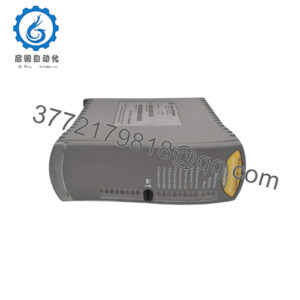
The Molex SST-PFB-SLC is the SST ProfiBus scanner module for the Allen-Bradley SLC 500 platform, originally produced by Woodhead and now offered under Molex. It is a chassis-mounted module that occupies a single slot in an SLC 500 rack and enables communication between an SLC processor (SLC 5/03 or later) and PROFIBUS DP remote I/O devices.
Acting as a PROFIBUS DP remote I/O scanner, the module can scan up to 96 slave devices, exchanging up to 244 bytes of input data and 244 bytes of output data with each slave. On the SLC side, up to 32 words of direct input and output data are supported, and up to 1000 words of data can be mapped into the M0 and M1 files. The scanner supports all standard PROFIBUS transmission rates from 9600 baud up to 12 Mbaud, and stores its configuration in on-board flash memory so it is retained across SLC power cycles.
Key Technical Specifications
| Parameter | Value |
|---|---|
| Function | ProfiBus scanner for SLC 500 networks |
| Supported processor | SLC 5/03 or later |
| Mounting | Single slot of an SLC 500 chassis |
| Network role | PROFIBUS DP remote I/O scanner |
| Slave capacity | Up to 96 PROFIBUS DP slaves |
| Data per slave | Up to 244 bytes of input data and 244 bytes of output data |
| SLC interface data | Up to 32 words of direct input and output data; up to 1000 words of M0 and M1 mapped data (up to 122 words with COM PROFIBUS) |
| Transmission rates | 9600, 19200, 93.75 k, 187.5 k, 500 k, 750 k, 1.5 M, 3 M, 6 M and 12 Mbaud |
| Configuration storage | Flash memory on the scanner; configuration does not need to be reloaded at each SLC start |
| Connectors | 9-pin PROFIBUS connector for the network; RS-232 serial port for configuration |
| Status indication | Status LEDs for communication and system status, including COM and SYS indicators |
| Operating temperature | 0 °C to 50 °C |
| Storage temperature | ‘-40 °C to 85 °C |
| Relative humidity | 5% to 95%, non-condensing |
| Diagnostics | Slave status per slave, network diagnostic counters, DP master diagnostic counters and FDL diagnostic counters |
Engineering Selection Highlights
- The module requires an SLC 5/03 or later processor; earlier SLC 500 processors cannot be used with this scanner.
- It occupies a single slot in the SLC 500 chassis, so a free slot (or chassis expansion) must be available before ordering.
- With up to 96 slaves and 244 bytes of input and 244 bytes of output data per slave, the module fits large distributed I/O architectures, but total data volume must be planned against the SLC-side mapping limits: 32 words of direct I/O and 1000 words of M0/M1 data (122 words of M0/M1 when configuring with COM PROFIBUS).
- The scanner covers all standard PROFIBUS transmission rates from 9600 baud to 12 Mbaud, including 750 kbaud, so it can be dropped into mixed-speed networks; all devices on a segment must be set to the same rate.
- The configuration is stored in flash memory on the scanner, which means the network does not depend on a reload from the SLC at every startup.
- Recommended PROFIBUS cable is Belden 3079A (Siemens or Bosch equivalents are also suitable); Allen-Bradley “blue hose” cable with 78 ohm impedance is not compatible with PROFIBUS and must not be substituted.
- Maximum cable length depends on the baud rate — for example, 1200 meters at 9600–93.75 kbaud down to 100 meters at 3–12 Mbaud — so segment length must be checked against the planned transmission rate.
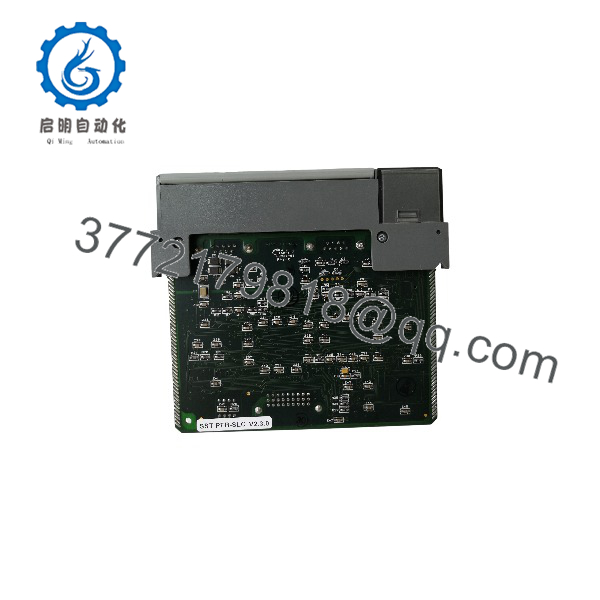
SST-PFB-SLC
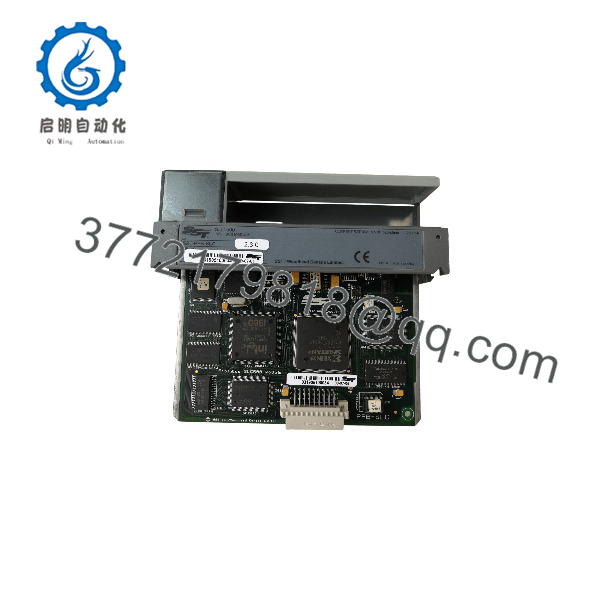
SST-PFB-SLC
System Compatibility & Integration Requirements
| Item / Dependency | Verified Compatibility or Requirement | Practical Note |
|---|---|---|
| Controller | Allen-Bradley SLC 500, SLC 5/03 or later processor | Earlier processors are not supported |
| Mounting | Single slot in an SLC 500 chassis | Plan chassis slot allocation during engineering |
| Network role | PROFIBUS DP remote I/O scanner, up to 96 slaves | Slaves require matching GSD configuration |
| Data mapping | SLC I, O, M0 and M1 files; Q0–Q255 byte addresses map to M1 word addresses for inputs and M0 for outputs | Assign Q addresses for analog or word modules on even byte boundaries |
| Configuration tooling | SST ProfiBus Configuration Tool (up to 1000 words of M0/M1 data) or COM PROFIBUS (up to 122 words of M0/M1 data) | Select the tool early — it determines the mapped-data capacity |
| Network connection | 9-pin PROFIBUS connector; RS-232 serial configuration port | Termination required at both ends of the bus segment |
| Cable | Belden 3079A recommended; Siemens or Bosch PROFIBUS cable suitable | 78 ohm Allen-Bradley blue hose is not compatible |
| Configuration retention | Stored in flash memory on the scanner | No upload needed at each SLC start |
Dimensions, Mounting & Connection Notes
- The module is a chassis-mounted device that occupies a single slot of the SLC 500 rack.
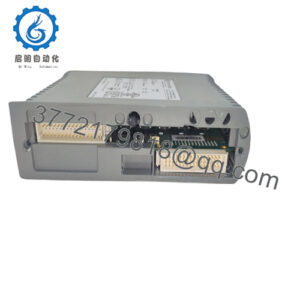
- It provides a 9-pin PROFIBUS connector for connection to the PROFIBUS network and an RS-232 serial port for configuration.
- Status LEDs on the front report communication and system status: the COM LED indicates network errors and the SYS LED reports DP master or DP slave operation.
- Belden 3079A is the recommended PROFIBUS cable; cables from Siemens or Bosch are also compatible. Allen-Bradley blue hose cable with 78 ohm impedance is not compatible with this module.
- Maximum cable distance depends on the transmission rate: 1200 meters at 9600, 19200 and 93.75 kbaud; 1000 meters at 187.5 kbaud; 400 meters at 500 kbaud; 200 meters at 1.5 Mbaud; and 100 meters at 3, 6 and 12 Mbaud.
- The bus segment must be terminated at both ends, with the termination matched to the PROFIBUS cable impedance.
Detailed Product Overview
The SST-PFB-SLC is part of the SST family of network interface products that Woodhead — now part of Molex — built for connecting non-native controllers to open industrial networks. This variant addresses a specific engineering problem: an Allen-Bradley SLC 500 system that needs to act as the master on a PROFIBUS DP network, typically because the field devices, drives or remote I/O on the other side speak PROFIBUS and the SLC does not. By installing the module in one chassis slot, the SLC 500 gains a PROFIBUS DP remote I/O scanner without changing the controller platform.
The division of labor is what makes the module straightforward to design around. The scanner handles all PROFIBUS-specific work — bus timing, token management, cyclic polling of slaves and diagnostic collection — while the SLC processor simply reads and writes the data images mapped into its I, O, M0 and M1 files. Up to 32 words of direct input and output data cover compact applications; for larger networks, the M0 and M1 files carry up to 1000 words of mapped data when configured with the SST ProfiBus Configuration Tool. Addressing in the configuration tool uses byte addresses (Q0–Q255), which map to word addresses in the M files, so word-oriented devices such as analog modules should be assigned addresses on even byte boundaries.
Capacity planning is the main design constraint. The scanner supports up to 96 slaves, each with up to 244 bytes of input and 244 bytes of output data, so the PROFIBUS side of a large distributed I/O system is rarely the limit. The binding constraint is usually the SLC-side mapping: the 32 words of direct I/O plus the M0/M1 capacity, which depends on the configuration tool used. Networks configured with COM PROFIBUS are limited to 122 words of M0/M1 data, while the SST ProfiBus Configuration Tool supports up to 1000 words. Choosing the configuration environment early in the project avoids redesigning the data mapping later.
Physical integration follows PROFIBUS practice rather than Allen-Bradley remote I/O practice. The bus is wired to the module’s 9-pin PROFIBUS connector, with Belden 3079A as the recommended cable; the 78 ohm blue hose used for Allen-Bradley proprietary networks does not meet PROFIBUS cable requirements and will not work reliably on this segment. Segment length must be matched to the transmission rate — 1200 meters is available at the lower rates, but only 100 meters at 3 Mbaud and above — and both ends of the segment require termination. All devices on the segment must run at the same baud rate from the module’s supported range of 9600 baud to 12 Mbaud.
Operationally, the scanner is configured once and then left alone: the configuration is stored in flash memory on the module, so it survives SLC power cycles without a reload. During commissioning, the module’s status LEDs and its per-slave status reporting, together with the network, DP master and FDL diagnostic counters, give the engineer visibility into individual slave failures and bus-level problems from the SLC environment.
For procurement verification, the points that matter are the processor version (SLC 5/03 or later), the available chassis slot, the intended configuration tool, and the cable and termination plan for the bus segment.
Applications & System Role
The SST-PFB-SLC fills the fieldbus gap in an SLC 500 architecture. The SLC 500 platform does not natively provide PROFIBUS DP master functionality, so this module adds the scanner role: it polls PROFIBUS DP remote I/O devices cyclically on behalf of the SLC processor and maps the exchanged data into the controller’s I, O, M0 and M1 files, where ladder logic can use it like local I/O.
Its main use is distributed or remote I/O architectures, where up to 96 PROFIBUS DP slaves — remote I/O couplers, drives, operator interfaces and other DP devices — communicate with the SLC over a single bus segment. The per-slave capacity of 244 bytes of input and 244 bytes of output data supports devices with substantial I/O images, such as analog-intensive bus couplers.
The module also exposes network-level diagnostics — slave status for each connected slave, plus network, DP master and FDL diagnostic counters — which supports commissioning and troubleshooting of the bus segment without separate diagnostic hardware.
FAQ
What is the Molex SST-PFB-SLC?
It is the SST ProfiBus scanner module for the Allen-Bradley SLC 500, produced by Woodhead (now part of Molex), which enables an SLC processor to communicate with PROFIBUS DP remote I/O devices.
Which processors does the SST-PFB-SLC support?
It supports the SLC 5/03 processor or later; earlier SLC 500 processors cannot be used with this module.
What does the SST-PFB-SLC do?
It acts as a PROFIBUS DP remote I/O scanner, polling up to 96 slave devices and mapping the exchanged input and output data into the SLC’s I, O, M0 and M1 files.
How much data can the SST-PFB-SLC exchange with each slave?
Up to 244 bytes of input data and 244 bytes of output data per slave, with up to 32 words of direct input and output data on the SLC side and up to 1000 words of M0/M1 mapped data.
Which PROFIBUS transmission rates does the module support?
It supports 9600, 19200, 93.75 k, 187.5 k, 500 k, 750 k, 1.5 M, 3 M, 6 M and 12 Mbaud.
How is the SST-PFB-SLC configured?
Configuration is performed with the SST ProfiBus Configuration Tool or COM PROFIBUS, and the resulting configuration is stored in flash memory on the scanner so it does not need to be reloaded at each SLC start.
What cable should be used with the SST-PFB-SLC?
Belden 3079A is recommended, with Siemens or Bosch PROFIBUS cables also suitable; Allen-Bradley blue hose cable with 78 ohm impedance is not compatible.
What are the module’s environmental limits?
Operating temperature is 0 °C to 50 °C, storage temperature is -40 °C to 85 °C, and relative humidity is 5% to 95%.