WhatsApp: +86 16626708626
 Email:
  Phone: +86 16626708626
Description
3. Key Technical Specifications
- Model: D136-003-001
- Type: Two-stage electro-hydraulic servo valve
- Pilot Stage: Flapper-nozzle
- Main Stage: 4-way spool
- Actuator: Permanent magnet torque motor
- Typical Input Signal: ±10 mA (variant-dependent)
- Rated Flow: Commonly associated with lower flow ratings in the D136 series (exact GPM depends on the specific -001 configuration at standard pressure drop)
- Application: Closed-loop control of hydraulic flow and pressure
- Key Features: High dynamic response, high accuracy, industrial-grade reliability
Note: Exact flow rating, coil resistance, pressure rating, and port configuration must be confirmed against the valve nameplate or official datasheet for the specific unit.
4. Product Introduction
The Moog D136-003-001 is a high-performance two-stage electro-hydraulic servo valve. It converts a low-power electrical input signal into precise hydraulic flow output for closed-loop motion and pressure control systems.
These valves are widely used in industrial applications requiring high dynamic response and accuracy, such as metal forming, simulation tables, test equipment, and precision hydraulic actuation. The D136 series is known for reliability in demanding environments. Available units are typically New Surplus or residual stock.
5. Troubleshooting Quick Reference
| Symptom | Possible Cause | Relevance to this Part | Quick Check Method | Recommendation |
|---|---|---|---|---|
| No or poor response | Electrical signal, coil, or contamination | ✅ High | Check input current and coil resistance | Verify command signal and wiring |
| Valve null shift or bias | Contamination or internal wear | ✅ High | Monitor null bias and pressure | Inspect fluid cleanliness and filters |
| Oscillation or instability | Tuning, air in system, or valve wear | ✅ High | Check system gains and fluid condition | Verify hydraulic circuit and valve condition |
| Internal leakage high | Worn spool or contamination | ✅ Medium | Measure leakage rates | Replace valve if leakage exceeds limits |
| Overheating | Excessive pressure drop or duty cycle | ✅ Medium | Check supply/return pressures | Review system design and cooling |
If the issue persists, record input signal values, supply pressure, and any fault indications before contacting support.
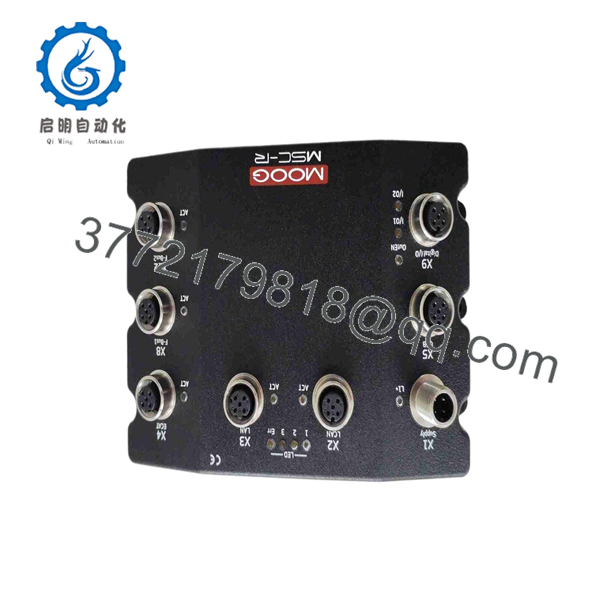
D136-003-001
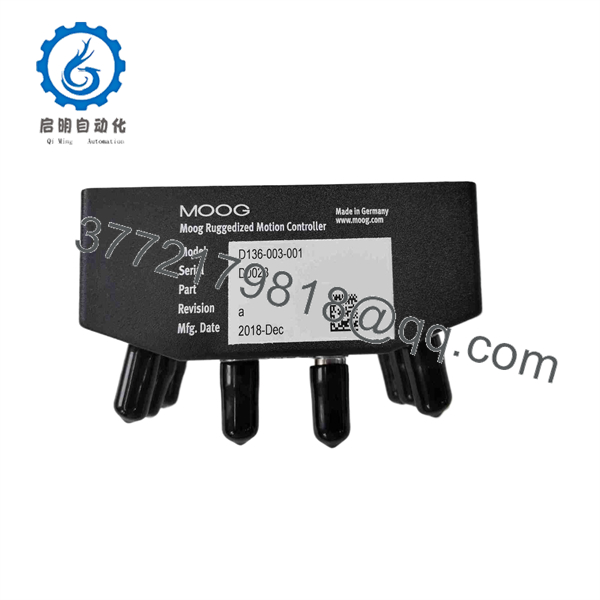
D136-003-001
6. Frequently Asked Questions (FAQ)
Q: What does the “-003-001” suffix mean?
A: In Moog servo valve part numbers, the suffixes typically define the electrical configuration (coil current/impedance) and the rated flow size. Exact meaning should be confirmed with the official datasheet for this variant.
Q: Is this a direct-acting or pilot-operated valve?
A: It is a two-stage valve (flapper-nozzle pilot stage driving a main spool).
Q: What fluid cleanliness is required?
A: Moog servo valves require high fluid cleanliness (typically ISO 4406 16/14/11 or better). Proper filtration is critical for reliable operation and long life.
Q: Can I interchange different D136 variants?
A: Only if the flow rating, electrical input, port pattern, and pressure rating match the application. Incorrect substitution can cause performance or safety issues.
Q: Is the D136-003-001 still in production?
A: Moog continues to support high-performance servo valves, but specific older configurations may be available only as New Surplus or residual stock.
Q: Why is pricing lower than a new Moog servo valve?
A: Specialized or lower-volume variants are often sold as New Surplus or residual stock. Pricing reflects remaining inventory rather than current production cost. All units are inspected and functionally verified before shipment. Standard warranty is typically 12 months.
Q: What should be checked before installing a replacement valve?
A: Confirm the exact part number, rated flow, electrical input, and port configuration. Ensure the hydraulic system is clean, properly filtered, and that the command signal matches the valve’s input requirements.