WhatsApp: +86 16626708626
 Email:
  Phone: +86 16626708626
Description
Key Technical Specifications
- Model: G122-829-001
- Manufacturer: Moog Industrial Controls Division
- Product Type: P-I Servoamplifier
- Control Mode: Proportional (P), Integral (I), or combined P-I control
- Power Supply: 24 V DC nominal
- Supply Voltage Range: 22 to 28 V DC
- Typical Supply Current: 75 mA at 24 V DC (no valve load)
- Maximum Supply Current: Approx. 200 mA with 100 mA load
- Input Channels: Three analog inputs (two single-ended, one differential)
- Input Signal Range: 4-20 mA or ±10 V selectable
- Output Type: Selectable current or voltage output
- Output Current Range: ±5 mA, ±10 mA, ±20 mA, ±30 mA, ±50 mA up to ±100 mA maximum
- Voltage Output: ±10 V maximum, minimum load 200 Ω
- Enable Input: +24 V DC, 17 to 32 V DC
- Feedback Excitation Output: +10 V DC, 10 mA maximum
- Mounting: DIN rail mounting
- Protection Rating: IP20
- Dimensions: 100 mm W × 108 mm H × 45 mm D
- Weight: Approx. 180 g
- Operating Temperature: 0 to +40 °C
- Replacement Compatibility: Functional replacement for Moog G122-824-002 with different pin-out requirements
Product Introduction
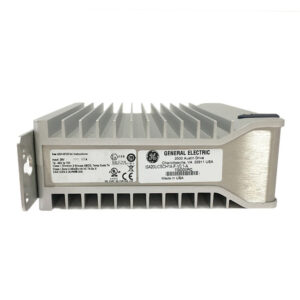
The Moog G122-829-001 is an analog P-I servoamplifier designed for closed-loop hydraulic control systems. It processes command and feedback signals, applies proportional and integral control, and outputs a controlled current or voltage signal to drive servo valves.
The module uses a compact DIN rail enclosure and provides configurable inputs, output selection, dither control, LED indicators, and test points for commissioning. It is commonly used in industrial hydraulic positioning systems where precise servo valve control is required.
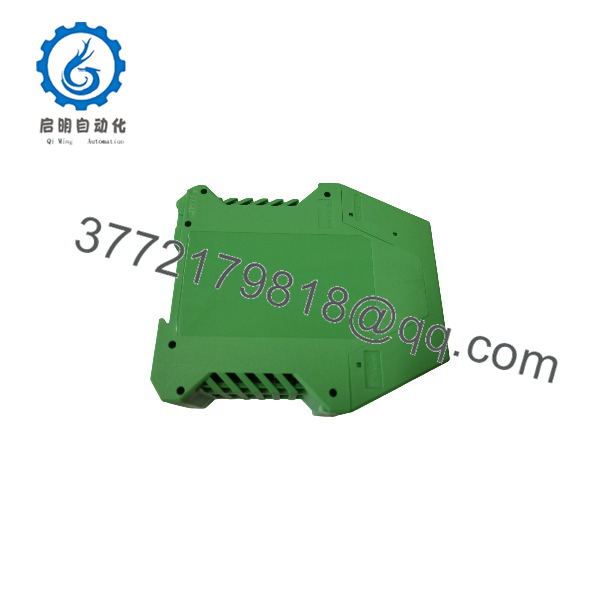
G122-829-001
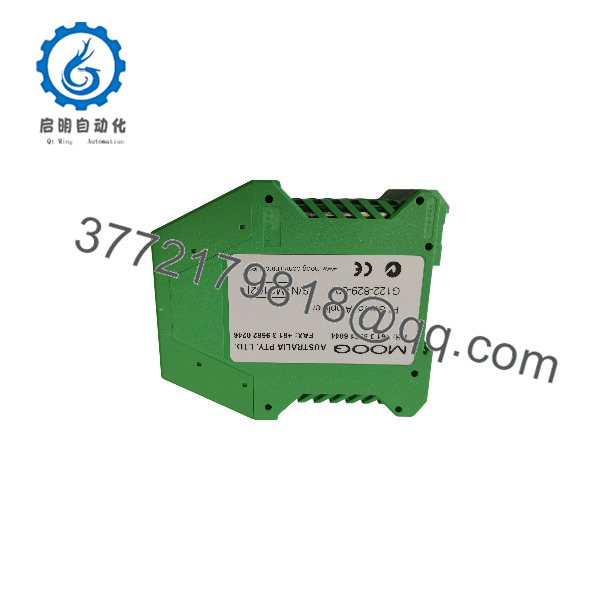
G122-829-001
Installation & Configuration Guide
Stage 1: Pre-Installation Preparation (Approx. 15 minutes)
⚠️ Safety First:
Hydraulic servo systems can store mechanical and hydraulic energy after shutdown.
Before replacing the module:
- Place the machine in a safe maintenance position.
- Disable hydraulic pressure according to site procedures.
- Remove electrical power from the control cabinet.
- Verify the 24 V DC supply is isolated before wiring work.
Tools Required:
- ESD wrist strap
- Digital multimeter
- Small screwdriver
- Wire labels
- Smartphone for terminal photos
Data Backup:
Before removing the old amplifier:
- Record all terminal wiring.
- Photograph front-panel potentiometer settings.
- Document internal switch settings if accessible.
- Record valve drive output configuration.
- Save PLC or motion controller parameters related to the servo loop.
Stage 2: Removing the Old Module (Approx. 10 minutes)
Steps:
- Switch off the 24 V DC control supply.
- Verify zero voltage at the amplifier terminals.
- Label command, feedback, enable, and valve wiring.
- Disconnect terminal wiring carefully.
- Release the DIN rail mounting clip.
- Remove the module from the rail.
⚠️ Note:
Do not assume terminal positions match older Moog amplifiers. The G122-829-001 replaces G122-824-002 functionally but uses a different pin assignment. Verify wiring before power-up.
Stage 3: Installing the New Module (Approx. 20 minutes)
Steps:
- Confirm the replacement part is Moog G122-829-001.
- Mount the amplifier horizontally on the DIN rail.
- Ensure top and bottom ventilation openings remain unobstructed.
- Connect power supply terminals.
- Reconnect command, feedback, enable, and valve output wiring.
Configuration Clone (Critical):
Verify:
- P/I control mode selection.
- Input signal type (4-20 mA or ±10 V).
- Output current or voltage selection.
- Dither enable setting.
- Proportional gain adjustment.
- Integral gain adjustment.
- Feedback scaling.
Self-Checklist:
- Terminal wiring verified
- Input signal type confirmed
- Output configuration matched
- Ventilation clearance maintained
- DIN rail locking clip secured
Stage 4: Power-On & Testing (Approx. 20 minutes)
Pre-Power Check:
- Confirm correct polarity of 24 V DC supply.
- Check for wiring shorts.
- Verify feedback transducer connection.
- Confirm valve output wiring.
Power-On Steps:
- Apply control power only.
- Check LED indicators.
- Verify enable input operation.
- Confirm feedback signal changes correctly.
- Apply a small command signal.
- Monitor valve response.
- Tune P and I parameters if required.
⚠️ Troubleshooting Note:
- No valve movement: Check enable input and output current configuration.
- Oscillation: Review proportional and integral gain settings.
- Position error: Verify feedback scaling and polarity.
- Unexpected valve motion: Confirm command signal polarity before increasing output limits.
Frequently Asked Questions (FAQ)
Q1: What does the Moog G122-829-001 control?
The G122-829-001 controls electrohydraulic servo valves in closed-loop systems. It combines command processing, feedback conditioning, proportional gain, integral control, and valve drive output in one analog module.
Q2: Is the -001 a direct replacement for G122-824-002?
It is a functional replacement, but not a wire-for-wire replacement. Moog specifies t has a different pin-out and improved high-gain performance. Always verify terminal mapping before installation.
Q3: Can this amplifier work with 4-20 mA and ±10 V signals?
Yes. The input configuration allows selectable 4-20 mA or ±10 V operation depending on switch settings and application requirements.
Q4: be used without tuning?
Usually not. The amplifier provides adjustable proportional and integral parameters because hydraulic systems differ in valve characteristics, actuator size, load conditions, and feedback devices. Commissioning adjustments are normally required.
Q5: Is t obsolete?
is a legacy industrial servo control module commonly found in existing hydraulic control systems. Availability depends on remaining OEM inventory and industrial surplus stock.
Q6: What should I check before ordering this module?
Verify:
- Exact part
- Supply voltage requirement
- Valve coil current requirement
- Feedback signal type
- Existing terminal wiring
- Required P/I configuration
- DIN rail installation space
Q7: Why is this module priced differently from new OEM channels?
Industrial automation components such as servo amplifiers are often sourced from maintenance inventory, discontinued equipment stock, or system upgrade projects. Price depends on condition, testing records, packaging status, and remaining market availability.