 WhatsApp: +86 16626708626
 Email:
  Phone: +86 16626708626
Description
What This Product Solves
In high-reliability VMEbus systems, the density of electronic components on a single-board computer often exceeds the physical space available for traditional I/O connectors. Furthermore, the sensitive high-speed signals generated by processors like the Motorola MVME series require a stable, shielded path to transition from the internal backplane to the external field wiring. The Motorola 01-W3496B01 is a specialized rear transition module (RTM) designed to solve the challenge of high-density signal breakout and interconnection in industrial automation and telecommunications racks.
The primary problem this product addresses is the mechanical and electrical complexity of routing I/O in a 6U VME environment. Without a dedicated transition board, engineers are forced to use “dangle” cables or front-panel connections that obstruct airflow and complicate maintenance. The Motorola 01-W3496B01 identifies and solves this by providing a fixed, ruggedized termination point at the rear of the chassis. This ensures system stability by allowing the primary CPU to be replaced from the front of the rack without disconnecting any field wiring. It is essential in situations where high reliability and fast data cycles are required, such as in power plant control or signal processing hubs. By moving the physical interface to the rear, the Motorola 01-W3496B01 reduces the risk of accidental signal loss and provides the clean, organized cable management necessary for mission-critical process control environments.
How the Product Works & Fits into a System
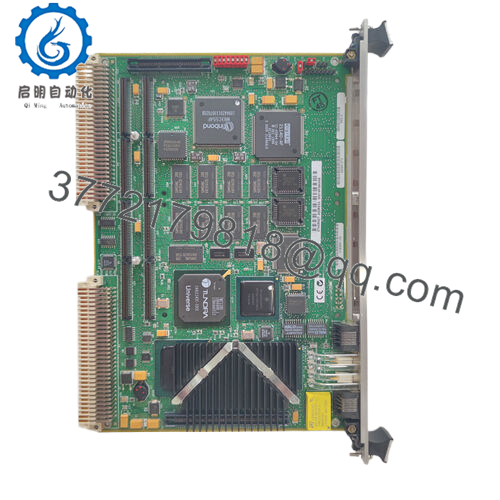
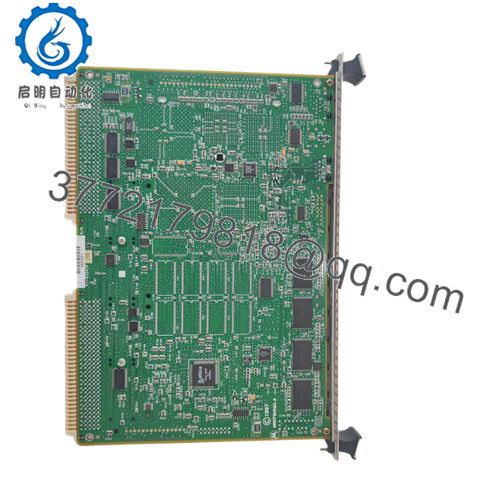
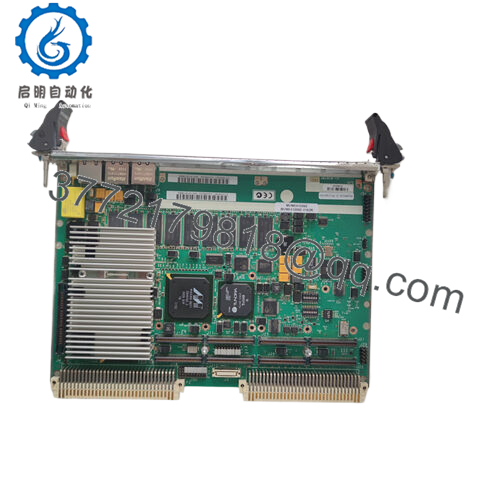
The Motorola 01-W3496B01 functions as a passive interface board that mates with the P2 connector on the rear side of a VMEbus backplane. When a compatible Motorola single-board computer is inserted into the front slot, its I/O signals (such as SCSI, Serial, or Ethernet) are passed through the backplane pins and directly into the Motorola 01-W3496B01. The module then routes these signals to standardized connectors—typically high-density SCSI or D-sub types—accessible from the back of the cabinet.
Within the automation stack, this module acts as the physical layer of the communication architecture. It interacts with the main controller by maintaining specific impedance and grounding characteristics required for high-speed data transmission. The board is designed to fit into the 6U rear-transition area of a VME chassis, aligned perfectly with the front-side CPU slot. This “rear-entry” architecture is a standard feature in high-end industrial automation, as it separates the logic-solving hardware from the heavy field cabling. The Motorola 01-W3496B01 is specifically engineered to support the pinouts of the MVME162 and MVME167 families, ensuring that signal reliability is maintained across the entire backplane transition.
Technical Highlights Summary (Table)
| Specification | Details |
| Model Number | Motorola 01-W3496B01 |
| Brand | Motorola / Artesyn |
| Type | Rear Transition Module (RTM) |
| Interface Ports | SCSI-2 (50-pin), Serial (DB-9), Parallel |
| Operating Temp Range | 0 to +55°C |
| Mounting Style | Rear VME 6U Slot |
| Dimensions | Standard 6U Rear Form Factor |
| Weight | 0.28 kg (approx.) |
| Interface/Bus | VME P2 Distribution Bus |
| Compliance | IEEE 1101.11, VITA Standards |
| Supported Protocols | SCSI-2, RS-232, Centronics Parallel |
| Typical Power Draw | Negligible (Passive Interface) |
Real-World Benefits
One of the most significant benefits of the Motorola 01-W3496B01 is the dramatic reduction in mean-time-to-repair (MTTR). In a critical system uptime environment, such as a semiconductor manufacturing line or a utility substation, every second of a shutdown is costly. By using this transition module, technicians can swap out a faulty processor board from the front of the rack in seconds, while the complex field wiring remains undisturbed at the rear. This ensures long-term performance by preventing the wear and tear on cables that usually occurs during hardware troubleshooting.
Furthermore, the Motorola 01-W3496B01 is engineered for performance consistency. By utilizing a high-quality multi-layer PCB with dedicated ground planes, it effectively shields sensitive serial and SCSI signals from the electromagnetic noise often found in industrial environments. This reduces engineering overhead during system commissioning, as there is no need to troubleshoot “ghost” data errors caused by poor cabling or unshielded breakouts. The professional, standardized port layout of the Motorola 01-W3496B01 provides a clean installation that meets modern safety and documentation standards for high-end industrial automation systems.

- 01-W3496B01
Typical Use Cases
The Motorola 01-W3496B01 is widely used in power plants where VME-based systems manage turbine control and historical data logging. In these applications, the module provides a reliable SCSI interface for external storage drives and serial ports for operator terminals. It is also frequently found in telecommunications central offices, where the rear-cabling architecture allows for dense equipment racks with optimized cooling and cable management.
In the defense and aerospace sectors, the Motorola 01-W3496B01 is utilized in test stands and simulation environments. These industries require the high reliability of the Motorola 68K processor family and the ruggedized I/O paths that only a dedicated transition board can provide. Whether it is used in a process control environment for a chemical plant or as part of a high-speed data acquisition system, the Motorola 01-W3496B01 provides the deterministic, stable physical interface required for complex, real-time industrial tasks.
Compatible or Alternative Products
Motorola MVME162 – The primary 68040 processor board that often requires this transition module.
Motorola MVME167 – A high-performance SBC that utilizes the P2 breakout for I/O.
Motorola 01-W3507B – A similar transition board with a different port density or layout.
Artesyn MVME712M – An external transition kit that often incorporates the Motorola 01-W3496B01.
Motorola 01-W3496A01 – An earlier revision of the same transition module.
VITA 1.1-1997 Cables – Standardized high-density cables designed to mate with this module.
Setup Notes & Maintenance Insights
Before installing the Motorola 01-W3496B01, it is essential to inspect the P2 pins on the VME backplane for any signs of bending or contamination. Since the module mounts from the rear, alignment is critical to ensure a secure mate with the primary controller. You should also verify that the jumper settings on your front-side SBC (such as an MVME162) are set to route the specific I/O signals—like SCSI or Serial—to the P2 backplane pins rather than the front-panel connectors.
Ongoing maintenance for the Motorola 01-W3496B01 is minimal due to its largely passive design. However, it is a professional best practice to periodically check the rear-facing cable connections for tightness, particularly in high-vibration environments. If the module is used in a dusty or corrosive atmosphere, a yearly inspection of the gold-plated connectors and a quick cleaning with an approved electronics contact cleaner will ensure signal reliability is maintained. Ensuring that the rear of the VME rack remains clear of obstructions will also help maintain the thermal profile of the entire system, protecting both the transition board and the primary CPU.