WhatsApp: +86 16626708626
 Email:
 Phone: +86 16626708626
Description
3. Key Technical Specifications
- Processor: MC68LC040, 25 MHz, 32-bit — MMU and 8 KB cache included, no integrated FPU (unlike the full MC68040)
- DRAM: 4 MB onboard parity-protected DRAM
- SRAM: 128 KB battery-backed SRAM
- Flash Memory: 1 MB onboard Flash with 162Bug debug monitor installed
- NVRAM / Clock: 8K × 8 NVRAM with battery-backed TOD clock
- VMEbus Interface: A16/A24/A32, D8/D16/D32 bus widths, master/slave with system controller function
- Serial Ports: 4 × EIA-232-D via front-panel RJ45 connectors
- Ethernet: Intel 82596CA LAN controller with DMA (+12 V rail, 100 mA max for off-board transceiver)
- SCSI: NCR 53C710 controller with 32-bit local bus burst DMA (async 5 MB/s, sync 10 MB/s)
- IndustryPack: 2 IP mezzanine slots (up to 4 single-wide IP modules per system)
- Timers: 6 tick timers with watchdog timer(s)
- Power Requirements: +5 V ±5% at 3.5 A typical / 4.5 A max (no IP modules); +12 V for LAN transceiver
- Format: Double-high 6U VME card, single VME slot
4. Product Introduction
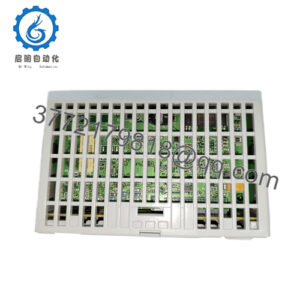
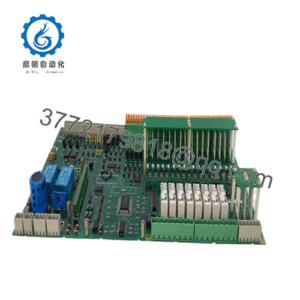
The Motorola MVME162-213 is a double-high VMEbus embedded controller built around the 25 MHz MC68LC040 with 4 MB of parity-protected DRAM, 1 MB of onboard Flash running the 162Bug debug monitor, and both SCSI (NCR 53C710) and Ethernet (82596CA) interfaces integrated on one slot. Two IndustryPack mezzanine slots let you add analog, digital, or fieldbus I/O without touching the backplane. It saw wide deployment in 1990s industrial controllers, medical imaging systems (including Picker Clinix RF90 x-ray platforms), semiconductor tools, and test rigs — and that’s where these boards are still being maintained today.
The reason buyers pick this exact part number is simple: the -213 configuration (4 MB DRAM, SCSI + Ethernet, LC040) is what the original system was qualified with, and swapping in a different variant risks breaking that qualification. The critical caveat: the MC68LC040 has no floating point unit. If your application was compiled expecting an FPU and your current board is a full MC68040 unit, read FAQ Q3 before ordering.
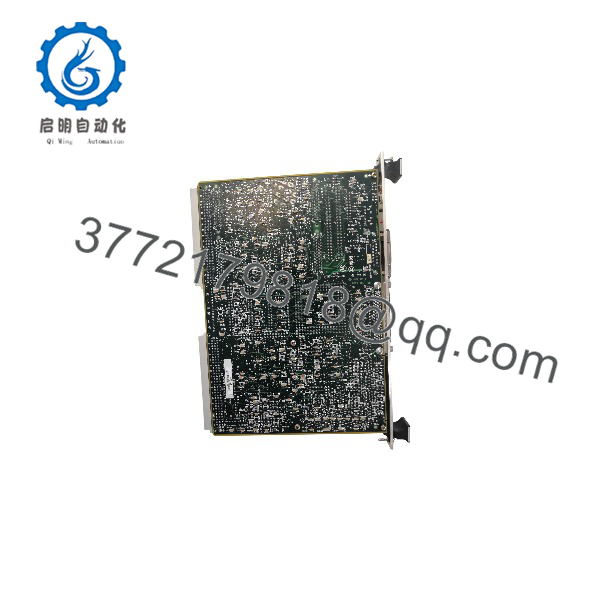
MVME162-213
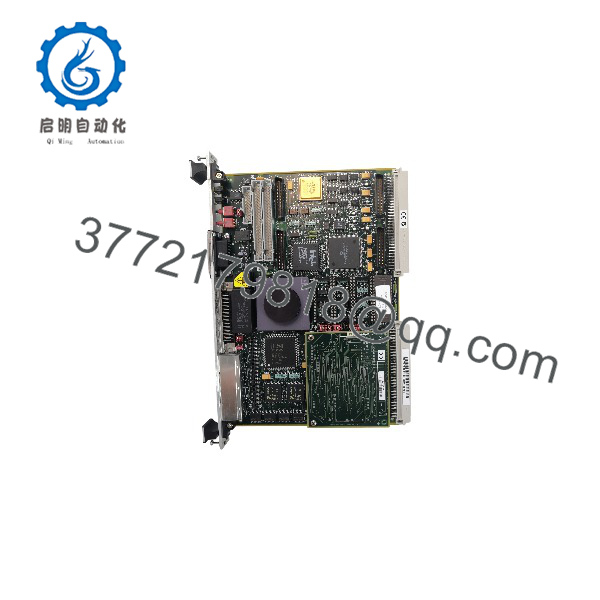
MVME162-213
5. Troubleshooting Quick Reference
| Symptom | Possible Cause | Relevance to this Part | Quick Check Method | Recommendation |
|---|---|---|---|---|
| FAIL LED (red, DS1) lit at power-up | Local memory test failure or Flash/firmware issue | ✅ High | Read the yellow RUN LED pattern; break into 162Bug and run the memory test on all 4 MB | If the memory test fails repeatedly on our board under test, we replace it — report with the 162Bug output |
| Software FPU exception / crash on math ops | Code compiled for full MC68040 running on LC040 (no FPU) | ✅ High | Check for “F-line” exception in the 162Bug exception display; confirm which CPU your old board had | Match the CPU variant to your application — this is the #1 trap with the -213 |
| No Ethernet link | 82596CA configuration, IP address setup, or +12 V transceiver rail | ⚠️ Medium | Verify station address via 162Bug NIOT; measure +12 V at the transceiver |
Controller chip failure is rare; check the transceiver, cable, and hub first |
| SCSI devices not detected | SCSI ID conflict or bad bus termination | ⚠️ Medium | Confirm unique SCSI IDs; verify termination at both bus ends | Termination and cabling cause most “dead SCSI” complaints |
| Serial console dead | RJ45 serial pinout is Motorola-proprietary, NOT standard RS-232 | ⚠️ Medium | Use the correct Motorola serial breakout adaptor; verify baud in 162Bug NVRAM | The most common rookie error with this board — check the adaptor before condemning the port |
| System resets intermittently | Marginal +5 V backplane rail under load | ❌ Low | Measure +5 V ±5% at P1 with a Fluke 115 under full chassis load | Budget total chassis draw with a 20% margin; this board draws up to 4.5 A plus IP modules |
| RTC / NVRAM loses data on power-down | Dead lithium backup battery | ✅ High (common, minor) | Measure battery voltage (>2.8 V typical); inspect the holder for corrosion | Replace the battery before it leaks — leakage is the single biggest board killer |
A note from the bench: most “dead” -213 boards we test come back fine. The usual suspects are the FPU mismatch (software issue, not hardware), the proprietary RJ45 serial pinout, or SCSI termination. Before you condemn the board, move it to a known-good slot and see if the fault follows the card. Stuck at 3:00 AM? Email technical support with photos of the front panel LEDs, the 162Bug power-up text, and your chassis config — we’ll tell you honestly whether the board is the problem.
6. Frequently Asked Questions
Q1: Is this board new, used, or refurbished?
Stock is a mix of New Surplus (factory-original, never deployed, often sealed in Motorola packaging) and refurbished units pulled from decommissioned systems. Condition is stated clearly on every quote — no vague “tested working” descriptions. Both tiers go through the same QC sequence: inbound traceability and anti-counterfeit checks, power-up on a genuine VME chassis, full 4 MB DRAM test via 162Bug, loop-back verification on all four serial channels, Ethernet and SCSI interface checks, and a 24-hour burn-in with thermal monitoring. Test photos and video are available on request.
Q2: Why is it cheaper than buying from the OEM — and can I even buy it new?
You can’t buy it new from Motorola or Emerson — this product line was discontinued years ago and there is no factory support. Everything on the market is surplus or refurbished stock, which is why the price sits well below original list. The discount isn’t a quality compromise; it’s the reality of an obsolete product with a finite supply. Honestly, the bigger question isn’t price — it’s availability. If a -213 runs your system, buy the spare before you need it.
Q3: ❗ Can I substitute this for a -023A or another MVME162 variant?
Careful — this is where people get burned. The -213 uses the MC68LC040, which has no floating point unit. The -023A uses the full MC68040 with an integrated FPU. If your application performs hardware floating point math and your installed board is an -023A, dropping in a -213 will throw F-line exceptions and crash. The boards are physically interchangeable in the slot, but software compatibility is not guaranteed across the ordering matrix. Match your exact part number (check the silkscreen: 01-W3866B43B) and CPU variant before ordering, and verify against the MVME162LX datasheet for your specific model.
Q4: Will my program and configuration survive a board swap?
Your application lives in Flash, EPROMs, or off-board storage — not in the CPU silicon — so the program survives if the new board carries matching firmware. Two gotchas: the 128 KB battery-backed SRAM and the NVRAM/TOD clock lose stored data if the battery is dead during the swap, and anything running in DRAM is gone at power-down regardless. Back up the 162Bug NVRAM configuration (serial settings, memory map, network parameters) and photograph the board, IP modules, and cabling before you pull the card. I’ve seen a tech lose half a day because he didn’t document the IP module positions before removing them.
Q5: Can I hot-swap this board?
No. The MVME162 200 Series has no hot-swap support — that’s a VME64x capability this board predates. Pulling it live can damage the backplane bus drivers, corrupt other boards’ VMEbus cycles, or kill the board. Power down the chassis, wait for discharge, wear a grounded ESD wrist strap, and handle the board by its edges. I once saw a $3,000 controller die from a winter static discharge because the tech skipped the strap in a dry equipment room. Use the strap. Every time.
Q6: What about the backup battery?
Check it at install time, not after the first power failure. The lithium cell backs up the SRAM, NVRAM, and TOD clock, and a 20-plus-year-old cell is overdue. A leaking cell corrodes the PCB — the single most common reason otherwise good MVME162 boards become scrap. Our units ship with battery voltage measured and documented, and any board showing corrosion at inbound inspection is rejected, never resold. If your calibration data lives in NVRAM, back it up before any swap.
Q7: What warranty and lead time do you offer?
Tested units ship with a 1-year replacement warranty covering functional failure under normal use — not physical damage, hot-swap damage, or battery leakage after receipt. In-stock boards ship within 1–2 business days via DHL/FedEx worldwide. Out-of-stock units typically source in 2–4 weeks depending on condition tier. Confirm stock and lead time before you schedule your maintenance window — a realistic “3 weeks” today beats a missed shutdown date later.