WhatsApp: +86 16626708626
 Email:
 Phone: +86 16626708626
Description
Core Product Summary
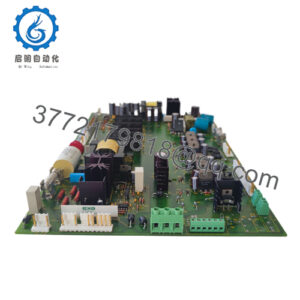
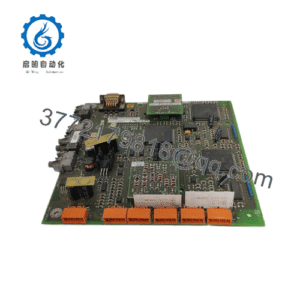
The Motorola MVME172PA-644SE is a double-high VME embedded controller from the MVME172P4 series. It is based on a 60 MHz MC68060 microprocessor with MMU and FPU and provides four IndustryPack slots for modular I/O expansion.
The board includes 16 MB of configurable SDRAM, 512 KB of battery-backed SRAM, 2 MB of Flash memory, dual serial ports, SCSI, and Ethernet interfaces. It implements an A32/D64 VMEbus master/slave interface with system controller capability and is designed for embedded monitoring and control applications that require IndustryPack expandability within a single VME slot.
Key Technical Specifications
| Parameter | Specification |
|---|---|
| Product type | VME Embedded Controller with 4 IP Slots |
| Series | MVME172P4 (Petra II) |
| Processor | 60 MHz MC68060 with 16 KB cache, MMU, and FPU |
| SDRAM | 16 MB configurable (shared VMEbus/local bus) |
| SRAM | 512 KB with battery backup |
| Flash | 2 MB |
| NVRAM / TOD | 8K × 8 with battery-backed time-of-day clock |
| EPROM socket | One 32-pin JEDEC |
| VMEbus interface | A32/D64 master/slave, system controller function |
| IndustryPack interface | Four 16-bit or two 32-bit ports with DMA |
| Serial ports | Two (console EIA-232-D DCE; second configurable) |
| Optional interfaces | SCSI (NCR 53C710) and Ethernet (82596CA) — included on this model |
| Timers | Six 32-bit timers + one watchdog |
| Power requirements (typical, no IP modules) | +5 V at 1.5 A |
| Board form factor | Double-high VME |
Detailed Product Overview
The Motorola MVME172PA-644SE is a single-slot VME single-board computer designed for embedded real-time control and monitoring systems that need both processing performance and flexible I/O expansion. It uses the MC68060 microprocessor running at 60 MHz, delivering superscalar integer and floating-point performance while preserving object-code compatibility with earlier 68000-family software.
Central to the board is the Petra ASIC (second-generation on PA-series models), which integrates the functions previously performed by separate memory-controller, IndustryPack-interface, and ECC chips. This integration improves memory subsystem performance and reduces component count. The on-board 16 MB SDRAM is configurable via switches to appear as smaller sizes when required by existing software, and supports single-bit error correction with double-bit error detection.
Four IndustryPack sites allow installation of up to four single-wide or two double-wide modules without consuming additional VME slots. Each site has a dedicated DMA channel, enabling efficient data movement for analog, digital, communications, or specialized I/O modules. The board also carries SCSI and Ethernet controllers that are brought out through the P2 connector, typically used with an MVME712-series transition module for standard external connectors.
The VMEbus interface, implemented with the VMEchip2 ASIC, supports full A32/D64 master and slave operation, block transfers, and system-controller functions. Two serial ports, six programmable 32-bit timers, a watchdog timer, and battery-backed NVRAM/TOD complete the core feature set needed for many industrial and laboratory applications.
Power is drawn primarily from the +5 V backplane rail. Typical consumption without IndustryPack modules is 1.5 A. The board is specified for operation from 0 °C to +55 °C under forced-air cooling conditions common in VME chassis.
Because the IndustryPack interface and the major peripheral controllers are integral to the design, system integrators can adapt the controller to changing I/O requirements by exchanging modules rather than redesigning the CPU board itself.
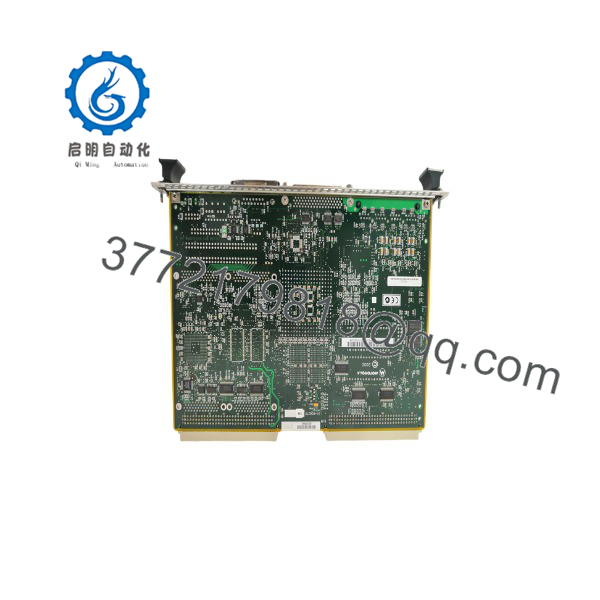
MVME172PA-652SE
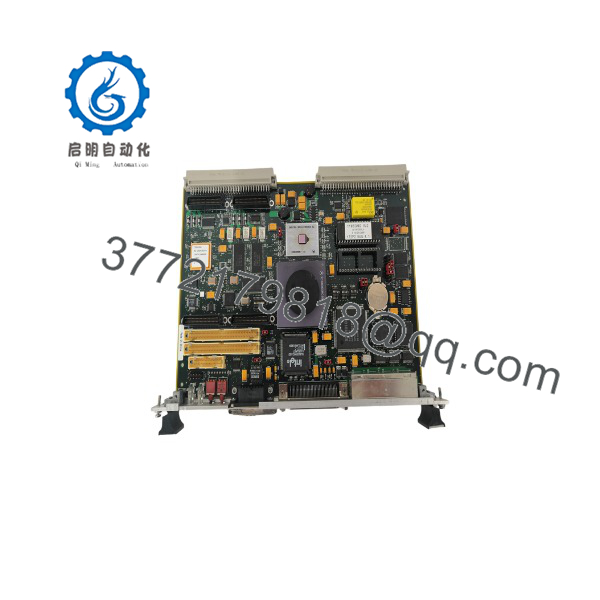
MVME172PA-652SE
System Compatibility & Integration Requirements
| Item / Dependency | Verified Compatibility or Requirement | Practical Note |
|---|---|---|
| Form factor | Double-high VME (6U) | Occupies one VME slot |
| VMEbus | A32/D64 master/slave with system controller | Compatible with VME64 systems |
| IndustryPack modules | Up to four single-wide or two double-wide | DMA supported on each port |
| Transition module | MVME712M or equivalent recommended | Brings SCSI, Ethernet, and serial ports to standard connectors |
| Power | +5 V primary; ±12 V for certain peripherals | Typical 1.5 A at +5 V without IP modules |
| Firmware / debug | 172Bug monitor supported | On-board Flash and EPROM socket available |
| Memory configuration | Switch-selectable apparent size | Physical 16 MB SDRAM can be set to appear smaller |
Dimensions, Mounting & Connection Notes
- Form factor: Double-high VME board
- Height: 233.4 mm (9.2 in)
- Depth: 160.0 mm (6.3 in)
- Front-panel height: 261.8 mm (10.3 in)
- Width: 19.8 mm (0.8 in)
- Mounting: Standard VME front-panel and P1/P2 connectors
- I/O access: Front-panel serial connectors; remaining peripheral signals routed via P2 to optional transition module
- Cooling: Forced-air cooling required for full temperature range (0 °C to +55 °C operating)
FAQ
What is the Motorola MVME172PA-644SE?
It is a double-high VME embedded controller featuring a 60 MHz MC68060 processor, 16 MB SDRAM, four IndustryPack slots, SCSI, and Ethernet.
Which processor does the MVME172PA-644SE use?
It uses a 60 MHz MC68060 microprocessor with integrated MMU and floating-point unit.
How much memory is installed?
The board provides 16 MB of configurable SDRAM, 512 KB of battery-backed SRAM, 2 MB of Flash, and 8K × 8 NVRAM with time-of-day clock.
How many IndustryPack slots are available?
Four single-wide (or two double-wide) IndustryPack sites with DMA support are provided.
Does this model include SCSI and Ethernet?
Yes. The -644SE configuration includes both the SCSI and Ethernet interfaces.
What transition module is typically used?
The MVME712M transition module is the standard companion for bringing serial, SCSI, Ethernet, and parallel signals to external connectors.
What is the operating temperature range?
The board is specified for 0 °C to +55 °C operation with forced-air cooling.