WhatsApp: +86 16626708626
 Email:
 Phone: +86 16626708626
Description
Key Technical Specifications
| Parameter | Value |
|---|---|
| Processor | Motorola PowerPC MPC603 |
| Processor speed | 200 MHz |
| On-chip cache | 16 KB instruction / 16 KB data L1 cache |
| Main memory | 16 MB ECC DRAM |
| Flash memory | 5 MB onboard Flash |
| NVRAM | 8 KB x 8 nonvolatile RAM |
| VMEbus interface | A32/D32/D64, BLT64 master/slave; system-controller capable |
| Ethernet | 10/100 Mbps auto-negotiating Ethernet |
| PMC expansion | Two IEEE P1386.1-compliant 32/64-bit PMC slots |
| PCI expansion | 64-bit PCI expansion mezzanine connector |
| Serial port | One asynchronous serial debug port |
| Timers / watchdog | Four 32-bit timers, one 16-bit timer, watchdog timer |
| Power consumption | 4.0 A typical, 4.75 A maximum at +5 V |
| Board size | 233.4 mm x 160.0 mm; single-slot 6U VME form factor |
| Front panel | Original-style VME ejector handles (-900 suffix) |
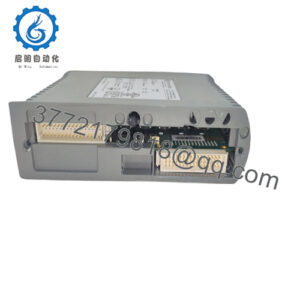
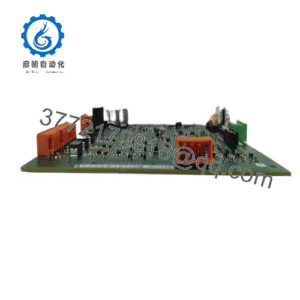
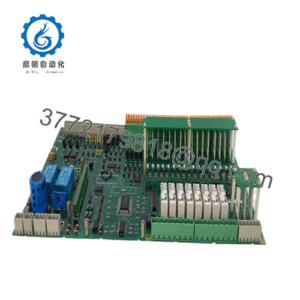
Motorola identifies the MVME2301-900 as a 200 MHz MPC603 board with 16 MB ECC DRAM and 5 MB Flash; the -900 suffix denotes the original-style VME ejector handles. The module provides VME64 master/slave operation, dual PMC expansion, 10/100 Mbps Ethernet, NVRAM, battery-backed time-of-day clock, and watchdog/timer resources for embedded industrial systems.
Product Introduction
The Motorola MVME2301-900 is a 6U VMEbus embedded processor module built on a 200 MHz PowerPC MPC603, 16 MB ECC DRAM, and 5 MB Flash. It is used in legacy industrial-control, SCADA, communications, test, and data-acquisition systems that still depend on the MVME2300 platform.
Its value is compatibility, not raw speed. The board retains the original-style VME ejector handles, supports two PMC cards and PCI expansion, and provides a VME64 interface with DMA, making it a practical like-for-like service part for aging Motorola VME installations.
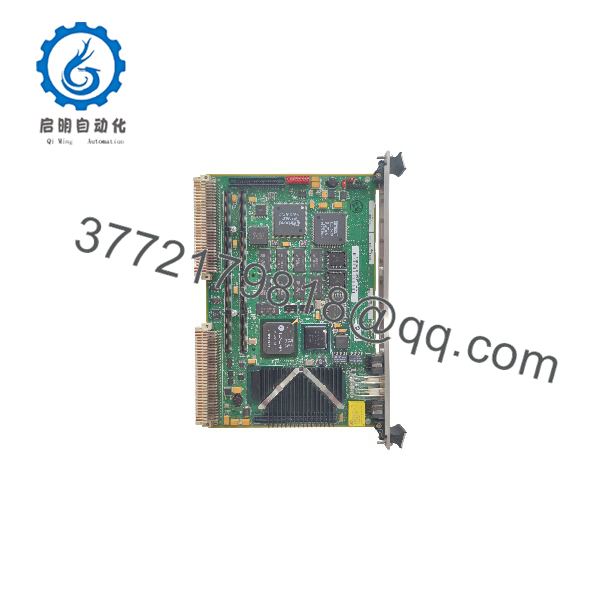
MVME2301-900
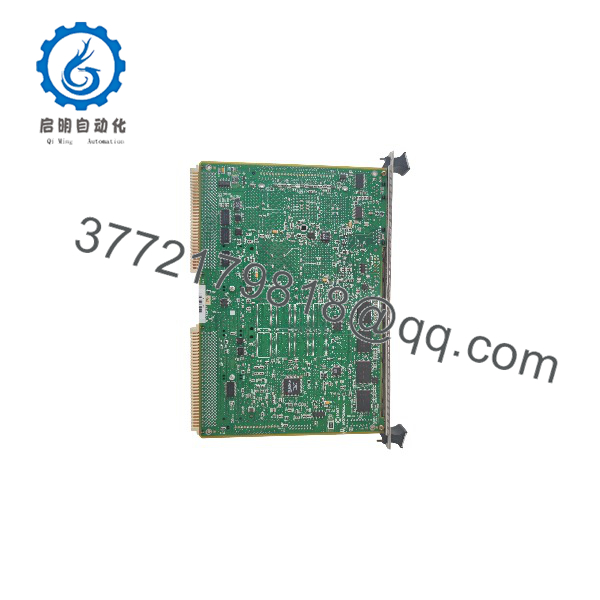
MVME2301-900
Troubleshooting Quick Reference
| Symptom | Possible Cause | Relevance to this Part | Quick Check Method | Recommendation |
|---|---|---|---|---|
| No LEDs or no boot activity | Chassis power, fuse, backplane fault, or poor P1/P2 seating | ❌ Low | Measure +5 V at the VME backplane; inspect and reseat the board with power off | Check PSU, fuses, and connector seating before replacing the SBC |
| Board powers up but will not boot | Corrupt Flash, failed boot device, or firmware/configuration fault | ✅ High | Connect to the serial debug port and capture the boot sequence | Restore firmware or boot image; replace the board if Flash is unusable |
| No Ethernet link | Cable, switch port, transceiver, or driver/configuration issue | ❌ Low | Swap cable and switch port; verify link LEDs and IP configuration | Test networking externally before condemning the board |
| VME bus errors or timeouts | Incorrect address map, bus grant, terminator, or system-controller setting | ✅ High | Compare VME jumpers and address configuration with system documentation | Correct configuration first; the MVME2300 can act as system controller |
| PMC card not recognized | PMC not seated, incompatible PMC, or PCI/PMC configuration mismatch | ❌ Low | Power down, reseat PMC, and test it in a known-good MVME2300 system | Verify PMC electrical and software compatibility |
| Random resets or memory faults | Weak backup battery, overheating, bad contact, or failing ECC DRAM | ✅ Medium | Check battery voltage, clean contacts, improve airflow, and run memory diagnostics | Replace the board if ECC errors continue after environmental checks |
| Intermittent faults after installation | ESD damage, bent connector pins, or incomplete board insertion | ✅ High | Inspect P1/P2 and PMC connectors; reseat with ESD protection | Replace only after connector, power, and configuration checks pass |
If the issue persists, provide photos of the board and chassis, jumper settings, serial boot output, and diagnostic logs before ordering a replacement.
Frequently Asked Questions
Can I hot-swap the MVME2301-900?
No. Power down the VME chassis before removal or installation. This is an older VME processor board, not a hot-swap design. Use a grounded ESD wrist strap and avoid touching connector pins or components.
Is the MVME2301-900 obsolete?
Yes. Motorola no longer manufactures the MVME2300 series. Current supply is generally limited to New Surplus, refurbished, or tested pre-owned inventory, so confirm the exact condition and test scope before purchase.
What does the “-900” suffix mean?
On the MVME2300 series, the -900 suffix identifies the version supplied with original-style VMEbus ejector handles. Electrically, the MVME2301-900 remains the 200 MHz MPC603, 16 MB ECC DRAM, 5 MB Flash configuration.
Will it replace an MVME2301 without the -900 suffix?
Usually yes at the board level, but verify the front-panel handle style, chassis clearance, firmware, VME address map, and installed PMC hardware. Do not assume that every MVME230x variant has the same CPU, memory, or Flash configuration.
Will my application software remain after replacement?
Not necessarily. The application may be stored in Flash, NVRAM, a PMC module, or another storage device in the chassis. Back up the boot image, application files, network settings, and VME configuration before removing the old board.
Why is this surplus board less expensive than a new OEM unit?
Because Motorola ended production, the price reflects available surplus stock rather than current manufacturing. New Surplus units are unused original parts, but they may carry older date codes and should be functionally tested before deployment.
What should I verify before ordering?
Confirm the required CPU speed, DRAM size, Flash size, PMC cards, VME system-controller role, firmware/boot configuration, and chassis power budget. The MVME2301-900 is specified at 4.0 A typical and 4.75 A maximum at +5 V.