WhatsApp: +86 16626708626
 Email:
  Phone: +86 16626708626
Description
Key Technical Specifications
| Parameter | Value |
|---|---|
| Processor | PowerPC MPC7455 (per original Motorola datasheet) or MPC7457 (per current Penguin Solutions datasheet) at 1 GHz |
| L2 Cache | 256 KB on-chip |
| L3 Cache | 2 MB |
| Coprocessor | AltiVec, for high-performance computational applications |
| Main Memory | 512 MB on-board 133 MHz SDRAM ECC, expandable to 1 GB total via memory mezzanine card |
| Flash Memory | Two banks of soldered Flash: 32 MB and 8 MB |
| System Controller | Marvell Discovery system controller, 133 MHz host bus, 133 MHz SDRAM memory bus |
| PCI Architecture | Dual independent 64-bit PCI buses, 33/66 MHz |
| PMC Expansion | Two PMC sites (one per PCI bus, each capable of 66 MHz operation), plus 64-bit PCI expansion mezzanine connector for up to four additional PMCs |
| VME Interface | Universe II, on a dedicated 33 MHz PCI segment isolated from the PMC sites |
| Ethernet | One Gigabit Ethernet interface plus one additional 10/100BaseTX interface |
| Serial Ports | Two ports, TL16C550C UARTs |
| I/O Compatibility | Compatible with the MVME51xx family for migration paths |
| PrPMC Support | Supports processor PMCs (PrPMCs) |
| Form Factor | Single VME slot, even fully configured with two PMC modules or one PMC plus a memory mezzanine |
⚠️ Confirm which specific processor variant (MPC7455 vs. MPC7457) and current memory configuration are populated on the physical unit you’re quoting — documentation has shifted across three corporate ownership changes, and customer-facing specs should match the label, not just the part number.
Product Introduction
The MVME5500 was Motorola’s flagship VMEbus single-board computer, built around a 1 GHz PowerPC 7450-family processor (MPC7455 or MPC7457 depending on documentation vintage) with an AltiVec coprocessor for data-intensive computational work. Dual independent 64-bit PCI buses feed two PMC expansion sites plus a mezzanine connector for up to four more PMCs, and the Marvell Discovery system controller keeps processor, memory, and I/O throughput balanced rather than bottlenecked at any one subsystem — a step up from the MPC750-class boards that came before it in the same product family.
What makes this one worth specifying over an older MVME24xx or MVME27xx board on a modernization job: Gigabit Ethernet plus a separate 10/100BaseTX interface, and documented I/O compatibility with the MVME51xx family, which gives integrators a real upgrade path without redesigning the surrounding VME chassis. It’s changed corporate hands twice since Motorola built it — Emerson Network Power, then Penguin Solutions — so expect documentation and branding on any given unit to reflect whichever era it shipped in.
Installation & Configuration Guide
Stage 1: Pre-Installation Preparation (~10 min)
⚠️ Safety First: Notify operations of the downtime window, confirm the VME chassis backplane is de-energized, and lock out/tag out chassis power before pulling any board.
Tools Required: ESD wrist strap, PH1/PH2 screwdriver for card-cage injector/ejector handles, digital multimeter, wire labels for PMC/front-panel cabling, smartphone for reference photos.
Data Backup: Record the MotLoad/PPCBug environment settings (memory configuration, boot device, system controller status) from the outgoing board. Document PMC module placement across both PCI-bus PMC sites and the expansion mezzanine connector if populated, since assignment affects addressing.
Stage 2: Removing the Old Module (~5 min)
- Remove the front panel bezel if present.
- Label and disconnect front-panel Gigabit Ethernet, 10/100 Ethernet, serial, and any PMC I/O cabling.
- Release the top and bottom card-cage injector/ejector handles.
- Slide the board straight out along its guide rails to protect the VME P1/P2 backplane connectors and the PCI expansion mezzanine connector.
- If PMC modules or a memory mezzanine card are installed, note their exact site assignment before removing them from the old board.
⚠️ Keep the old board available until the replacement is confirmed booting — documented environment settings and PMC placement are your primary reference on this platform.
Stage 3: Installing the New Module (~15 min)
- ESD prep. Confirm the board is genuinely an MVME5500 and check the processor label (MPC7455 vs. MPC7457) against what your application or BSP expects — most software targeting one runs fine on the other, but verify against your specific board support package.
- Configuration clone (critical): Re-enter the documented MotLoad/PPCBug environment settings, and reinstall PMC modules and any memory mezzanine card into their original site positions.
- Slide the board into the guide rails and engage the injector/ejector handles fully — confirm even seating against the P1/P2 backplane and PCI expansion connectors.
- Reattach Ethernet, serial, and PMC I/O cabling per your labels.
Self-Checklist: [ ] Environment settings restored [ ] PMC modules and mezzanine seated in correct positions [ ] Cabling reattached per labels [ ] Injector/ejector handles locked
Stage 4: Power-On & Testing (~15 min)
Pre-Power Check: Multimeter check on the backplane supply rails for shorts before re-energizing.
- Power up the chassis and confirm the board boots to the MotLoad/PPCBug debug monitor prompt.
- Verify memory size detection (up to 1 GB with mezzanine) and ECC status match expectations.
- Confirm link status on both the Gigabit and 10/100 Ethernet interfaces, and check PMC/PrPMC enumeration on both PCI buses.
- Load and boot the application image.
- Dry-run test both Ethernet interfaces and PMC I/O before returning the system to production.
⚠️ Troubleshooting Note: If only one PMC site enumerates correctly, check that the module is seated on the PCI bus segment it’s rated for (33 vs. 66 MHz) — the Universe II VME interface is deliberately isolated onto its own 33 MHz segment precisely so both PMC sites can run at 66 MHz, and a misidentified site is a more common cause of a “dead” PMC than a faulty card.

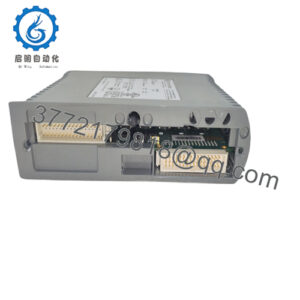
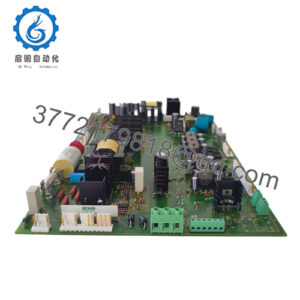
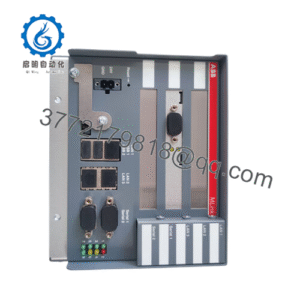
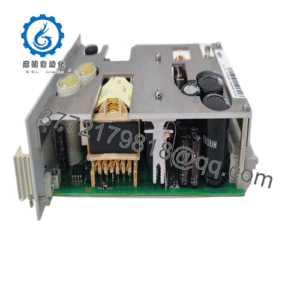
MVME5500

MVME5500
Frequently Asked Questions (FAQ)
Can the MVME5500 be hot-swapped under power?
No. Standard VMEbus boards on this platform aren’t hot-swap rated — de-energize the chassis backplane and lock out power before removing or inserting the board.
Is the MVME5500 obsolete, and is “new” stock genuinely new?
Effectively yes for practical sourcing purposes — this was Motorola’s flagship VME board in its generation, and while it’s been carried forward under Emerson and now Penguin Solutions branding, expect current supply to be dominated by surplus and refurbished-tested channels rather than fresh factory builds. Confirm actual condition per unit rather than assuming “new” from the listing title alone.
What’s the direct replacement if this is out of stock?
ProSoft’s documented I/O compatibility path points to the MVME51xx family for backward-compatible migration, and Penguin Solutions continues to sell current-generation “Penguin Edge” VME boards as a forward path if you need active manufacturer support rather than a like-for-like surplus swap.
Will I lose my configuration or ladder/application logic when I swap this module?
Your application software and BSP configuration typically live on the board’s Flash and boot device, not on separately removable media — document the MotLoad/PPCBug environment settings and back up the application image before removal, since there’s no CF-card-style swap mechanism on this platform.
Is the MPC7455 version functionally the same as the MPC7457 version?
They’re both PowerPC 7450-family (“G4”) processors at 1 GHz, and the difference between them is largely a documentation-era distinction as the board passed from Motorola to later owners rather than a functional redesign — but confirm against your specific BSP or application requirements rather than assuming blanket interchangeability, since minor revision-specific behavior can exist.
Why is your price lower than other “new” listings for this model?
On a board with this sourcing history, price differences track to testing depth and documented condition, not to a lesser product — an untested pull and a load-tested, memory-and-PMC-verified unit aren’t the same offering even under the identical part number. State plainly whether the unit was functionally tested, which processor variant is populated, and what condition applies before quoting.