WhatsApp: +86 16626708626
 Email:
 Phone: +86 16626708626
Description
Core Product Summary (Brand / Model / Key Attributes)
The Motorola PMCSPAN is a 6U VMEbus mezzanine carrier board designed to provide PCI Mezzanine Card (PMC) expansion capability for Motorola VME Single Board Computers (SBCs). Operating as a dedicated PCI expansion module, the PMCSPAN interfaces directly with compatible host processor boards—such as the MVME2300, MVME2400, MVME2600, MVME2700, MVME3600, MVME4600, and MVME5100 series—via a multi-pin PCI local bus expansion connector to extend total slot capacity across the VME backplane.
Designed to accommodate IEEE P1386.1 compliant mezzanine cards, a primary PMCSPAN unit provides onboard slots for either two single-wide PMC modules or one double-wide PMC module. Up to four single-wide slots can be configured in a single host stack by combining a primary carrier with secondary expansion modules (such as the PMCSPAN-010). The board supports both front-panel I/O access and rear P2 backplane routing, utilizing an onboard PCI-to-PCI bridge to deliver transparent 32-bit, 33 MHz PCI bus throughput to the guest PMCs.
Key Technical Specifications
| Parameter | Specification |
| Product Type | PCI Mezzanine Card (PMC) Expansion Carrier Module |
| Form Factor | Single-slot 6U VMEbus carrier |
| Host System Interface | Multi-pin high-density PCI expansion mezzanine connector |
| PMC Capacity (Primary) | 2 Single-wide or 1 Double-wide PMC slot |
| Mezzanine Standard | IEEE P1386.1 PCI Mezzanine Card (PMC) compliant |
| PCI Bus Architecture | 32-bit local PCI bus operating at 33 MHz |
| PCI Bridge Interface | Integrated PCI-to-PCI bridge chip (e.g., DEC 21150 / PLX 6150) |
| PCI Bus Signaling Voltage | 5V signaling |
| I/O Routing Options | Front-panel bezel cutout and VMEbus P2 connector signal pass-through |
| Power Consumption (Carrier Base) | +5V @ 0.44 A maximum (excluding power drawn by installed PMC payloads) |
| PMC Power Allocation | Up to 7.5 Watts maximum per PMC slot |
| Board Flammability Rating | UL 94V-0 recognized printed wiring board |
Detailed Product Overview
The Motorola PMCSPAN addresses physical density constraints in high-performance VMEbus processing systems. As single-board computers increased in processing power, integrating specialized hardware—such as additional Ethernet controllers, serial interfaces, graphics drivers, fieldbus interfaces, and DSP modules—required a flexible mezzanine system. The PMCSPAN serves as an active carrier board that bridges the host processor’s internal PCI bus to add IEEE P1386.1 PMC slots while preserving standard VMEbus slot arrangements.
When mounted adjacent to a compatible Motorola PowerPC single-board computer, the PMCSPAN links electrically via a high-speed PCI expansion header. An onboard PCI-to-PCI bridge isolates the main host processor bus from the mezzanine payload slots. This architecture allows the host processor’s firmware (such as PPCBug or MOTLoad) to enumerate guest PMC devices naturally during system power-up and initialization.
The module provides full flexibility for field deployments through dual I/O accessibility. Front-panel cutouts allow direct cabling to PMC connectors, while board traces support routing I/O signals through the VMEbus P2 backplane connector. Mechanical stability is assured by board standoffs, ejector handles (such as Scanbe or modern styling options), and secure mounting points that ensure reliable electrical contact under severe industrial or embedded operating conditions.
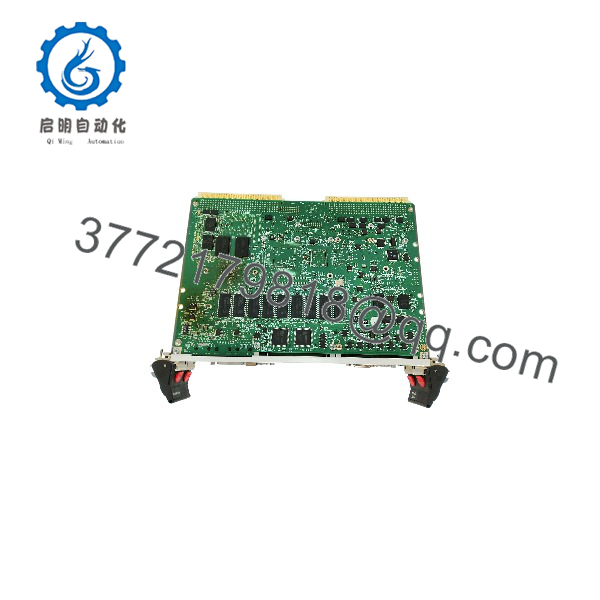
PMCSPAN
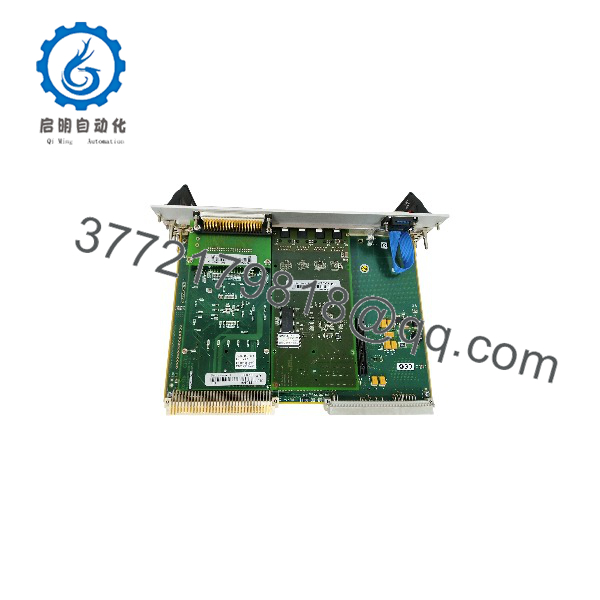
PMCSPAN
Engineering Selection Highlights
- Host Connector Interfacing: Mates directly with the multi-pin PCI expansion connector found on supported Motorola VME SBCs without requiring backplane PCI routing.
- Flexible Payload Configurations: Accepts either two single-wide PMC modules or one double-wide PMC module, allowing tailored I/O setups.
- Stacking Capability: Primary carrier modules (e.g., PMCSPAN-002) support mounting secondary expansion modules (e.g., PMCSPAN-010) to expand system capacity up to four single-wide slots total.
- Dual Signal Routing Flexibility: Accommodates external panel cabling through front-panel cutouts as well as customized rear-panel wiring through P2 backplane pin routing.
- Bus Isolation via Bridge Hardware: Integrates an onboard PCI-to-PCI bridge chip to manage signal load and ensure consistent electrical timing across all guest PMC slots.
Dimensions, Mounting & Connection Notes
- Form Factor: 6U single-slot VMEbus module profile.
- Height: 233.4 mm (9.2 in.).
- Depth: 160.0 mm (6.3 in.).
- Mechanical Fastening: Secured to the host processor board using four threaded mechanical standoffs and retaining screws.
- Intermodule Connection: Multi-pin high-density male/female PCI mezzanine connector headers link the host SBC and the PMCSPAN board.
- Insertion & Extraction: Standard VMEbus injector/ejector handles ensure proper seating into the VME subrack backplane.
- Thermal Considerations: Forced-air cooling within the VME chassis must account for heat generated by both the PMCSPAN base carrier and all installed PMC payload modules.
System Compatibility & Integration Requirements
| Item / Dependency | Verified Compatibility or Requirement | Practical Note |
| Supported Host Processors | Motorola MVME2300, MVME2400, MVME2600, MVME2700, MVME3600, MVME4600, MVME5100 series | Host board must feature the high-density PCI expansion mezzanine connector. |
| Secondary Expansion Carrier | PMCSPAN-010 / PMCSPAN(1)-010 | Mounts directly onto a primary PMCSPAN board to add two additional PMC slots. |
| Supported Mezzanines | IEEE P1386.1 PMC Modules (32-bit PCI, 33 MHz, 5V signaling) | Ensure mezzanine card dimensions match single-wide or double-wide 6U VME envelope. |
| System Enclosure / Chassis | Standard 6U VMEbus enclosure / chassis | Each added PMCSPAN module consumes one additional VME slot width in the chassis. |
| System Firmware | PPCBug or MOTLoad Firmware | System firmware auto-detects bridged PCI devices during boot diagnostic routines. |
FAQ
What is the Motorola PMCSPAN?
The Motorola PMCSPAN is a 6U VMEbus carrier board that adds IEEE P1386.1 PCI Mezzanine Card (PMC) slots to compatible Motorola VME single board computers.
Which Motorola CPU boards support the PMCSPAN?
The PMCSPAN connects to Motorola MVME processor modules equipped with a PCI expansion connector, including the MVME2300, MVME2400, MVME2600, MVME2700, MVME3600, MVME4600, and MVME5100 series.
How many PMC modules can a single PMCSPAN hold?
A primary PMCSPAN carrier board holds up to two single-wide PMC modules or one double-wide PMC module.
What is the difference between a primary and secondary PMCSPAN?
A primary PMCSPAN (e.g., PMCSPAN-002) mates directly with the host VME processor module. A secondary PMCSPAN (e.g., PMCSPAN-010) stacks on top of the primary PMCSPAN board to add two extra single-wide PMC slots.
Does the PMCSPAN require software drivers?
The PMCSPAN uses an onboard PCI-to-PCI bridge, making it hardware-transparent to host operating systems. Drivers are required for the specific PMC mezzanine cards installed on the board, but not for the carrier board itself.
How are I/O connections routed from the guest PMCs?
PMC I/O signals can be cabled directly through the front-panel bezels or routed through the board trace connections to the VMEbus P2 backplane connector.
Verification & Troubleshooting Notes
- Module Seating Verification: Ensure all four corner standoffs are fully tightened and the multi-pin PCI header is fully seated. Incomplete mating can cause system boot hangs or PCI bus enumeration failures.
- Firmware PCI Diagnostics: Use system firmware commands (e.g., within PPCBug) to inspect the local PCI memory map. If installed PMC cards are not visible under PCI device scans, check for proper power distribution and jumper settings on both the host SBC and carrier.
- Power Budget Checks: Verify that total power consumption (+5V, +12V, -12V) drawn by all installed PMCs does not exceed 7.5 Watts per slot or exceed the maximum chassis power supply capabilities.
- Card Keying & Alignment: Verify PMC standoff alignment and signal voltage keying (5V) prior to inserting mezzanine cards to avoid pin damage.