 WhatsApp: +86 16626708626
 Email:
  Phone: +86 16626708626
Description
What This Product Solves
In the evolution of industrial automation, the transition from simple logic controllers to high-performance embedded computing required a platform that could handle intense real-time processing while surviving the physical rigors of the factory floor. The Motorola VME162PA344SE was engineered to solve the problem of “computing at the edge” long before the term became a modern buzzword. Many legacy control systems in power plants, semiconductor manufacturing, and defense applications struggle with data bottlenecks when trying to coordinate multiple high-speed I/O signals. This module provides a centralized, high-reliability processing node that can manage complex tasks—such as motion control, data logging, and communication bridging—all within a single VMEbus slot.
The primary challenge this product addresses is deterministic execution. In process control, a delay of even a few milliseconds in a control loop can result in product defects or equipment damage. The Motorola VME162PA344SE utilizes the MC68040 microprocessor architecture to ensure that interrupts are handled with absolute precision. It is essential in situations where system stability is non-negotiable and where the environment involves high temperatures, vibration, or electromagnetic interference that would cause a standard commercial PC to fail. By integrating a powerful CPU with flexible IndustryPack (IP) carrier slots, the Motorola VME162PA344SE allows engineers to customize their I/O requirements without adding extra boards to the rack, effectively reducing the system footprint and improving signal reliability.
How the Product Works & Fits into a System
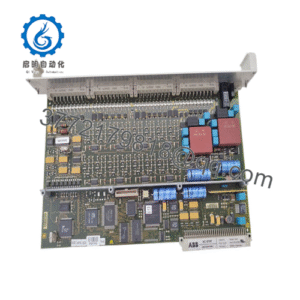
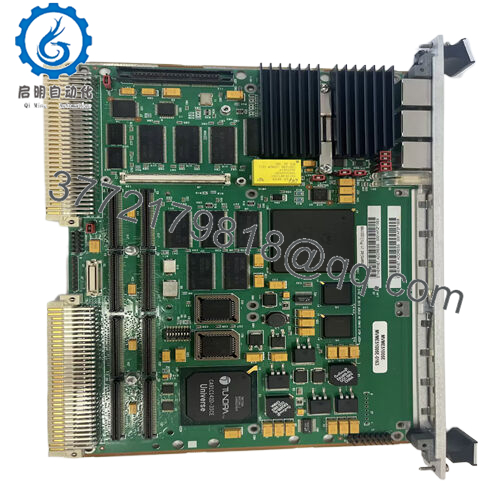
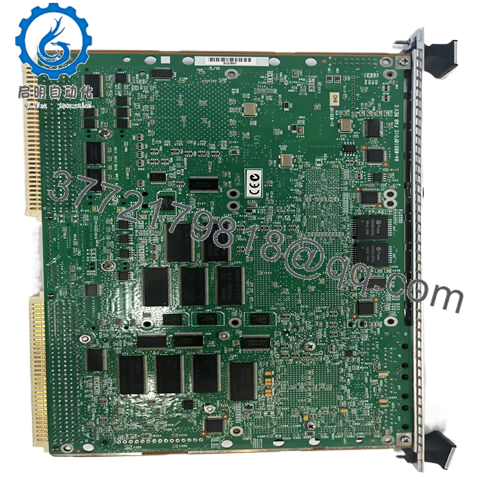
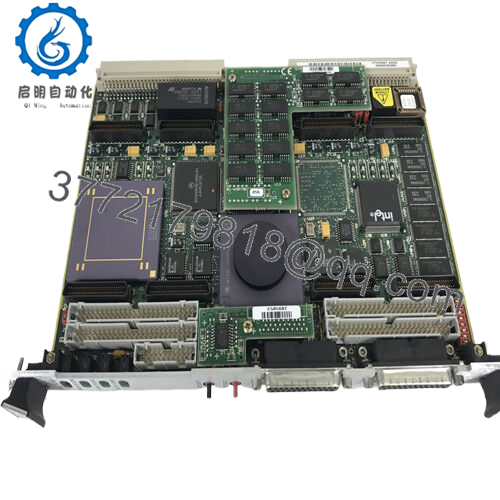
The Motorola VME162PA344SE functions as a 6U VMEbus Single Board Computer (SBC) that typically acts as the “brain” of a VME chassis. At its core is the 68040 CPU, which interacts with the rest of the automation stack through a high-speed VMEbus interface. This module is positioned at the top of the local control hierarchy, where it pulls data from various I/O boards, processes the logic in a real-time operating system like VxWorks or OS-9, and then sends commands back to the field devices.
What sets the Motorola VME162PA344SE apart is its modularity. The “PA” designation indicates the presence of IndustryPack (IP) interface slots, allowing you to “plug in” small mezzanine modules for specialized tasks like analog-to-digital conversion, serial communication, or digital I/O directly onto the CPU board. This tightly coupled architecture minimizes the latency typically found when data has to travel across the backplane systems. The board also features onboard Ethernet and SCSI interfaces, making it a versatile hub for both local control and higher-level plant networking. With built-in diagnostics and a robust ROM monitor (162Bug), the module provides engineers with the tools needed to troubleshoot low-level hardware issues before they affect the broader process control environment.
Technical Highlights Summary (Table)
| Specification | Details |
| Model Number | Motorola VME162PA344SE |
| Brand | Motorola (now part of Artesyn/Artesyn Embedded) |
| Type | Embedded Single Board Computer (SBC) |
| Processor | MC68040 @ 25MHz (or 33MHz variant) |
| Memory | 4MB to 16MB DRAM / 1MB Static RAM |
| Operating Temp Range | 0 to +55°C |
| Mounting Style | 6U VMEbus Slot |
| Dimensions | 160mm x 233mm (Double Eurocard) |
| Weight | 0.55 kg (approx.) |
| Interface/Bus | VMEbus (VME64), IP Mezzanine (4 slots) |
| Compliance | CE, UL, VITA Standards |
| Supported Protocols | TCP/IP, SCSI, Serial (RS-232/422) |
| Typical Power Draw | 15W – 20W |
Real-World Benefits
The most immediate benefit of the Motorola VME162PA344SE is its ability to reduce engineering overhead through hardware consolidation. By utilizing the four IndustryPack slots on the board, a designer can often replace three or four separate VME modules with a single Motorola VME162PA344SE and the appropriate IP carriers. This not only saves expensive rack space but also reduces the number of potential failure points in the system, such as backplane connectors and inter-board cabling.
Furthermore, this module ensures long-term performance for legacy systems that cannot be easily migrated to modern x86 architectures. The 68K architecture is renowned for its stability and predictable behavior in real-time applications. For an engineer, this means performance consistency—the code you write today will execute with the same timing characteristics ten years from now. The inclusion of Static RAM (SRAM) with battery backup capability is another critical value-add, as it allows for the retention of vital process variables during a power loss, ensuring a faster and safer system recovery. Choosing the Motorola VME162PA344SE is a strategic decision for facilities that prioritize “proven-in-use” reliability over the latest consumer-grade speed ratings.

- VME162PA344SE
Typical Use Cases
The Motorola VME162PA344SE is widely used in power plants for turbine control and auxiliary system monitoring. Its ability to interface with legacy SCSI storage and high-speed networking makes it an ideal upgrade path for older Mark V or Mark VI control subsystems. It is also a staple in the transportation industry, particularly in train control and signaling systems where high reliability and resistance to vibration are mandatory for passenger safety.
In the semiconductor industry, the Motorola VME162PA344SE is often found controlling wafer-handling robotics and vacuum systems. These applications require the fast data cycles and deterministic response times that the 68040 processor provides. Because the board can be configured with specific IP modules for motion control, it can manage the precise positioning required in cleanroom environments. Whether it’s used in a critical system uptime role for a manufacturing line or as a data concentrator in a research lab, the Motorola VME162PA344SE provides a ruggedized, dependable foundation for complex automation tasks.
Compatible or Alternative Products
Motorola VME162-212 – A base version of the 162 series without the IP mezzanine slots.
Motorola VME167 – A higher-performance 68040 board with more focus on networking.
Motorola VME172 – An upgraded version featuring the MC68360 QUICC processor.
Abaco/Force VME64 – Modern x86-based VME boards for complete system refreshes.
IP-ADC – Typical IndustryPack analog input module used with the Motorola VME162PA344SE.
IP-Serial – Common mezzanine add-on for expanding RS-232/485 communication ports.
Setup Notes & Maintenance Insights
Before installing the Motorola VME162PA344SE, it is essential to check the jumper settings for the VMEbus system controller functions. If this board is placed in Slot 1, it must be configured as the bus arbiter; otherwise, it must be set to a slave or secondary master mode. Additionally, check the battery for the SRAM; if the board has been in storage for several years, the battery may need replacement to ensure your process data is retained during power cycles. Ensure the IP modules are securely screwed into the board before sliding the unit into the VME rack, as loose mezzanine cards can cause intermittent bus errors.
Ongoing maintenance for the Motorola VME162PA344SE is focused on thermal management and connection integrity. Industrial environments can accumulate conductive dust, so a periodic cleaning of the VME backplane connectors with an electronics-grade cleaner is recommended. Monitor the onboard diagnostic LEDs during boot-up; the 162Bug firmware provides specific error codes that can tell you if the DRAM or the Ethernet controller is failing. Because the 68040 runs relatively warm, verify that the cabinet’s forced-air cooling is functional to prevent the processor from throttling or experiencing premature component aging.