WhatsApp: +86 16626708626
 Email:
 Phone: +86 16626708626
Description
Key Technical Specifications
| Parameter | Value |
|---|---|
| Model | MTL4549C |
| Manufacturer | Eaton / MTL |
| Product family | MTL4500 Intrinsic Safety Interface Range |
| Function | Safe-area-to-hazardous-area isolating driver for 4–20 mA devices |
| Number of channels | 2 |
| Signal range | 4 to 20 mA |
| Supported communication | HART, bidirectional digital communication |
| Digital signal bandwidth | 500 Hz to 10 kHz |
| Maximum load resistance | 800 Ω at 20 mA (16 V) |
| Minimum load resistance | 90 Ω |
| Output resistance | Greater than 1 MΩ |
| Under-range / over-range capability | 1 mA under-range; 24 mA over-range with load ≤ 520 Ω |
| Line fault detection | Open-circuit detection only; no short-circuit detection |
| Open-circuit indication | Input current falls below 0.9 mA |
| Transfer accuracy at 20°C | Better than 20 µA |
| Temperature drift | Less than 1.0 µA/°C |
| Signal ripple | Less than 40 µA peak-to-peak |
| Supply voltage | 20 to 35 V DC |
| Maximum current consumption | 70 mA at 24 V DC with 20 mA signal into a 250 Ω load |
| Power dissipation | 1.6 W at 24 V DC with 20 mA signal into a 250 Ω load |
| Intrinsic-safety output | V0 = 28 V; I0 = 93 mA; P0 = 651 mW; Um = 253 V AC/DC |
| Hazardous-area location | Zone 0, IIC, T4–T6 when suitably certified; Division 1, Group A |
| Ambient operating conditions | −20 to +60°C, up to 95% non-condensing RH |
| Functional safety | SIL 2 capable as a single device (HFT = 0); SIL 3 capable in redundant configurations (HFT = 1) |
| Mounting | DIN-rail mounted MTL4500-series interface module |
The C suffix is important: unlike the standard MTL4549, the MTL4549C provides open-circuit detection only. It does not detect short circuits in the field loop.
Product Introduction
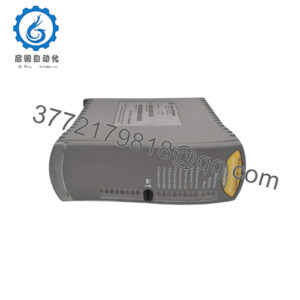
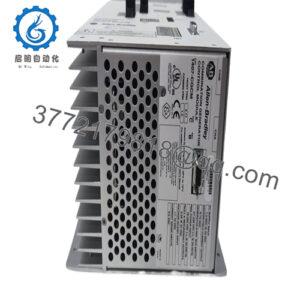
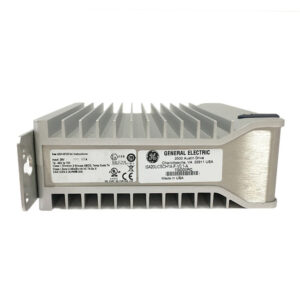
The MTL4549C is an Eaton/MTL two-channel intrinsic-safety isolating driver for 4–20 mA HART valve positioners, I/P converters, and similar hazardous-area loads. It accepts floating 4–20 mA control signals from a safe-area DCS or PLC and drives up to two field devices, with galvanic isolation between the control system and field circuits.
For HART positioners, it passes bidirectional digital communication, allowing configuration and diagnostics from an operator station or handheld communicator. The MTL4549C adds open-circuit line fault detection; controllers with readback can identify a broken field loop when input current falls below 0.9 mA.
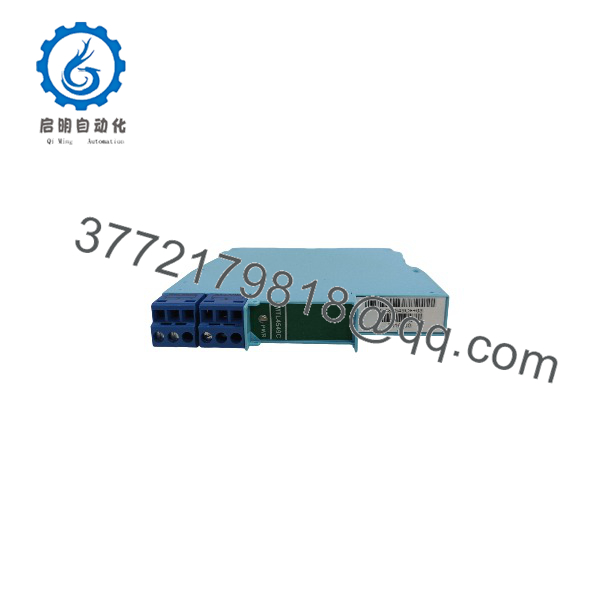
MTL4549C
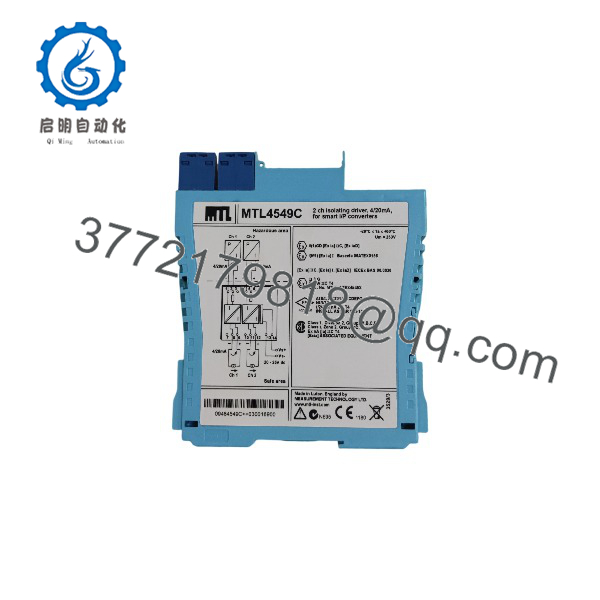
MTL4549C
Troubleshooting Quick Reference
| Symptom | Possible Cause | Relevance to this Part | Quick Check Method | Recommendation |
|---|---|---|---|---|
| No output to positioner | Loss of 24 V DC supply, blown fuse, or incorrect wiring | ✅ High | Measure 20–35 V DC at the module supply terminals; inspect DIN-rail seating and fuses | Restore supply or correct wiring before replacing the MTL4549C |
| One channel reads 0 mA | Open field loop or failed I/P converter | ✅ High | Disconnect field wiring and measure loop resistance; check for open circuit at terminals | Repair field wiring or replace the positioner/I-P converter |
| Controller reports open circuit | Field wiring break, loose terminal, or failed positioner coil | ✅ High | With the loop connected, measure input current; MTL4549C open-circuit indication is below 0.9 mA | Check field cable continuity and terminal tightness |
| Valve does not stroke correctly | Wrong controller scaling, positioner calibration, or mechanical issue | ❌ Low | Command 4, 12, and 20 mA from the DCS and measure actual loop current | Calibrate the positioner; do not replace the isolator first |
| HART communicator cannot reach device | Insufficient loop resistance, wiring issue, or HART configuration problem | ✅ Medium | Verify total loop resistance is within the 90–800 Ω range; check HART connection | Correct loop resistance and check HART device configuration |
| Output unstable or inaccurate | Ground loop, poor shielding, or excessive load | ✅ Medium | Measure loop current with a calibrated mA meter; verify load is ≤ 800 Ω | Correct shielding/grounding or reduce loop load |
| Module LED off | No module power | ✅ High | Confirm green power LED and measure supply voltage | Check power distribution and DIN-rail connection |
❗ Do not assume the MTL4549C has failed because a loop reads low current. The C version intentionally pulls current below 0.9 mA on an open circuit, so a wiring break can look like a dead channel. Check the field loop first.
If the issue remains after checking supply voltage, loop resistance, HART configuration, and field wiring, contact technical support with photos of the module, wiring, and controller diagnostic data.
Frequently Asked Questions
Can I use the MTL4549C to drive two valve positioners?
Yes. It has two independent channels and is intended to drive two 4–20 mA current-to-pressure converters or other hazardous-area loads up to 800 Ω per channel.
Does the MTL4549C detect both open circuits and short circuits?
No. The standard MTL4549 detects both open circuits and short circuits, but the MTL4549C detects open circuits only. If your safety or operations philosophy requires short-circuit detection, use the standard MTL4549 instead.
Can I use it with HART valve positioners?
Yes. The module supports bidirectional HART communication over the 4–20 mA loop, so you can configure or interrogate the positioner from the control system or a handheld HART communicator.
Can I hot-swap the MTL4549C?
To be honest, this is not a module to pull live without a plan. Although the MTL4500 housing is designed for DIN-rail installation, isolate the relevant loop and follow your plant’s live-work procedure. Removing it under power can disrupt the field loop and may create an unsafe valve movement depending on the positioner’s fail-safe action.
What load can each channel drive?
Each channel can drive up to 800 Ω at 20 mA, equivalent to 16 V across the load. Keep the minimum load at 90 Ω.
Is the MTL4549C suitable for SIL-rated safety functions?
Yes. It has been assessed for IEC 61508 applications and is SIL 2 capable as a single device with HFT = 0. SIL 3 capability requires a redundant configuration with HFT = 1. Confirm the final SIL calculation against your actual safety requirements and proof-test interval.
Why is New Surplus less expensive than factory-new stock?
New Surplus units are genuine Eaton/MTL modules manufactured earlier but not installed or commissioned. We inspect, document, and functionally verify each unit before shipment. It is not used, repaired, or refurbished stock unless explicitly stated on the product page.