WhatsApp: +86 16626708626
 Email:
  Phone: +86 16626708626
Description
3. Key Technical Specifications
| Parameter | Value |
|---|---|
| Input Power | 3-phase AC 200–230 V +10 % / –15 %, 50/60 Hz |
| Continuous Output Current | 4.5 Arms |
| Maximum Output Current | 16 Arms |
| Control Method | Transistor PWM |
| Power Capacity (approx.) | 1.5 kVA (rated); up to 3× under peak torque |
| Compatible Actuators | AR30 series (and selected ARH / RT models) |
| Encoder Support | Absolute (8192 p/rev typical) |
| Positioning Functions | Equal/arbitrary division (max 255 addresses), pulse-train, speed command, JOG, skip, step |
| Control Power | DC 24 V ±10 % (approx. 0.4 A) |
| Regenerative Capacity | Internal; external resistor option |
| Protections | Overload, overspeed, overvoltage, motor overheat, battery alarm, signal-line break |
| Operating Environment | Industrial; follow OEM limits for temperature/humidity |
| Weight | Approx. 2.4 kg |
| Mounting | Vertical panel mount (2 mounting holes for ARN15/30 size) |
Exact revision (F, A, FB, etc.) and software version must be verified against the actuator and system requirements. Official sales of the AR15/AR30 family ended; remaining units are surplus stock.
4. Product Introduction
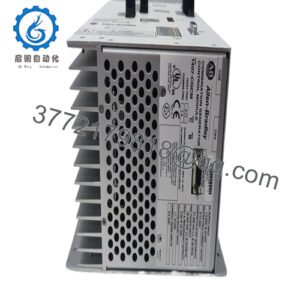
The Nabtesco ARN30 is a compact AC servo amplifier from the VIGOSERVO AR series, designed to drive the AR30 precision servo actuator. It integrates the servo driver and controller functions, accepting 3-phase 200–230 V power and delivering PWM control for high-accuracy positioning, indexing, and continuous motion.
Plant engineers keep the ARN30 in service for existing AR-series installations where the matched actuator and amplifier pair must be preserved. The unit supports absolute encoder feedback, multiple operating modes (address-based positioning, pulse-train, speed, JOG), and standard industrial I/O for PLC or NC interfacing. Because the series is discontinued, verified surplus units remain the practical path for maintenance without full system redesign.
5. Installation & Configuration Guide
Stage 1: Pre-Installation Preparation (15–20 min)
⚠️ Safety First: Isolate main and control power. Lock-out/tag-out the 200–230 V supply and 24 V control circuit. Wait for the charge lamp to extinguish and capacitors to discharge (minimum 5–10 min). Confirm the machine is in a safe mechanical state.
Tools Required: ESD wrist strap, appropriate screwdrivers, multimeter, torque wrench for mounting bolts, wire labels, smartphone for photos of existing wiring and parameter settings.
Data Backup: Photograph all terminal connections (TB1/TB2/TB3 if present), DIP/switch settings, and parameter values if accessible via the front panel or software. Record encoder type and any regenerative resistor configuration.
Stage 2: Removing the Old Amplifier (10 min)
- Disconnect motor power (U/V/W), encoder, brake, and control I/O cables. Label every conductor.
- Remove mounting screws and withdraw the unit carefully.
- Inspect the panel for debris, damaged wiring, or bent connector pins.
⚠️ Retain the old unit until the replacement is fully commissioned and the axis moves correctly under load.
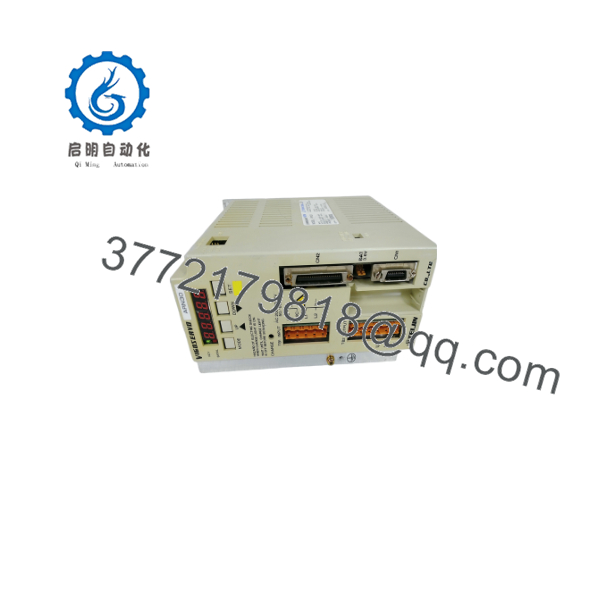
ARN30
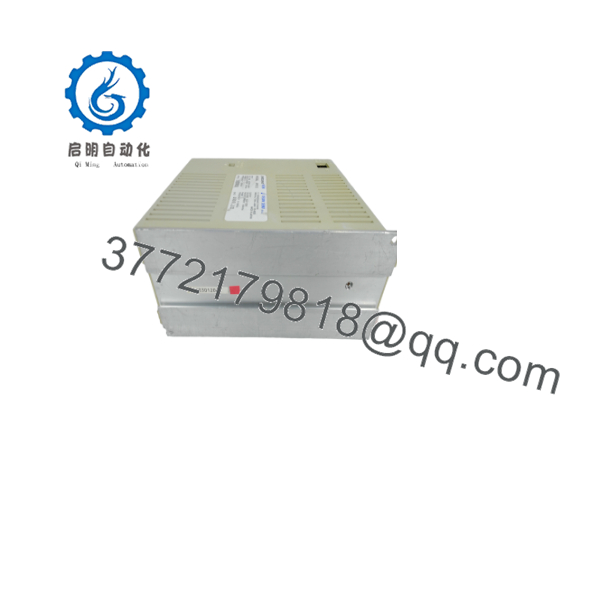
ARN30
Stage 3: Installing the New Amplifier (15–20 min)
- Verify the exact model suffix (F, A, FB, etc.) matches the required configuration and actuator.
- Mount the amplifier vertically using the two mounting holes; ensure adequate clearance for cooling.
- Configuration Clone (critical): Set any switches or jumpers to match the photographed original. Confirm regenerative resistor shorting links (RGEN–DCC) if no external resistor is used.
- Reconnect power, motor, encoder, brake, and I/O wiring using the correct torque and shielding practices.
Self-Checklist: [ ] Model matches [ ] Regenerative links correct [ ] Wiring secure and labeled [ ] Grounds intact.
Stage 4: Power-On & Testing (15–25 min)
Pre-Power Check: Verify no short circuits on the 200–230 V and 24 V rails with a multimeter.
- Apply control power first, then main power. Observe the front-panel display (initialization messages such as “HELLO” or model ID are normal).
- Confirm READY status and absence of alarms (AL codes). Common early faults include encoder mismatch (AL-11/AL-14) or regenerative issues (AL-4).
- Enable servo (SVON) in a safe mode and perform a low-speed JOG or limited positioning move.
- Verify encoder feedback, brake release timing, and positioning completion signals.
⚠️ Troubleshooting: Encoder alarms usually indicate incorrect cable or absolute-battery state. Overvoltage on deceleration points to missing regenerative path. If the charge lamp stays on or alarms persist, power down immediately and re-check wiring.
6. Frequently Asked Questions (FAQ)
Q: Can the ARN30 be hot-swapped under power?
A: No. Main and control power must be removed and the charge lamp extinguished before any connector is touched. Capacitor residual voltage presents a shock hazard and can damage the new unit.
Q: Is the ARN30 still in production, and is stock genuinely new?
A: Nabtesco discontinued the AR15/AR30 actuator and corresponding ARN amplifiers (final orders roughly 2020, deliveries through 2021). Available units are new original or carefully tested surplus. Serial numbers and condition are verified on intake.
Q: What is the direct replacement if the ARN30 is unavailable?
A: There is no drop-in modern equivalent from Nabtesco for the exact AR30 mechanical package. System redesign to a current servo platform (or a compatible later AR-series amplifier if mechanical fit allows) is normally required. Confirm actuator frame and reduction ratio before considering any alternative.
Q: Will I lose absolute position data when I replace the amplifier?
A: Absolute encoder data resides in the actuator/encoder and its battery. Provided the battery remains connected and the new amplifier is configured for the same encoder type, position is retained. Always photograph battery connections and perform the required initialization sequence if the manual specifies it for the specific actuator.
Q: Why is the price lower than historical OEM list prices?
A: This is discontinued surplus inventory. Pricing reflects secondary-market availability of tested original units rather than current production cost.
Q: What testing is performed before shipment?
A: Visual and mechanical inspection, power-on self-test, communication/handshake checks where possible, and verification of key protective functions. Test reports and photos are available on request. Full closed-loop performance testing with a matched AR30 actuator is performed when a compatible unit is available in the test rack.