WhatsApp: +86 16626708626
 Email:
 Phone: +86 16626708626
Description
Core Product Summary (Brand / Model / Key Attributes)
The National Instruments SCXI-1125 is an 8-channel isolated analog input and signal conditioning module designed for use within the SCXI data acquisition architecture. It provides independent isolation amplifiers for each of its eight channels, enabling safe and accurate measurement of low-level and high-voltage signals in complex industrial and laboratory environments. The module performs signal amplification, isolation, and multiplexing, routing multiple conditioned signals into a single analog input channel of a controlling data acquisition device to expand system channel capacity.
Engineered for versatility, the SCXI-1125 features 12 programmable gain settings and software-configurable lowpass filtering options of 4 Hz or 10 kHz per channel. It supports input ranges from \pm 2.5 mV up to \pm 5 V natively, with expanded voltage and current measurement capabilities achievable via compatible terminal blocks such as the SCXI-1313 or TBX-1316. Offering 300 Vrms of working isolation per channel with channel-to-channel and channel-to-earth common-mode protection, the module delivers robust noise rejection and measurement integrity for thermocouples, millivolts, volts, and current loops.
Key Technical Specifications
| Specification | Value / Detail |
| Product Type | 8-Channel Isolated Analog Input / Signal Conditioning Module |
| Number of Input Channels | 8 channels |
| Input Signal Types | Thermocouples, millivolts, volts, current (0 to 20 mA, 4 to 20 mA with proper shunt configuration) |
| Input Voltage Ranges | Programmable per channel from \pm 2.5 mV to \pm 5 V (extendable up to \pm 300 VDC with SCXI-1313 or \pm 1000 VDC with TBX-1316) |
| Isolation Voltage | 300 Vrms working isolation per channel (double insulated, Category II) |
| Lowpass Filter Options | Programmable 4 Hz or 10 kHz per channel |
| Gain Settings | 12 programmable gain settings |
| Scanning Mode | Random scanning (channels selectable and scannable in any order) |
| System Architecture | SCXI chassis-compatible, multiplexed output to a single DAQ device channel |
| Software Support | NI-DAQ driver software |
Detailed Product Overview
The National Instruments SCXI-1125 functions as a high-performance frontend signal conditioner within modular measurement systems. In industrial test, measurement, and monitoring applications, raw sensor signals are frequently exposed to high common-mode voltages, ground loops, and electrical noise. The SCXI-1125 addresses these challenges by providing channel-by-channel isolation, ensuring that high-voltage transients or fault conditions on one channel do not propagate to the measurement hardware or adjacent channels.
The module incorporates individual isolation amplifiers for each of the eight input channels. This design allows engineers to mix different measurement types—such as thermocouples and high-level voltage inputs—across the same module while maintaining precise gain and filtering control tailored to each specific signal source. The inclusion of selectable 4 Hz or 10 kHz lowpass filtering gives users direct control over noise attenuation, making it well-suited for both slow-responding thermal measurements and faster dynamic signals.
Integration relies on connection to an appropriate SCXI chassis and a host data acquisition (DAQ) board. The module multiplexes the conditioned inputs into a single backend channel, drastically multiplying the effective channel density of the host DAQ card. Configuration and signal scaling are handled programmatically through NI-DAQ driver software, streamlining system setup and automated test execution.
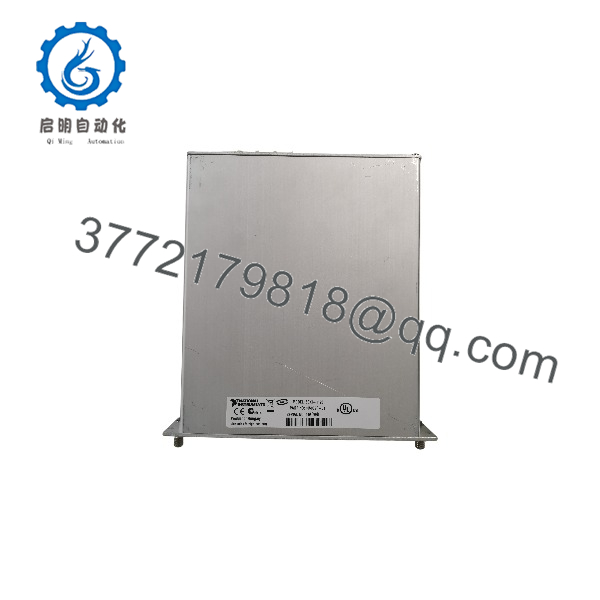
SCXI-1125
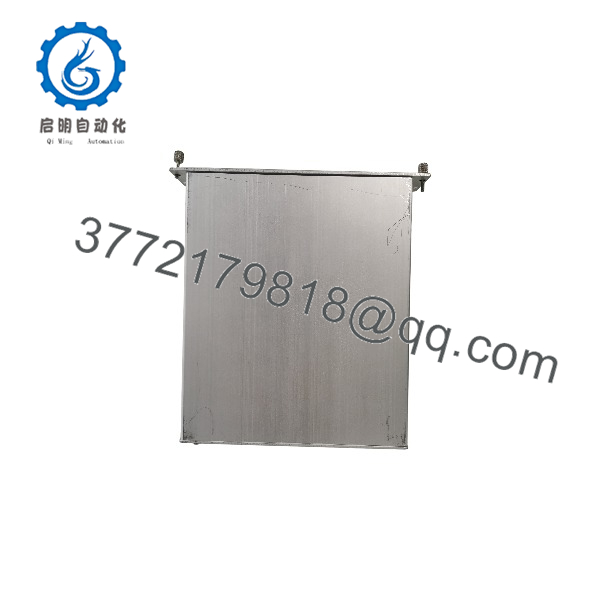
SCXI-1125
Engineering Selection Highlights
- High Common-Mode Isolation: Delivers 300 Vrms working isolation per channel, protecting measurement equipment against high differential voltages and ground potential shifts.
- Flexible Channel Configuration: Features 12 programmable gain settings and independent filter selection (4 Hz or 10 kHz) for each of the 8 channels, accommodating diverse sensor dynamics.
- Extended Input Range Compatibility: Supports native low-level inputs down to \pm 2.5 mV, with range expansion up to \pm 300 VDC or \pm 1000 VDC when paired with specialized high-voltage terminal blocks like the SCXI-1313 or TBX-1316.
- Random Scanning Capability: Allows users to configure and acquire data from selected channels in any arbitrary order rather than sequential-only scanning.
- Software-Driven Scaling: Fully integrates with NI-DAQ driver environments for simplified calibration, channel configuration, and automated data scaling.
System Compatibility & Integration Requirements
| Item / Dependency | Verified Compatibility or Requirement | Practical Note |
| Chassis Architecture | SCXI Chassis | Must be installed in a compatible National Instruments SCXI enclosure housing a supporting DAQ module. |
| Host Controller / DAQ | National Instruments DAQ device with SCXI compatibility | Multiplexes the 8 conditioned channels into a single analog input on the host card. |
| Terminal Blocks | Compatible SCXI terminal blocks (e.g., SCXI-1313, TBX-1316) | Required for field wiring termination; specific terminal blocks expand voltage measurement ranges up to high-voltage thresholds. |
| Software Environment | NI-DAQ driver software | Required for device configuration, self-calibration execution, and data acquisition programming. |
Dimensions, Mounting & Connection Notes
- Form Factor: Standard SCXI module designed for front-loading insertion into an SCXI chassis backplane.
- Wiring Termination: Front-mounting terminal block attachment (such as screw-terminal or high-voltage attenuation blocks) providing secure physical connection for field sensors.
- Grounding & Isolation: Designed with double insulation meeting Category II standards for 300 Vrms operational isolation; proper chassis grounding must be maintained to preserve common-mode rejection and safety ratings.
- Warm-Up Period: A 15-minute warm-up period is recommended prior to executing precision measurements or module self-calibration.
FAQ
What is the NI SCXI-1125?
The NI SCXI-1125 is an 8-channel isolated analog input and signal conditioning module engineered to amplify, filter, and isolate low-level and high-voltage signals before they reach a data acquisition device.
Which system and architecture does it belong to?
It belongs to the National Instruments SCXI (Signal Conditioning Extensions for Instrumentation) modular platform.
What are its core technical specifications?
It features 8 independent channels, 300 Vrms working isolation per channel, programmable input ranges from \pm 2.5 mV to \pm 5 V (expandable), and selectable 4 Hz or 10 kHz lowpass filtering.
Can the module measure high voltages or current signals?
Yes. While its native range covers up to \pm 5 V, its measurement range can be extended up to \pm 300 VDC or \pm 1000 VDC using compatible high-voltage attenuator terminal blocks like the SCXI-1313 or TBX-1316, and it supports current inputs through proper shunt resistor configurations.
What software is required to operate the SCXI-1125?
It requires NI-DAQ driver software to manage channel configuration, scanning sequences, signal scaling, and self-calibration routines.
Verification & Troubleshooting Notes
- Self-Calibration: The module supports software-initiated self-calibration via the SCXI calibration VI to minimize gain and offset errors; ensure the recommended 15-minute thermal warm-up has elapsed prior to running calibration.
- Signal Discrepancies: If unexpected readings occur, verify that the channel gain and lowpass filter settings configured in software match the physical sensor type and expected signal dynamics.
- Isolation Integrity: Ensure that external wiring does not exceed the certified Category II working isolation limits (300 Vrms) unless used with designated high-voltage attenuator terminal blocks.