WhatsApp: +86 16626708626
 Email:
 Phone: +86 16626708626
Description
Key Technical Specifications
| Parameter | Value |
|---|---|
| Manufacturer part number | 781510-01 |
| Module model | NI-9214 |
| Compatible systems | NI CompactDAQ and CompactRIO |
| Thermocouple channels | 16 differential thermocouple inputs |
| Internal channels | 1 autozero channel; 3 cold-junction compensation channels in TB-9214 |
| Thermocouple types | J, K, T, E, N, B, R, and S |
| ADC | 24-bit delta-sigma |
| Voltage range | -78.125 mV to +78.125 mV |
| Aggregate sample rate | 68 S/s |
| High-resolution mode | 52 ms conversion time; 0.96 S/s per channel |
| High-speed mode | 735 µs conversion time; 68 S/s aggregate |
| Input impedance | 20 MΩ differential |
| Open-thermocouple detection | Per-channel OTD circuit |
| Isolation | Channel-to-channel and channel-to-earth-ground isolation |
| Safety voltage | ±30 V maximum between any two terminals |
| Operating temperature | -40 to +70°C |
| Storage temperature | -40 to +85°C |
| Ingress protection | IP40 |
| Included terminal block | TB-9214 screw-terminal plug |
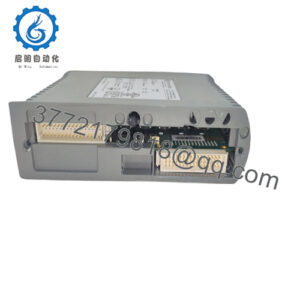
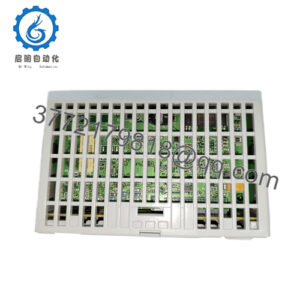
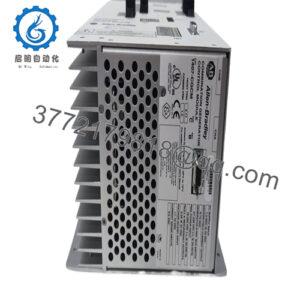
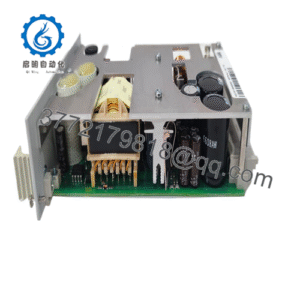
The NI-9214 is a 16-channel, 24-bit, ±78.125 mV isothermal thermocouple input module for CompactDAQ and CompactRIO systems. It includes an internal autozero channel, cold-junction compensation sensors in the TB-9214 terminal block, and open-thermocouple detection on each channel.
Product Introduction
The National Instruments NI-9214 is a high-density C Series temperature input module for systems that need many thermocouple channels in limited chassis space. It measures J, K, T, E, N, B, R, and S thermocouples and returns calibrated temperature or raw-voltage data through NI software.
Its measurement architecture uses a 24-bit delta-sigma ADC, differential filtering, autozero compensation, and terminal-block cold-junction sensors to reduce offset and thermal-gradient errors. The NI-9214 is a strong fit for furnace, test-cell, environmental-chamber, and process-monitoring applications where channel density matters more than high-speed acquisition.
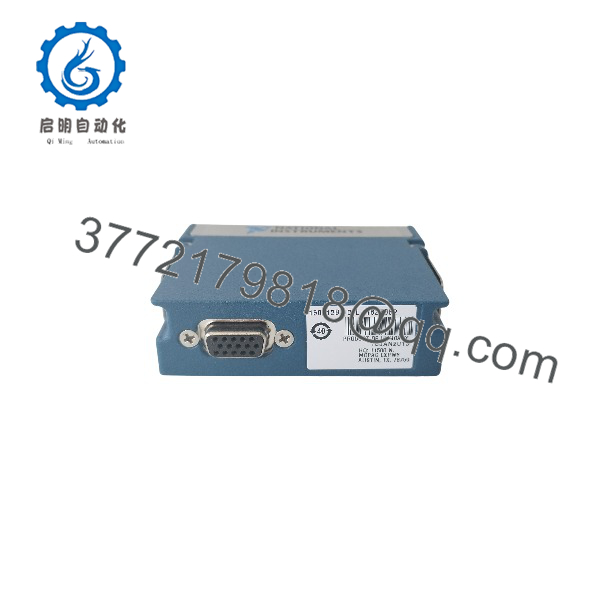
9214
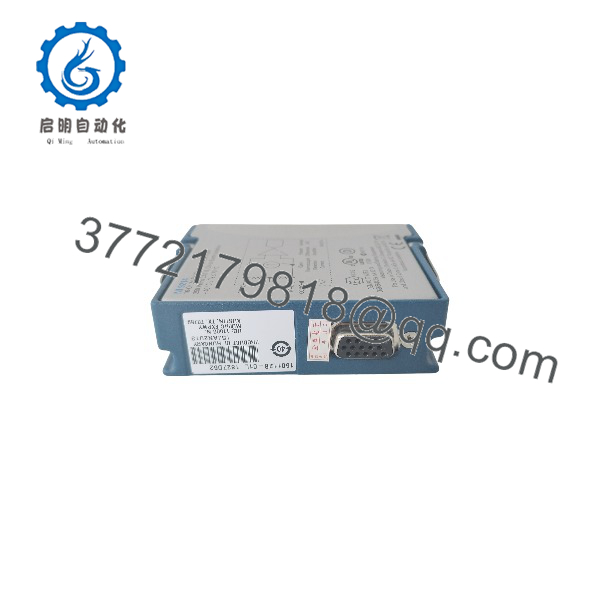
9214
Troubleshooting Quick Reference
| Symptom | Possible Cause | Relevance to this Part | Quick Check Method | Recommendation |
|---|---|---|---|---|
| Open thermocouple error | Broken TC wire, loose screw terminal, or damaged extension cable | ✅ High | Disconnect the TC, measure continuity, and reseat the TB-9214 screw terminals | Repair the thermocouple or wiring; the NI-9214 OTD circuit is reporting correctly |
| Reading near ambient on all channels | Incorrect thermocouple type selected, CJC issue, or software configuration error | ✅ High | Confirm the selected TC type in NI MAX/LabVIEW and compare with the physical sensor | Correct the thermocouple type and measurement units in software |
| Noisy or unstable readings | Ground loops, EMI, long unshielded TC cable, or high common-mode voltage | ✅ Medium | Use shielded TC cable, route away from VFD/power cables, and verify common-mode voltage | Improve shielding and grounding before replacing the module |
| One channel reads incorrectly | Reversed TC polarity, wrong TC type, damaged sensor, or contaminated terminal | ✅ High | Swap two known-good thermocouples between channels and compare readings | Isolate the sensor, wiring, or channel before replacing the module |
| No module detected | Chassis power, module seating, unsupported chassis, or driver issue | ❌ Low | Reseat the module, verify chassis power, and check NI MAX device detection | Check chassis and NI software before replacing the module |
| Inaccurate readings across many channels | Thermal gradient across the terminal block, poor CJC contact, or airflow issue | ✅ Medium | Allow thermal stabilization, inspect TB-9214 seating, and avoid localized airflow on terminals | Let the module stabilize and keep terminal-block temperature uniform |
| Module damaged after voltage event | Exceeded ±30 V terminal-to-terminal limit or incorrect wiring | ✅ High | Inspect terminals and PCB; verify input wiring against the NI-9214 manual | Replace the module; correct the wiring fault before reinstallation |
If the issue persists, send photos of the module and TB-9214, thermocouple type, wiring diagram, NI MAX configuration, and raw readings before ordering a replacement.
Frequently Asked Questions
Can I hot-swap the NI-9214?
Yes. NI C Series modules are designed for hot-swappable operation in supported CompactDAQ and CompactRIO chassis. Even so, use ESD precautions and avoid disconnecting thermocouple wiring while the system is actively logging critical data.
Is the NI-9214 obsolete?
No. The NI-9214 remains an active NI/Emerson product and is available new from NI. Surplus and refurbished units may also be available, but New Original stock is the preferred option for new installations.
What is the difference between the NI-9213 and NI-9214?
The NI-9213 provides 16 thermocouple channels at a faster aggregate rate, while the NI-9214 emphasizes higher accuracy through its isothermal TB-9214 terminal block, autozero channel, and thermal-gradient-reducing layout. Choose based on whether speed or measurement accuracy is the priority.
Can the NI-9214 measure RTDs?
No. The NI-9214 is a thermocouple input module. It supports J, K, T, E, N, B, R, and S thermocouples; use an NI RTD module for RTD sensors.
How fast can the NI-9214 sample?
It provides up to 68 S/s aggregate in high-speed mode, or 0.96 S/s per channel in high-resolution mode. It is intended for temperature monitoring, not high-speed dynamic signal acquisition.
Why does my reading change when I touch the terminal block?
That is usually normal thermocouple behavior. Your hand changes the temperature at the terminal block, which affects cold-junction compensation. Allow the module to stabilize and avoid localized heating or cooling near the TB-9214.
What should I check before ordering?
Confirm the required thermocouple types, channel count, sampling rate, CompactDAQ/CompactRIO chassis compatibility, and whether the TB-9214 terminal block is included. The NI-9214 is supplied with the TB-9214 screw-terminal plug.