WhatsApp: +86 16626708626
 Email:
 Phone: +86 16626708626
Description
Key Technical Specifications
| Parameter | Value |
|---|---|
| Analog Input Channels | 32 single-ended / 16 differential |
| AI Resolution | 16-bit |
| Max AI Sample Rate | 250 kS/s (single-channel, aggregate per DAQmx limits) |
| AI Input Range | ±0.2 V to ±10 V, programmable per channel |
| AI Accuracy | 16-bit with calibrated absolute accuracy per NI spec table |
| Analog Output Channels | 4 |
| AO Resolution | 16-bit |
| Max AO Update Rate | 833 kS/s |
| AO Output Range | ±10 V |
| Digital I/O | 48 total: 32 static (P0.<0..31>), 16 PFI (P1/P2) |
| Correlated DIO | 32 lines (P0), up to 1 MHz |
| Counter/Timers | 2 × 32-bit, 80 MHz timebase |
| Triggering | Analog and digital triggering; PFI lines configurable |
| Bus Interface | PCI (32-bit, 33 MHz), RTSI bus for multi-device sync |
| Driver Software | NI-DAQmx (Windows XP through current releases) |
| Connector | 68-pin VHDCI (use SHC68-68-EPM or legacy SH68-68-D1 cable) |
| Warm-Up Time | 15 minutes to full accuracy |
| Operating Temperature | 0 to +55 °C (indoor use only) |
| Calibration | External calibration interval 24 months (verify against spec sheet) |
Verify the exact assembly revision and calibration status against the label on the board before ordering. M Series boards share model families; the 6229 (no suffix) is the low-cost variant — don’t confuse it with the 6229-37 or bus-powered variants if your application needs the full 250 kS/s.
Product Introduction
The NI PCI-6229 is a 16-bit multifunction DAQ board for standard PCI slots. It packs 32 single-ended analog inputs at 250 kS/s, 4 analog outputs at 833 kS/s, 48 digital lines, and two 32-bit counter/timers onto one full-length card. Typical uses: laboratory automation, design verification, manufacturing test, and research data logging on desktop or industrial PCs.
The 6229 earns its slot with density. One card covers AI, AO, DIO, and counting without a separate counter board, and NI-DAQmx exposes the full API to LabVIEW, C/C++, and .NET. For teams already standardized on the M Series, it’s a known quantity — the pinout, driver model, and cable ecosystem (SCC and SCXI conditioning via the 68-pin connector) carry across the whole family. Limitations to respect: no simultaneous-sampled AI (multiplexed), and the 250 kS/s is aggregate, not per-channel.
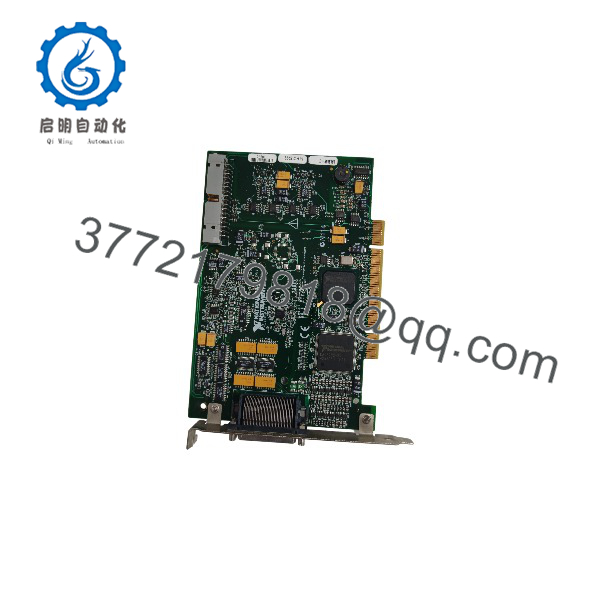
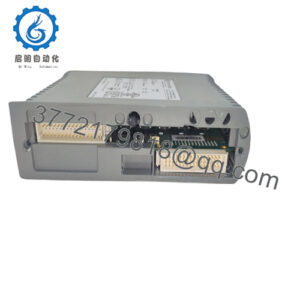
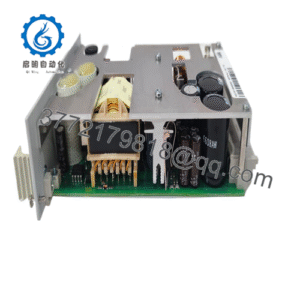
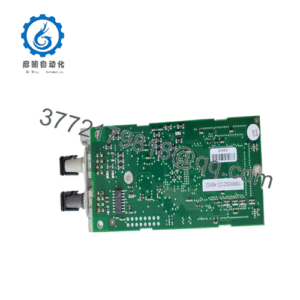
PCI-6229
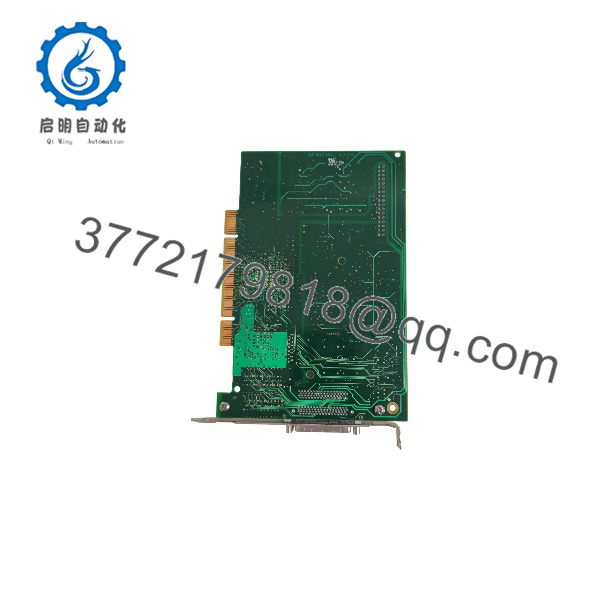
PCI-6229
Installation & Configuration Guide
Stage 1: Pre-Installation Preparation (Est. 10 minutes)
⚠️ Safety First: Notify operations of test-system downtime. Confirm the PC is in a safe state, shut it down, lock out/tag out power, and wait 5 minutes for the power supply capacitors to discharge.
- Tools Required: ESD wrist strap, PH2 screwdriver, multimeter, cable labels, smartphone for photos.
- Data Backup: Export your NI-DAQmx task configuration (.nce files or MAX export). Photograph the 68-pin cable routing and any PFI jumpers. Document device name and DAQmx device number — your application code references these.
- Driver Check: NI-DAQmx 7.4 or later supports the 6229. Check the installed version in NI MAX before you swap anything. Driver mismatch is the #1 avoidable failure.
Stage 2: Removing the Old Card (Est. 5 minutes)
- Unscrew the PCI bracket retention screw.
- Disconnect the 68-pin VHDCI cable — the connector has spring-latch screws or a friction lock; release it fully before pulling. Never yank it at an angle; the pins bend easily.
- Release the card from the slot by pulling straight up. Do not pry it against adjacent boards.
- Inspect the PCI slot and the card edge for dust or bent pins.
⚠️ Keep the old card until the replacement has passed a full functional test. It’s your fallback and your wiring reference.
Stage 3: Installing the New Card (Est. 5 minutes)
- Ground yourself with the ESD strap before the card leaves its anti-static bag.
- Verify the model number and assembly revision on the board label match your order (190469x-0xL format).
- Align the card with the PCI slot and press evenly along the top edge until fully seated. Secure the bracket screw.
- Reconnect the 68-pin cable per your photos, and confirm the breakout panel or cable assembly (SCB-68, BNC-2090, etc.) is seated.
Self-Checklist: [ ] Model/revision matches, [ ] Card fully seated, [ ] Bracket screwed, [ ] 68-pin cable latched.
Stage 4: Power-On & Testing (Est. 10 minutes)
- Power on the PC. Windows should detect the board; NI-DAQmx binds the driver automatically.
- Open NI MAX — the 6229 appears under “NI-DAQmx Devices.” Verify the device name, and run MAX’s built-in Test Panels.
- Test AI with a known voltage (a battery or calibrator); test AO into a meter; toggle a DIO line. Watch for open-channel errors.
- Reload your DAQmx tasks from backup and dry-run your application at reduced rates before going live.
- If your application syncs multiple cards via RTSI, verify the RTSI cable and device routing in MAX before production runs.
⚠️ Troubleshooting Note: If the device shows an error code in MAX (e.g., “device not recognized” or resource conflicts), reseat the card and confirm the DAQmx version first — dead-on-arrival is rare; driver and seating issues are not. If AI readings drift or jump, check that your input configuration (differential vs single-ended, RSE) matches your wiring — most “noise” complaints on this board are actually a floating/unreferenced input mode mismatch. Allow the 15-minute warm-up before trusting absolute accuracy figures.
Frequently Asked Questions (FAQ)
Q1: Can I hot-swap this card under power?
No. PCI is not hot-swap capable. Pulling a live card risks the slot, the motherboard, and the board’s front end. Shut down, wait 5 minutes for capacitor discharge, then swap. I’ve seen a tech skip this once — the board survived, the motherboard didn’t.
Q2: Is the PCI-6229 obsolete, and is your stock genuinely new?
Yes, discontinued — NI moved DAQ to X Series (PCIe) and USB platforms years ago. Our stock is New Original / New Surplus: factory-sealed or uninstalled units with traceable sourcing. Every board is functionally tested before shipping, and we’ll send the test report and photos of the exact unit on request. We label New Surplus and Refurbished (tested) as separate grades — no blurring.
Q3: What’s the direct replacement if this is out of stock?
Two paths. The PXI-6229 is the same silicon in PXI form — but it needs a PXI chassis, not a PCI slot. The PCIe-6329 (X Series) is the functional successor with a PCIe interface, higher rates, and better accuracy, but requires a PCIe slot and its pinout differs — verify your cable and conditioning accessories. If your PC still has a working PCI slot and your code targets DAQmx, replacing with another PCI-6229 is usually the lowest-risk, lowest-cost option. Verify against NI’s current product documentation before committing to a migration.
Q4: Will I lose my DAQmx tasks or calibration data when I pull the old card?
Your tasks live on the PC hard drive, not the card — back up the MAX configuration export and you’re safe. Calibration constants are stored on the board itself. If the replacement board is out of cal (check the cal date on the label), your absolute accuracy won’t meet spec until it’s recalibrated. Relative measurements and basic function work fine regardless; don’t skip calibration for metrology or quality-audit applications.
Q5: Why is your price lower than the original OEM list price?
The board is discontinued, so surplus inventory trades below original list. We source excess stock from OEM-authorized channels and test in-house, rather than moving factory-fresh production. You get a verified board at a surplus price. Honest caveat: for this model, “new” means uninstalled surplus — genuinely factory-sealed units are increasingly rare, so condition is stated explicitly per listing.
Q6: What’s the difference between the PCI-6229 and the PXI-6229 / USB-6229?
Same measurement silicon, different packaging and bus. The PCI version goes in a desktop/industrial PC’s PCI slot. The PXI version goes in a PXI chassis with backplane triggering. The USB versions are standalone screw-terminal or BNC boxes. The NI 6229 specifications document covers all three — specs are identical for AI/AO/DIO, but bus throughput and triggering differ. Match the form factor to your existing hardware, not the other way around.
Q7: Does this need a signal conditioning accessory, or can I wire straight to the card?
The card’s 68-pin VHDCI connector is not field-wiring friendly — you need a breakout box (SCB-68, BNC-2090) or a cable assembly (SHC68-68-EPM plus a terminal block) to land wires. For thermocouples, strain gauges, or high-voltage signals, add SCC or SCXI conditioning modules. Direct-to-card wiring works fine for clean, low-voltage signals in a controlled environment. Always check the AI absolute accuracy table in the NI spec sheet for your specific voltage range before trusting measurements near a tolerance limit.