WhatsApp: +86 16626708626
 Email:
 Phone: +86 16626708626
Description
Core Product Summary
The NI PXIe-8133 is a PXI Express embedded controller from National Instruments that provides the PC, processor, and I/O functions needed to control a PXI or CompactPCI Express chassis from a single module. It is built around a quad-core Intel Core i7-820QM processor running at 1.73 GHz base frequency, with a maximum single-core Turbo mode frequency of 3.06 GHz, and serves as the system controller for modular instrumentation and data acquisition applications.
The controller is a four-wide 3U PXI Express module that occupies one system slot plus three controller expansion slots and is compatible with PXI Express Specification 1.0. It provides four x4 PCI Express links to the chassis backplane, dual-channel DDR3 memory (2 GB standard, 8 GB maximum), a 120 GB or larger internal SATA hard drive, two 10/100/1000 BaseTX Ethernet ports, four Hi-Speed USB 2.0 ports, an integrated GPIB (IEEE 488.2) controller, one RS-232 serial port, an ECP/EPP parallel port, and an ExpressCard/34 slot. It ships with Windows 7 Professional or Windows XP Professional SP3 for Embedded Systems and can alternatively be configured as a PXIe-8133 RT controller running LabVIEW Real-Time.
Key Technical Specifications
| Parameter | Value |
|---|---|
| Product type | PXI Express embedded controller (system controller) |
| Processor | Intel Core i7-820QM, quad-core |
| CPU frequency | 1.73 GHz base, 3.06 GHz in single-core Turbo mode |
| On-die L2 cache | 512 KB per core |
| Memory | Dual-channel DDR3 PC3-10600, 2 SO-DIMM slots; 2 GB standard, 8 GB maximum |
| Internal storage | 120 GB or larger 2.5 in. Serial ATA hard drive (up to 150 MB/s, supports Native Command Queuing) |
| Ethernet | 2 ports, 10/100/1000 BaseTX |
| PXI Express link configuration | 4-link: x4, x4, x4, x4; 2-link: x4, x4 |
| PXI Express trigger bus | Yes, with front-panel SMB trigger connector |
| GPIB | Integrated IEEE 488.2 controller |
| Serial / parallel ports | 1 RS-232; 1 ECP/EPP parallel port |
| USB | 4 Hi-Speed USB 2.0 ports |
| Expansion | ExpressCard/34 slot |
| Video | DVI-I connector driven by ATI Radeon E2400 embedded GPU (DVI-to-VGA adapter included) |
| Operating system | Windows 7 Professional or Windows XP Professional SP3 for Embedded Systems; LabVIEW RT configuration available |
| Board format | Four-wide 3U PXI Express module |
| Slot requirements | One system slot plus three controller expansion slots |
| Backplane compatibility | PXI Express Specification 1.0 |
| Weight | 1.30 kg (2.87 lb) typical |
| Operating temperature | 5 to 50 °C standard; 0 to 55 °C with extended-temperature option |
| Relative humidity | 10% to 90% noncondensing (5% to 95% with extended-temperature option) |
| Storage temperature | −40 to 65 °C standard; −40 to 71 °C with extended-temperature option |
| Maximum altitude | 2,000 m |
| Safety standards | IEC 61010-1, EN 61010-1, UL 61010-1, CSA 61010-1 |
| EMC standards | EN 61326-1, EN 55011 (CISPR 11, Group 1 Class A), AS/NZS CISPR 11, FCC 47 CFR Part 15B, ICES-001 |
Detailed Product Overview
The NI PXIe-8133 functions as a modular PC inside a PXI Express chassis. Instead of connecting an external desktop PC to the chassis through an interface module, the PXIe-8133 plugs directly into the system controller slot and exchanges data with peripheral modules over the chassis backplane through four x4 PCI Express links. This arrangement removes the external link cable from the data path, keeps the whole measurement chain inside one enclosure, and lets the controller behave as the root of the chassis PCI Express hierarchy.
The choice of a quad-core Intel Core i7-820QM has practical consequences for test software. The four physical cores let a multithreaded application environment such as LabVIEW, LabWindows/CVI, Measurement Studio, Visual C++, or Visual Studio .NET distribute independent tasks — acquisition loops, processing, logging, and user interface updates — across separate cores instead of time-slicing them on one. The 1.73 GHz base frequency rises to 3.06 GHz in single-core Turbo mode, which benefits single-threaded sections of a program such as analysis routines that cannot be parallelized. For memory-bound streaming applications, the dual-channel DDR3 architecture supports up to 8 GB across two SO-DIMM slots; using matched modules of the same size and speed in both slots is recommended to get full dual-channel bandwidth.
Integration effort concentrates on three areas. First, chassis planning: the controller is a four-wide module, so it consumes the system slot plus three adjacent controller expansion slots, and the chassis must provide that contiguous slot group. Second, operating environment: the controller’s 5 to 50 °C operating range (0 to 55 °C for the extended-temperature configuration) can be narrower than that of a chassis rated for higher temperatures, and the operating temperature limit must not be exceeded even inside such a chassis. Third, software: the standard configuration ships with Windows 7 Professional or Windows XP Professional SP3 for Embedded Systems preinstalled, while the RT configuration runs LabVIEW Real-Time for deterministic applications; configuration switches on the controller select LabVIEW RT boot and safe-mode behavior. Driver software such as NI-VISA, NI-DAQmx, and NI-488.2 is used to access modular hardware and instruments, and Linux support is limited to partial support for the NI-VISA driver and NI Modular Instruments.
The front panel concentrates the external interfaces engineers need at the bench: two Gigabit Ethernet ports for host communication and distributed systems, four USB 2.0 ports, one RS-232 port, an ECP/EPP parallel port, an integrated GPIB controller for controlling IEEE 488.2 instruments, a DVI-I video output, and an ExpressCard/34 slot for additional I/O or removable storage. An SMB trigger connector routes PXI Express trigger signals to or from any backplane trigger line, so timing signals can be shared with external equipment; the trigger lines must be allocated so that two resources never drive the same line, which would double-drive the trigger and can damage hardware. Because the module has no integrated optical drive, Windows or driver installations are performed from a USB CD/DVD-ROM drive or USB storage device.
The internal 2.5 in. SATA hard drive (120 GB or larger) supports transfer rates up to 150 MB/s and Native Command Queuing. The extended-temperature 24/7 configuration and controllers configured for LabVIEW RT use an 80 GB minimum hard drive instead. RAM is field-upgradeable by replacing the SO-DIMMs after removing the controller from the chassis, and NI notes that only DDR3 SO-DIMMs it has tested and verified are guaranteed to work correctly.
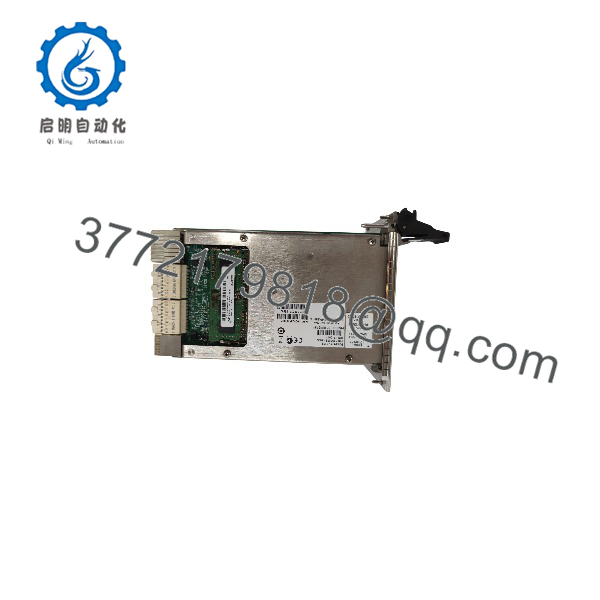
PXIe-8133
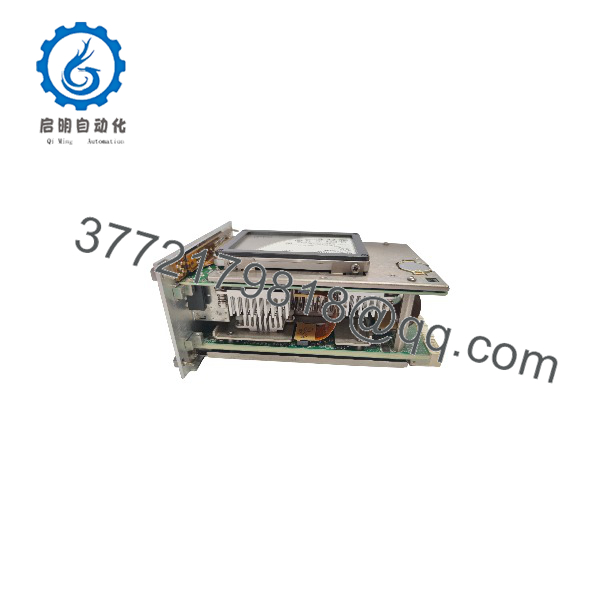
PXIe-8133
System Compatibility & Integration Requirements
| Item / Dependency | Verified Compatibility or Requirement | Practical Note |
|---|---|---|
| Platform | PXI Express / CompactPCI Express chassis | Installs in the system controller slot; consult the chassis manual for specific instructions and warnings |
| Specification conformance | PXI Express Specification 1.0 | Governs backplane compatibility of the module |
| Slot footprint | One system slot plus three controller expansion slots | Four-wide 3U module; the chassis must offer this contiguous slot group |
| Backplane links | PXI Express 4-link configuration x4, x4, x4, x4; 2-link configuration x4, x4 | Link width applies to supported chassis backplane connections |
| Memory | Two DDR3 SO-DIMM slots, PC3-10600, up to 8 GB | Matched size and speed modules in both slots optimize capacity and performance; use DDR3 SO-DIMMs verified for this controller |
| Operating system | Windows 7 Professional or Windows XP Professional SP3 for Embedded Systems; LabVIEW RT option | RT configuration boots via LabVIEW RT configuration switch; safe-mode switch used for reconfiguring TCP/IP and updating software |
| Driver software | NI-VISA, NI-DAQmx, NI-488.2 | NI-VISA provides a uniform API for USB, serial, GPIB, PXI, and PXI Express instruments; Linux support is partial (NI-VISA and NI Modular Instruments) |
| GPIB instruments | Integrated IEEE 488.2 controller | Controlled through NI-488.2 driver software |
| Trigger routing | Front-panel SMB connects to or from any PXI Express backplane trigger line | Trigger allocation must prevent two resources from driving the same trigger line |
| Video | DVI-I output, ATI Radeon E2400 embedded GPU | DVI-to-VGA adapter included for analog displays |
| Installation grounding | Chassis must be plugged in before installing the controller | The power cord grounds the chassis and protects the module during installation |
Dimensions, Mounting & Connection Notes
| Item | Value |
|---|---|
| Board dimensions | Four-wide 3U PXI Express module |
| Weight | 1.30 kg (2.87 lb) typical |
| Mounting | PXI Express chassis system controller slot, card guides top and bottom, injector/ejector rail |
| Power draw (at 25 °C ambient) | ‘+3.3 V: 3.1 A typical / 4.6 A max; +5 V: 2.2 A / 3.3 A; +12 V: 4.8 A / 7.2 A; −12 V: 0 A; +5 V Aux: 0.29 A / 0.43 A |
| Operating shock | 30 g peak, half-sine, 11 ms pulse (with solid-state hard drive) |
| Random vibration | Operating 5 to 500 Hz, 0.3 g rms; nonoperating 5 to 500 Hz, 2.4 g rms |
| Environment limits | Indoor use only; Pollution Degree 2; maximum altitude 2,000 m |
| Operating temperature | 5 to 50 °C standard; 0 to 55 °C extended-temperature option |
| Relative humidity | 10% to 90% noncondensing standard; 5% to 95% noncondensing extended-temperature option |
| Storage temperature | −40 to 65 °C standard; −40 to 71 °C extended-temperature option |
| Front-panel connectors | DVI-I video, dual stacked Gigabit Ethernet, 4 USB 2.0, RS-232 (COM1), IEEE 1284 type C parallel port, GPIB, SMB trigger, ExpressCard/34 slot |
| External mating parts | Serial mating connector AMP 745491-5; Ethernet mating connector AMP 554739-1; GPIB mating connector ITT Cannon MDSM-25SC-Z11-V51; parallel port adapter cable NI part 777169-01 |
Installation notes: remove the four protective screw caps before insertion, keep the injector/ejector handle in its downward position while inserting the controller, and do not raise the handle during insertion. The chassis must be plugged in before installation so the power cord grounds it. The parallel port uses an IEEE 1284 type C connector, so devices with type A connectors require an adapter cable. The module has no integrated CD/DVD drive; software is installed from a USB CD/DVD-ROM drive (Windows 7 and Windows XP are supported for USB installation), and the controller can also boot from USB floppy drives and other USB storage devices. The W1 jumper on the controller is reserved for factory testing and must remain in its default position.
FAQ
What is the NI PXIe-8133?
The NI PXIe-8133 is a PXI Express embedded controller — a modular PC in a four-wide 3U PXI Express form factor — that acts as the system controller for a PXI or CompactPCI Express chassis in modular instrumentation and data acquisition systems.
What processor does the PXIe-8133 use?
It uses an Intel Core i7-820QM quad-core processor with a 1.73 GHz base frequency and 3.06 GHz maximum single-core Turbo mode frequency.
How much memory and storage does it have?
It supports dual-channel DDR3 PC3-10600 memory with 2 GB standard and 8 GB maximum across two SO-DIMM slots, plus an internal 120 GB or larger 2.5 in. Serial ATA hard drive supporting transfer rates up to 150 MB/s.
Which slots does the PXIe-8133 occupy in a chassis?
It occupies one PXI Express system slot plus three controller expansion slots, because it is a four-wide 3U module conforming to PXI Express Specification 1.0.
Which interfaces does the controller provide?
Two 10/100/1000 BaseTX Ethernet ports, four Hi-Speed USB 2.0 ports, one RS-232 serial port, one ECP/EPP parallel port, an integrated GPIB (IEEE 488.2) controller, a DVI-I video output, an ExpressCard/34 slot, and a front-panel SMB trigger connector that routes signals to or from any PXI Express backplane trigger line.
Which operating systems can it run?
The standard configuration ships with Windows 7 Professional or Windows XP Professional SP3 for Embedded Systems; an RT configuration runs the LabVIEW Real-Time operating system for deterministic, embedded measurement and control applications.
What are the operating environment limits?
Standard models operate from 5 to 50 °C, extended-temperature models from 0 to 55 °C. The controller is rated for indoor use only, Pollution Degree 2, a maximum altitude of 2,000 m, and 10% to 90% relative humidity noncondensing (5% to 95% for the extended-temperature option). The operating temperature limit applies even inside a chassis with a higher temperature rating.
Which standards does it comply with?
It is designed to meet IEC 61010-1, EN 61010-1, UL 61010-1, and CSA 61010-1 for safety, and it meets EN 61326-1, EN 55011 (CISPR 11 Group 1 Class A), AS/NZS CISPR 11, FCC 47 CFR Part 15B, and ICES-001 for electromagnetic compatibility.