WhatsApp: +86 16626708626
 Email:
 Phone: +86 16626708626
Description
Core Product Summary
The NVIDIA T1000 is a professional graphics card built on the NVIDIA Turing GPU architecture. It is designed as a compact, low-profile, single-slot solution for workstation environments that require reliable multi-display output and professional application acceleration.
The card delivers 896 CUDA cores, 4 GB of GDDR6 memory (an 8 GB variant is also available), and up to 2.5 TFLOPS of single-precision performance while drawing a maximum of 50 W. It requires no external power connector and fits into small-form-factor workstations.
Key Technical Specifications
| Parameter | Value / Description |
|---|---|
| Manufacturer | NVIDIA |
| Product name | T1000 |
| Architecture | Turing (TU117) |
| CUDA Cores | 896 |
| GPU Memory | 4 GB GDDR6 (8 GB variant available) |
| Memory Interface | 128-bit |
| Memory Bandwidth | Up to 160 GB/s |
| Peak FP32 Performance | Up to 2.5 TFLOPS |
| System Interface | PCI Express 3.0 x16 |
| Max Power Consumption | 50 W |
| Form Factor | Low-profile, single-slot |
| Thermal Solution | Active fan |
| Display Connectors | 4 × mini-DisplayPort 1.4 |
| Max Simultaneous Displays | 4 × 5K (5120 × 2880 @ 60 Hz) or 2 × 8K (7680 × 4320 @ 60 Hz) |
Engineering Selection Highlights
- Low-profile single-slot design with 50 W power envelope allows installation in compact workstations without additional power cables.
- 896 CUDA cores and GDDR6 memory provide more than 50 % graphics performance improvement over the previous-generation P1000 in many professional workloads.
- Four mini-DisplayPort 1.4 outputs with latching connectors support multi-monitor configurations up to four 5K displays or two 8K displays.
- Full support for professional APIs including DirectX 12, OpenGL 4.6, Vulkan, CUDA, and OpenCL.
- Active cooling and bus-powered operation simplify deployment in dense or space-constrained systems.
- Compatible with NVIDIA professional software tools for multi-display management and workstation optimization.
System Compatibility & Integration Requirements
| Item / Dependency | Verified Compatibility or Requirement | Practical Note |
|---|---|---|
| Host interface | PCI Express 3.0 x16 | Backward compatible with PCIe 3.0 systems |
| Power | Bus-powered (50 W max) | No external 6-pin or 8-pin power connector required |
| Form factor | Low-profile single-slot | Fits SFF and standard chassis with low-profile bracket |
| Display outputs | 4 × mini-DisplayPort 1.4 | Adapters required for HDMI/DVI/VGA if needed |
| Operating system | Windows and Linux (professional driver support) | NVIDIA professional drivers recommended |
| Multi-display | Up to 4 simultaneous displays | NVIDIA Mosaic and RTX Desktop Manager supported |
T1000
T1000
Dimensions, Mounting & Connection Notes
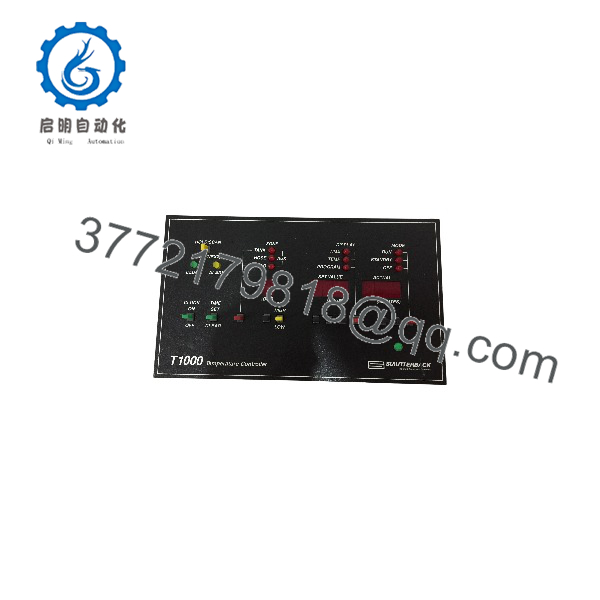
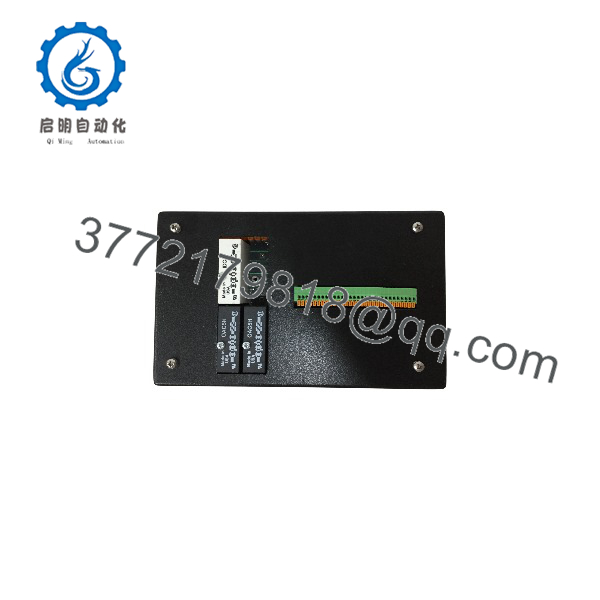
The NVIDIA T1000 measures approximately 2.713 inches (H) × 6.137 inches (L) and occupies a single low-profile slot. It uses an active fan heatsink. The card installs in any system that accepts a standard PCIe x16 card with low-profile clearance. Display connections are four latching mini-DisplayPort 1.4 ports. Exact bracket options (full-height or low-profile) and accessory kits are supplied according to the ordered SKU.
Detailed Product Overview
The NVIDIA T1000 is based on the Turing architecture and uses the TU117 GPU. It contains 896 CUDA cores, 56 texture units, and 32 ROPs. Memory is 4 GB GDDR6 on a 128-bit interface, delivering up to 160 GB/s of bandwidth. An 8 GB memory configuration is also offered under the same product family.
The card is engineered for professional environments. It operates within a 50 W power envelope, draws all power from the PCIe slot, and uses a single-slot low-profile form factor with active cooling. Four mini-DisplayPort 1.4 connectors with latching mechanisms allow reliable multi-monitor connections supporting resolutions up to 8K.
Software support includes the full NVIDIA professional driver stack, CUDA, OpenCL, DirectX 12, OpenGL 4.6, and Vulkan. Features such as NVIDIA RTX Desktop Manager and Mosaic technology assist with multi-display workspace management. The design targets CAD, DCC, financial, and general visualization users who need certified performance in a compact package.
Because exact memory configuration (4 GB or 8 GB), bracket type, and accessory options vary by SKU, the official NVIDIA datasheet for the ordered part number should be referenced for final system integration details.
Applications & System Role
The T1000 serves as an entry-to-mid-level professional graphics accelerator for visualization and multi-display workloads. It is commonly used in:
- CAD and design workstations requiring multi-monitor layouts
- Digital content creation and video editing systems with moderate GPU demands
- Financial services and trading environments with dense multi-display setups
- Small-form-factor and embedded workstations where power and space are constrained
- General professional visualization where certified drivers and long-term support are required
It provides a balance of performance, power efficiency, and display flexibility for applications that do not require high-end ray-tracing or large memory footprints.
FAQ
What is the NVIDIA T1000?
It is a professional graphics card based on the Turing architecture, designed for workstation multi-display and visualization applications in a low-profile single-slot form factor.
How much memory does the T1000 have?
The standard model has 4 GB GDDR6; an 8 GB GDDR6 variant is also available.
Does the T1000 require external power?
No. It is bus-powered with a maximum consumption of 50 W.
How many displays can it drive?
Up to four simultaneous displays, including four 5K displays at 60 Hz or two 8K displays at 60 Hz.
What is the form factor?
Low-profile, single-slot card measuring approximately 2.713 × 6.137 inches.
Is the T1000 suitable for CAD workstations?
Yes. It is positioned for professional CAD, design, and multi-monitor visualization workloads that benefit from certified drivers and compact power-efficient hardware.