WhatsApp: +86 16626708626
 Email:
 Phone: +86 16626708626
Description
Core Product Summary
The Yokogawa SR1030B62 is a direct drive (DD) servo actuator from the DYNASERV SR series, Yokogawa’s outer-rotor servo actuator family built for high torque, high speed and high precision in factory automation. It is a gearless rotary actuator: the load mounts directly to the rotating outer rotor, eliminating gear backlash and mechanical play from the drive train, which is the property that makes DYNASERV units the standard choice for precision indexing and industrial robotics.
Within the SR-series designation, SR1030 places the unit in the 30 N·m torque class of the family (SR1015 units are specified at 15 N·m and SR1100 units at 100 N·m maximum torque, defining the series numbering convention). The actuator operates from a 200–230 Vac, 50/60 Hz supply and is driven by a dedicated DYNASERV driver — the motor and driver must be used as a matched pair of the same model combination. The “B62” suffix defines the exact build specification of this unit and must be matched when ordering a replacement. Typical roles are rotary index tables, robot joints and other positioning axes where repeatability, stiffness and clean direct-drive motion matter more than raw speed.
Key Technical Specifications
| Parameter | Value |
|---|---|
| Product type | Direct drive (DD) servo actuator, outer-rotor type |
| Product family | Yokogawa DYNASERV SR series (DD servo actuators) |
| Model / designation | SR1030B62 |
| Torque class | 30 N·m class within the SR-series designation (SR-series numbering: SR1015 = 15 N·m, SR1100 = 100 N·m maximum torque) |
| Drive principle | Gearless direct drive — load attached directly to the outer rotor |
| Construction | Outer-rotor servo actuator with integrated rotor position sensing; motor surface is magnetized |
| Power supply | SR-series actuators operate from 200–230 Vac, 50/60 Hz (verify the rating on the unit nameplate before connection) |
| Driver requirement | Dedicated DYNASERV driver (DrvGII generation or the conventional SD/SR/TM type drivers); motor and driver must be a matched model combination |
| Encoder/feedback | Rotor position sensing integrated in the actuator (per the DYNASERV technical manual) |
| Environmental protection | Motor is neither dust-, drip- nor water (oil)-proof; install in a controlled environment |
| Grounding | Ground terminal must be connected to earth |
| Application scope | FA device fields: industrial robotics, indexing and precision rotary positioning |
Engineering Selection Highlights
- Matched motor–driver pairing is mandatory. The DYNASERV technical manual requires the motor and driver to be of the same model combination; using a mismatched pair can result in failure, so the model on both rating nameplates must be confirmed before commissioning or replacement.
- The suffix is the build specification. SR-series units exist in multiple suffix variants (B02, B62, B82 and others) plus driver option codes; the full model string, not the SR1030 base designation, is the correct ordering reference.
- Torque class follows the series numbering. SR-series model numbers carry the torque class in their designation (SR1015 at 15 N·m, SR1100 at 100 N·m maximum), placing the SR1030 in the 30 N·m class — size the axis against the torque class and verify the exact rating on the nameplate.
- Direct drive removes the gearbox from the maintenance equation — and from the error budget. With the load mounted directly on the rotor, there is no gear backlash or lost motion, but the axis stiffness, load inertia and mounting precision requirements all shift to the mechanical design of the load attachment.
- Supply verification before power-up is a safety instruction. The technical manual explicitly prohibits operating at power supply voltages other than the one indicated on the device; SR-series units are built for 200–230 Vac, 50/60 Hz supplies, so the site mains must be confirmed against the nameplate.
- Environmental limits are strict. The motor is not dust-, drip- or water/oil-proof, so the actuator belongs in a controlled cabinet or clean machine environment, and the magnetic motor surface requires magnetically sensitive items to be kept clear.
- Small-angle duty needs a running-in routine. If the axis oscillates at small angles (50° or less), the manual prescribes a run-in sweep of 90° or more approximately ten times per 10,000 small-angle oscillations to prevent bearing lubrication problems — relevant for wafer-handling and similar dithering axes.
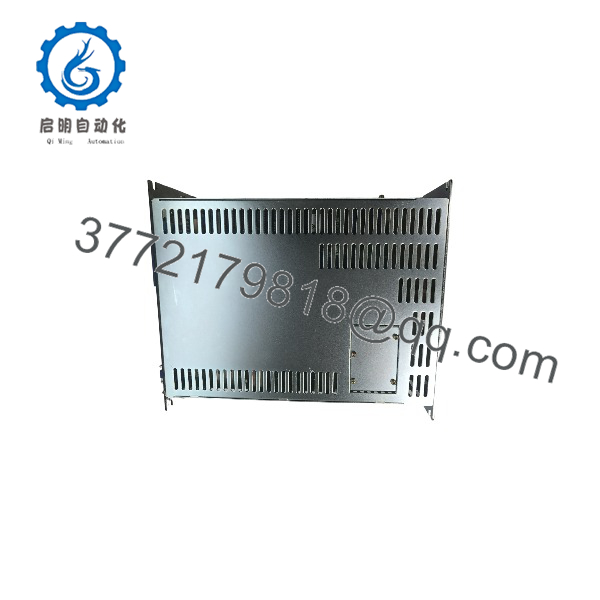
SR1030B62
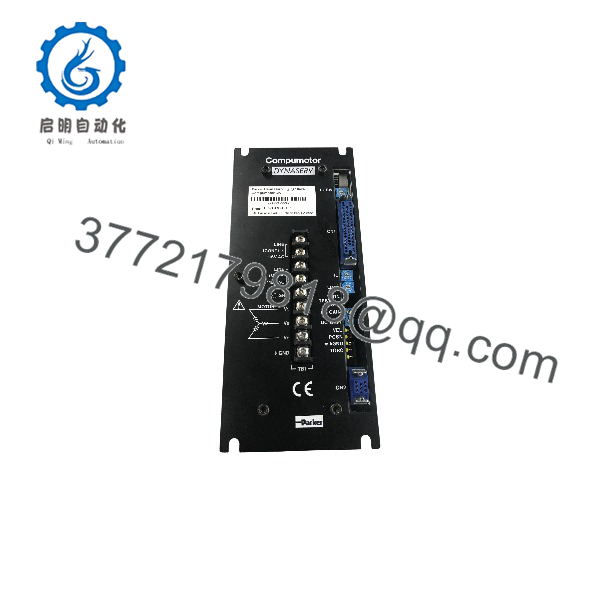
SR1030B62
System Compatibility & Integration Requirements
| Item / Dependency | Verified Compatibility or Requirement | Practical Note |
|---|---|---|
| Driver | DYNASERV drivers — DrvGII generation or conventional SD/SR/TM type drivers | Motor and driver must be the same model combination; confirm both rating nameplates |
| Model configuration | Exact model string including suffix (SR1030B62) must be matched | Suffix variants define the build specification; do not substitute by base designation alone |
| Power supply | 200–230 Vac, 50/60 Hz (SR-series rating) | Never operate at a voltage other than the one indicated on the device nameplate |
| Grounding | Ground terminal must be earthed | Electrical safety requirement stated in the DYNASERV technical manual |
| Load attachment | Load mounts directly to the rotor; keep a clearance of at least 1 mm between the load and the motor upper surface | Do not force objects into the shaft hole; use load attachment screws shorter than the effective thread depth |
| Installation orientation | Both motor and driver must be installed in the specified orientation | Do not install the motor reversed with the rotor fixed and the stator rotating |
| Environment | Controlled environment; motor is not dust-, drip- or water (oil)-proof | Choose the installation location accordingly; keep specified free space around the driver air vent |
| Handling | Motor surface is magnetized | Keep items affected by magnetism away from the actuator |
| Operation profile | Small-angle oscillation (< 50°) requires periodic 90°+ running-in sweeps | Follow the manual’s bearing lubrication procedure for dithering axes |
| Cables | Motor and index-part cables must not be forcibly bent, twisted, pulled, heated or placed under heavy objects | Cable damage is a documented failure cause in the manual’s precautions |
Detailed Product Overview
Direct drive is a design decision with consequences, and understanding the SR1030B62 starts with understanding what its users gave up and what they gained by removing the gearbox. A conventional servo axis trades motor speed for torque through a reduction stage, accepting backlash, elasticity and wear as the price. A DYNASERV DD actuator makes the opposite trade: the outer-rotor construction produces high torque directly at the output flange, so the position the control loop settles on is the position the load actually holds. For indexing tables and robot joints — axes whose entire purpose is arriving at a position and holding it — that property is the product.
The SR series is Yokogawa’s DD servo actuator line documented in the DYNASERV technical manual alongside the DM series motors, covering combinations with DrvGII drivers as well as the earlier conventional SD/SR/TM type drivers. Within the family, the model numbering carries the torque class: SR1015 units are specified at 15 N·m, SR1100 units at up to 100 N·m, and the SR1030 sits correspondingly in the 30 N·m class. The suffix string that follows — B62 in this case — defines the exact build specification of the individual unit, which is why a replacement order should carry the complete designation rather than the series name.
Integration discipline is unusually important with DD actuators, and the DYNASERV manual is explicit about the points that matter. First, the motor and driver must be a matched model combination; a mismatched pair is treated as a configuration error that can end in failure, and both rating nameplates must be confirmed. Second, the supply voltage must be exactly what the device nameplate indicates — the SR-series rating is a 200–230 Vac, 50/60 Hz supply, and the manual prohibits operating outside the indicated voltage. Third, the load attachment is part of the precision system: a clearance of at least 1 mm between the load and the motor’s upper surface preserves the surface precision, objects must never be forced into the shaft hole, and load screws must stay within the effective thread depth. Fourth, the actuator must not be installed with the rotor fixed and the stator rotating — the outer rotor is the output.
Two operating characteristics deserve planning attention. The motor surface is magnetized, so components sensitive to magnetic fields must be kept away from the actuator — a genuine layout constraint in machines with sensors, encoders or magnetic media nearby. And the motor is not dust-, drip- or oil-proof, so the environment must be selected accordingly; the bearing lubrication point is also covered by a specific procedure: axes that oscillate at small angles (50° or less) should periodically sweep through 90° or more, about ten times per 10,000 small-angle oscillations, to keep the bearings lubricated. For dithering axes this running-in routine is a real maintenance instruction, not a suggestion.
The cable set is another documented vulnerability: the cables exiting the motor and index section must not be bent, twisted, pulled, heated or crushed, which makes cable routing a review point during machine assembly and after any service work. The driver side adds its own rules — power off before opening covers or setting jumpers, the terminal protection cover kept in place, the air vent unblocked, and the specified free space maintained around the driver box.
For a buyer, the practical summary is this: the SR1030B62 is a precision axis component whose value depends on being installed exactly as its system documentation prescribes — matched driver, correct supply, controlled environment, precise load attachment — and the like-for-like replacement path is defined by the full model string on the nameplate.
Applications & System Role
The SR1030B62 sits at the joint or axis level of a precision motion system. Its engineering role is to convert electrical commands from its DYNASERV driver into high-torque rotary motion with no intermediate transmission: the load — an index table, a robot arm, a rotary stage — is bolted directly to the actuator’s outer rotor. This direct-drive architecture is what defines the product’s system value: all the positioning error sources that a gearbox contributes (backlash, lost motion, wind-up, wear) are absent, and the full torque of the motor acts on the load without gear reduction.
Yokogawa’s DYNASERV technical documentation positions the family in the FA device fields — factory automation equipment, industrial robotics and indexing — wherever an axis must stop and hold position accurately under load, repeatedly and without mechanical play. In a machine architecture, the SR-series actuator pairs with its dedicated DYNASERV driver, which closes the position loop using the actuator’s integrated rotor sensing and supplies the motor phases from a 200–230 Vac mains input. The actuator is the mechanical output element of that loop; the quality of the axis is decided by correct motor–driver matching, load attachment precision and the controlled environment the actuator is installed in.
Because the motor carries a magnetized surface and is not sealed against dust or liquids, its natural habitat is inside machine frames, clean processing equipment and robot structures rather than exposed plant areas. For procurement, the SR1030B62 is a like-for-like replacement item on existing DYNASERV-driven axes: the selection work is verifying the full model string and driver pairing, not re-specifying the axis.
FAQ
What is the Yokogawa SR1030B62?
It is a direct drive (DD) servo actuator from the Yokogawa DYNASERV SR series — an outer-rotor, gearless rotary servo actuator in the 30 N·m torque class, intended for high-precision factory automation axes.
What is direct drive, and why does it matter for this actuator?
The load attaches directly to the actuator’s rotating outer rotor with no gearbox, eliminating backlash and mechanical play — the property that makes DYNASERV units suitable for precision indexing and industrial robotics.
What torque class does SR1030 belong to?
In the SR-series numbering, the digits encode the torque class: SR1015 units are specified at 15 N·m and SR1100 units at 100 N·m maximum torque, which places SR1030 in the 30 N·m class; the exact rating should be confirmed on the unit nameplate.
Which driver does the SR1030B62 require?
A dedicated DYNASERV driver — DrvGII generation or the conventional SD/SR/TM type drivers — of the same model combination as the motor; the manual requires that the motor and driver models be matched and verified on both rating nameplates.
What supply voltage does it need?
SR-series DYNASERV actuators are built for 200–230 Vac, 50/60 Hz supplies; the actuator must never be operated at a voltage other than the one indicated on its nameplate.
What does the B62 suffix mean?
The suffix string defines the exact build specification of the unit; SR-series actuators exist in several suffix variants, so replacements must match the complete model designation rather than just SR1030.
What installation conditions apply?
The motor must be grounded, installed in the specified orientation (not with the rotor fixed and the stator rotating), in a controlled environment — the motor is neither dust-, drip- nor water (oil)-proof — with at least 1 mm clearance between load and motor surface and no forcing of objects into the shaft hole.
Are there special operating procedures for small-angle motion?
Yes — for axes oscillating at 50° or less, the manual prescribes running the actuator through a sweep of 90° or more approximately ten times per 10,000 small-angle oscillations to prevent bearing lubrication problems.