WhatsApp: +86 16626708626
 Email:
  Phone: +86 16626708626
Description
Key Technical Specifications
| Parameter | Value |
|---|---|
| Model | Pacific Scientific 6440-001-K-N |
| Product family | 6440 Series |
| Product type | Microstepping indexer and stepper drive |
| Drive topology | Bipolar chopper stepper drive |
| Controlled motor type | Two-phase stepper motor |
| AC input voltage | 120/230 VAC, switch selectable |
| Line frequency | 50/60 Hz |
| Internal power supply | 300 W continuous |
| Continuous phase current | 0.625–5.0 A RMS, adjustable in 0.625 A increments |
| Peak phase current | 7.1 A peak |
| Microstepping resolution | Up to 51,200 steps/rev binary; up to 50,000 steps/rev decimal |
| Onboard program memory | 1,792 bytes NVRAM |
| Programming method | Mnemonic command language |
| Serial interfaces | RS-232, RS-422, RS-485 |
| Serial communication rate | 9,600 baud |
| Discrete I/O | Eight programmable bidirectional I/O lines |
| Dedicated motion inputs | Start, stop, limit, and home inputs |
| Two-axis capability | Master/slave configuration supported |
| Secondary-axis supply | 66 VDC ±2 V output at J6 for compatible slave drive |
| Enclosure dimensions | 6.25 × 2.25 × 12.50 in. |
| Operating temperature | 0 to +50 °C ambient; derating required toward +60 °C |
| Approximate unit weight | 5.5–6.0 lb, listing-dependent |
| Product status | Discontinued / legacy equipment |
The 6440-001-K-N combines an indexer, microstepping drive, and power supply in one enclosure. Its documented functions include on-the-fly step-size changes for high-speed travel and fine positioning, mnemonic-program execution stored in nonvolatile memory, serial communications, and master/slave two-axis operation. Verify the full suffix, line-voltage selection, motor-current setting, I/O assignments, and legacy program before treating another 6440 variant as a direct substitute.
Product Introduction
The Pacific Scientific 6440-001-K-N is a 6440 Series microstepping indexer and two-phase stepper motor drive with an integrated AC power supply. It runs stored positioning programs and accepts serial commands for legacy industrial machinery such as packaging machines, index tables, feeders, labelers, pick-and-place equipment, and automated assembly stations.
The unit accepts switch-selectable 120/230 VAC, supplies up to 5.0 A RMS phase current, and stores motion programs in 1,792 bytes of NVRAM. It supports RS-232, RS-422, and RS-485 interfaces, configurable microstepping resolution, discrete I/O, and two-axis master/slave arrangements.
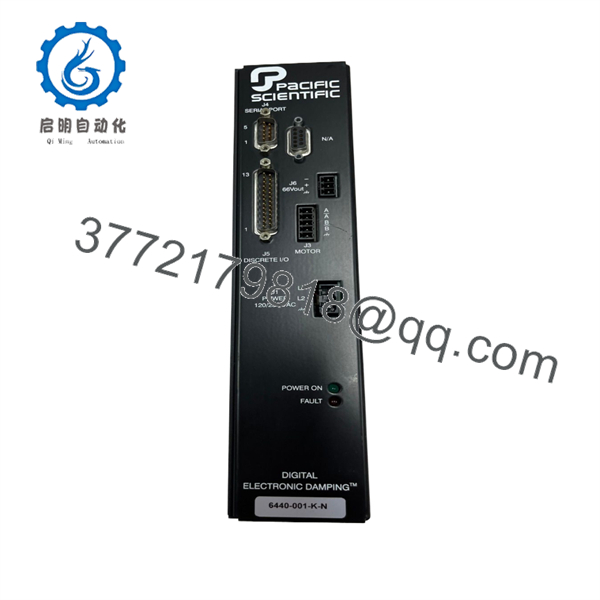
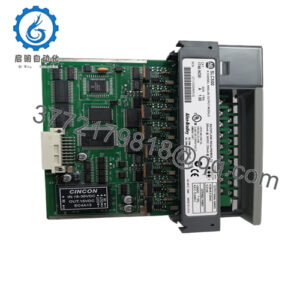
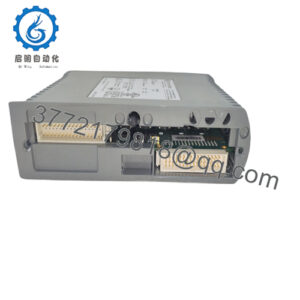
6440-001-K-N
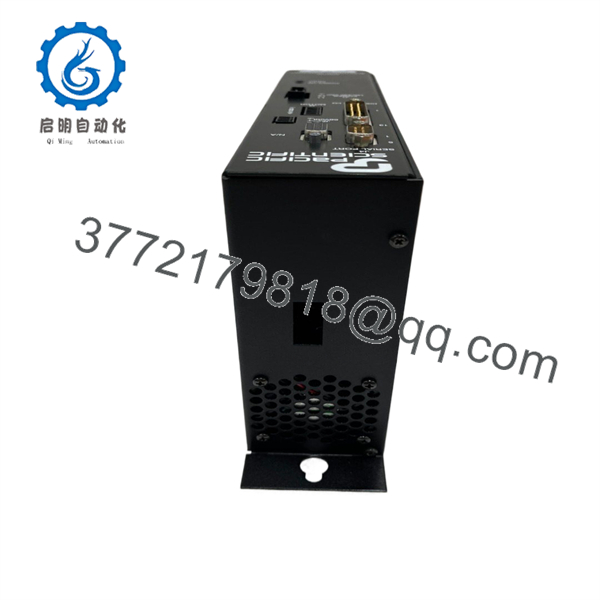
6440-001-K-N
Troubleshooting Quick Reference
| Symptom | Possible Cause | Relevance to this Part | Quick Check Method | Recommendation |
|---|---|---|---|---|
| No power indication or no machine response | Incorrect AC supply, open fuse, incorrect 120/230 VAC selector, loose input wiring | ⚠️ Medium | With the cabinet isolated as required, verify the incoming line voltage and compare it to the drive’s 120/230 VAC selection. Check upstream fuses, disconnects, and terminal torque. | Do not replace the 6440 first. A voltage-selector mismatch can cause a dead unit or immediate damage when power is applied. |
| Drive powers up but motor has no holding torque | Open motor winding, disabled output, failed drive output stage, disconnected motor cable | ✅ High | Lock out power, disconnect the motor plug, and measure winding resistance. Identify the two winding pairs and compare their resistance readings. Restore power only after confirming motor and cable integrity. | If power and command conditions are correct but the motor has no holding torque, the drive output stage becomes a credible fault candidate. |
| Motor vibrates, hums, or stalls without rotation | Incorrect phase wiring, crossed winding pairs, acceleration too high, load jam, resonance | ⚠️ Medium | Identify motor winding pairs with an ohmmeter. Compare each lead to the panel drawing. Run a low-speed jog with reduced acceleration and inspect the mechanical load for binding. | Don’t wire from memory. One crossed motor lead can make a healthy drive look failed while heating the motor and output transistors. |
| Axis moves in the wrong direction | Direction polarity issue, program parameter error, motor-phase wiring changed | ❌ Low | Run a controlled jog and compare actual movement against the stored program or serial command. Check the motor wiring against the original terminal record. | Correct direction in the program or approved wiring documentation. Do not swap random leads with the cabinet energized. |
| Axis does not start when commanded | Start input inactive, stop input asserted, limit input active, home input logic wrong, program not selected | ⚠️ Medium | Check the dedicated start, stop, limit, and home inputs with a meter or PLC input monitor. Confirm the proper program number and start condition. | Check field switches, safety relays, PLC outputs, and input logic before replacing the indexer. |
| Serial configuration software cannot communicate | Wrong serial standard, wrong cable, incorrect baud rate, RS-232/422/485 wiring mismatch | ⚠️ Medium | Confirm whether the installation uses RS-232, RS-422, or RS-485. Verify the cable pinout, PC adapter, COM-port setup, and 9,600-baud serial setting. | Start with the cable and serial standard. RS-422/485 wiring errors are common, especially after a panel retrofit. |
| Program disappears after power cycling | NVRAM retention fault, failed internal backup component, program never stored correctly | ✅ High | Load a noncritical test program, save it using the documented procedure, cycle power, then reconnect and verify program retention. | Back up the original mnemonic program before replacement. If saved data repeatedly disappears, repair or replacement is usually required. |
| Drive overheats during production | Current set too high, insufficient cabinet airflow, high ambient temperature, mechanical overload | ✅ High | Verify the programmed or selected phase current does not exceed the motor rating. Measure enclosure temperature and inspect heat dissipation surfaces and fan operation. | Reduce current only after confirming torque requirements. Correct mechanical binding and airflow first; avoid operating near the upper temperature limit without derating. |
| Axis loses position after fast moves | Acceleration too aggressive, motor torque margin too low, supply sag, resonance, mechanical slip | ⚠️ Medium | Compare commanded and actual positions after a repeated move sequence. Reduce acceleration by 25% for a controlled test and monitor the incoming AC supply under load. | Treat missed steps as a complete motion-system problem, not an automatic drive failure. Check couplings, belts, load inertia, acceleration, and motor current. |
| Two-axis system loses only the secondary axis | Slave-drive failure, J6 secondary supply problem, master/slave wiring issue | ⚠️ Medium | Measure the secondary-axis supply at J6 only using the approved schematic and safe live-test practice. Verify the slave-drive input and common reference wiring. | Check the secondary drive and interconnect first. Do not assume the 6440 master is defective because the second axis stopped. |
| Multiple axes and panel functions fail together | Cabinet power loss, safety-chain trip, PLC output loss, shared control transformer fault | ❌ Low | Check the incoming AC supply, control transformer secondary, E-stop chain, and PLC fault indicators. Confirm whether unrelated panel loads also lost power. | A common failure points upstream. Do not order a 6440 until shared-power and safety circuits are verified. |
❗ Line-voltage warning: This drive uses switch-selectable 120/230 VAC input. Photograph the original voltage-selector position before removal and verify the actual cabinet supply with a properly rated meter. A 120 VAC/230 VAC mismatch is not a commissioning nuisance; it can destroy the replacement unit at power-up.
❗ Program-retention warning: The 6440-001-K-N may contain the machine’s local motion logic in NVRAM. The PLC can be healthy while the axis refuses to run because the old indexer held the motion sequence. Back up the mnemonic program through the serial interface before removing a unit that still communicates.
❗ Motor-current warning: Set the replacement drive to the documented motor current, not to the highest available 5.0 A RMS setting. Higher current may temporarily mask a mechanical problem, but it also overheats the motor, raises drive temperature, and shortens component life.
❗ ESD and output-cable warning: Lock out AC power, wait for internal energy storage to discharge, and wear a grounded wrist strap. Then verify motor cable insulation before connecting it to the new drive. I have watched a replacement motion drive fail immediately because the old cable had a phase-to-ground fault hidden in a moving cable carrier.
Keep these checks in mind and you will save yourself 90% of typical rework time. If you are stuck, send technical support clear photos of the nameplate, AC selector, motor terminals, I/O wiring, serial settings, fault symptoms, and the archived motion program.
Frequently Asked Questions (FAQ)
Q: What is the Pacific Scientific 6440-001-K-N used for?
A: The 6440-001-K-N is an integrated microstepping indexer and two-phase stepper drive. It stores and executes local motion programs, receives serial commands, controls motor winding current, and provides discrete I/O for motion events such as start, stop, home, and limit conditions. It is commonly used where a machine needs a self-contained legacy positioning controller.
Q: Does the 6440-001-K-N require 120 VAC or 230 VAC?
A: It supports 120/230 VAC, 50/60 Hz, with the input voltage selected by the unit’s configuration arrangement. Confirm the physical selection and incoming supply before power-up. Never assume the old drive was set correctly just because it was installed in a 230 VAC cabinet; verify it with the wiring schematic and meter.
Q: What is the maximum motor current for this drive?
A: The documented continuous phase-current range is adjustable from 0.625 A to 5.0 A RMS, in 0.625 A increments, with a 7.1 A peak rating. Set current according to the installed motor’s rated phase current and the machine’s thermal environment. More current is not automatically more usable torque, especially at high speed where motor back-EMF and resonance dominate.
Q: Can I use this unit as a replacement for any Pacific Scientific 6440 drive?
A: No. Match the complete part number, including the -001-K-N suffix, before calling it a direct replacement. Confirm the AC input arrangement, motor-current range, serial interface, installed motion program, discrete I/O wiring, microstepping setup, and any master/slave axis wiring. Similar-looking 6440 units can create expensive startup problems if the program or interface assumptions differ.
Q: Will I lose the machine’s positioning program during a drive replacement?
A: You can, and this is the big trap. The 6440 stores motion programming in 1,792 bytes of nonvolatile RAM. If the old unit is still online, connect through the serial port and archive the mnemonic program before removing it. Also document all I/O logic, motion constants, limit behavior, homing parameters, and any external controller commands.
Q: Can the 6440-001-K-N control two axes?
A: It supports a master/slave two-axis configuration. The documented J6 output provides approximately 66 VDC ±2 V for a compatible secondary slave drive. That does not mean any second stepper drive can connect to it. Verify the secondary-drive model, power requirements, common reference, command wiring, and original machine drawing before attempting a two-axis replacement.
Q: Is the 6440-001-K-N obsolete?
A: Yes, it is legacy motion-control equipment. Current availability usually comes from stored OEM spares, new surplus inventory, tested used units, or refurbished stock rather than current production. If the machine is critical, confirm actual stock, condition, warranty, firmware/program status, and the availability of a matching spare before scheduling maintenance.
Q: Why is a New Surplus 6440-001-K-N cheaper than a current factory drive?
A: New Surplus normally refers to unused original inventory from an OEM spare shelf, project cancellation, distributor excess, or liquidation stock. It can cost less because it may not include current factory channel support, factory packaging, or modern product lifecycle coverage. Ask for photos of the exact item, power-on test evidence, serial-port communication verification, output test method, program-memory check, condition statement, and written warranty terms before purchase.