WhatsApp: +86 16626708626
 Email:
  Phone: +86 16626708626
Description
3. Key Technical Specifications
| Parameter | Value |
|---|---|
| Frame Size | NEMA 23 (2.25″ / 57 mm dia.) |
| Rotor Stacks | 2 |
| Holding Torque | 223 oz-in (1.57 N·m) |
| Step Angle | 1.8° (200 steps/rev) |
| Rated Current per Phase | 2.5 A DC |
| Phase Resistance | 1.2 Ω |
| Phase Inductance | 4.5 mH |
| Rotor Inertia | 0.0031 oz-in-s² |
| Detent Torque | 9.6 oz-in (0.07 N·m) |
| Shaft | Single, smooth |
| Axial Shaft Load | 65 lb (289 N) |
| Radial Shaft Load | 19 lb (85 N) |
| Weight | 2.1 lb (0.95 kg) |
| Insulation Class | Class B (130 °C) |
| Operating Temperature | −20 °C to +40 °C |
| Thermal Resistance | 4.4 °C/W |
| Winding | 4-lead series, max torque at low speed |
| Construction | SIGMAX, conventional round-frame |
4. Product Introduction
The Pacific Scientific / Kollmorgen E22SSLT-LNN-NS-04 is a 2-stack NEMA 23 hybrid stepper motor from the E Series SIGMAX line. It delivers 223 oz-in holding torque with a 1.8° step angle for open-loop positioning in industrial automation, pick-and-place, small conveyors, laboratory equipment, and light CNC stages.
Its 4-lead series winding is optimized for maximum low-speed torque, while the laminated rotor and 0.0031 oz-in-s² inertia support quick settling. The smooth shaft and special mounting configuration match many existing Pacific Scientific / Kollmorgen installations, making it a straightforward drop-in when the original motor fails or is no longer stocked by the factory.
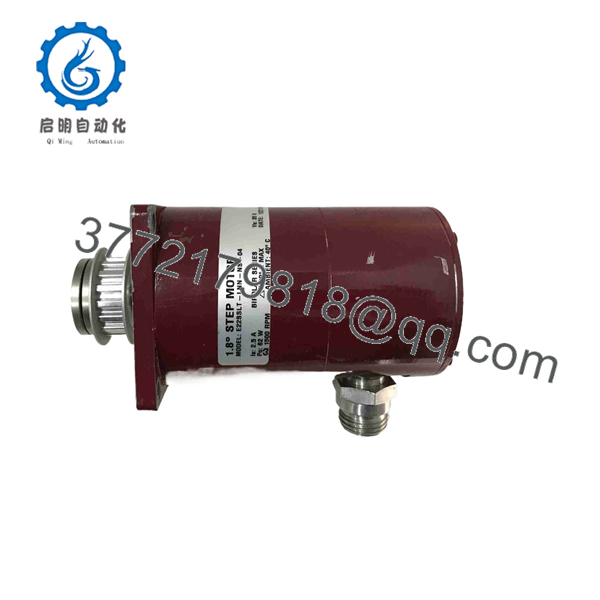
E22SSLT-LNN-NS-04
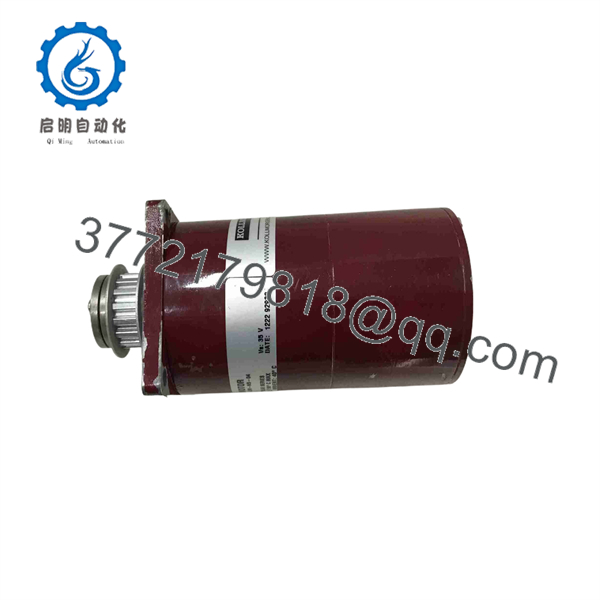
E22SSLT-LNN-NS-04
5. Troubleshooting Quick Reference
| Symptom | Possible Cause | Relevance to this Part | Quick Check Method | Recommendation |
|---|---|---|---|---|
| No movement, no holding torque | Drive not enabling phases or open winding | ✅ High | Measure resistance across each phase pair (expect ~1.2 Ω) | Replace motor if open or shorted; verify drive output first |
| Motor runs but loses steps | Overload, accel too aggressive, or resonance | ✅ Medium | Reduce speed/accel; check mechanical binding with shaft free | Confirm load is within 223 oz-in holding torque; add microstepping |
| Excessive heat / thermal trip | Continuous current too high or poor heat sink | ✅ High | Measure case temp after 30 min; check drive current setting | Set drive to ≤2.5 A/phase; improve airflow around motor |
| Shaft turns freely when powered | Complete loss of phase current | ✅ High | Check drive enable, fuses, and wiring continuity to motor | Motor is usually good; problem is upstream of the leads |
| Position drift when power off | Normal detent only | ❌ Low | Detent is only ~9.6 oz-in — expected | Use holding torque (powered) or add brake if needed |
| Mechanical noise / vibration | Resonance or loose coupling | ❌ Low–Medium | Run at different speeds; inspect coupling and mounting | Change pulse rate or add damping; motor itself rarely the root |
If the motor shows correct phase resistance and still fails to produce torque under a known-good drive, capture photos of the nameplate, wiring, and any visible damage, then contact technical support with the diagnostic details.
6. Frequently Asked Questions (FAQ)
Q: Is the E22SSLT-LNN-NS-04 still a current production part?
A: The E Series has been largely superseded by newer Kollmorgen designs. This specific configuration is typically available only as new surplus or carefully tested stock. Lead times and quantities are limited — check current availability before committing to a multi-unit order.
Q: Can I hot-swap this motor while the machine is powered?
A: No. Kill power to the drive first. Connecting or disconnecting leads under power can damage the drive output stage and the motor windings. Always follow lock-out/tag-out.
Q: Will this motor drop straight into my existing Pacific Scientific / Kollmorgen mount?
A: In most cases yes — it uses the special mounting configuration and smooth shaft that many E22 units shipped with. Still verify the exact face-mount hole pattern and shaft length against your old motor or the original drawing before ordering.
Q: What drive current should I set?
A: Rated current is 2.5 A per phase in series connection. Most modern microstepping drives can be set to this value. Running higher will only increase heat with little torque gain; running lower reduces holding torque.
Q: Does it retain position when power is removed?
A: Only the residual detent torque (~9.6 oz-in) remains. For vertical axes or any load that can back-drive, you need either continuous power to the windings or an external brake.
Q: Why is the price lower than a new factory quote?
A: These units are new surplus — never installed, full electrical and mechanical function verified, but they do not come in current-production packaging and are not covered by the original OEM warranty. We provide our own 1-year replacement warranty and full test documentation.
Q: Do you supply the test report and photos?
A: Yes. Every unit is resistance-checked, insulation-tested, and run under load on a test stand. Photos of the nameplate, shaft, and leads plus the test results are available on request before shipment.