WhatsApp: +86 16626708626
 Email:
  Phone: +86 16626708626
Description
Key Technical Specifications
| Parameter | Value |
|---|---|
| Manufacturer | Parker Hannifin / Compumotor |
| Model Number | COMPAX 2500S/F3 |
| Common Alternate Marking | COMPAX 2500SF3 / CPX2500S/F3 |
| Product Series | Compax-S |
| Product Type | Brushless servo drive controller |
| Controller Architecture | Compax-M servo controller integrated with direct-on-line power supply |
| Nominal Power Class | 2.5 kVA |
| Supply Version | F3, three-phase direct-on-line input variant; verify exact input-voltage code from the unit nameplate |
| Available Compax-S Power Classes | 2.5 kVA, 4.5 kVA, and 8.5 kVA |
| Primary Motor Type | Parker/Compumotor brushless servo motors and compatible feedback systems |
| Control Modes | Position, velocity, and torque operation, subject to installed firmware and system configuration |
| Feedback Requirement | Motor feedback and encoder/resolver compatibility must match the installed drive setup |
| Host Integration | Machine-controller interface and communications are configuration-specific; verify connector set and installed options |
| Motion Functions | Application-specific positioning and servo-control capability through Compax programming/configuration |
| Installation Location | Industrial control cabinet with suitable grounding, cooling, and electrical protection |
| Replacement Requirement | Match the full COMPAX 2500S/F3 or CPX2500S/F3 label, supply variant, motor model, feedback cable, firmware, program, I/O wiring, and host interface |
| Product Lifecycle | Discontinued legacy servo-drive family; typically sourced as New Surplus, refurbished, or used-tested stock |
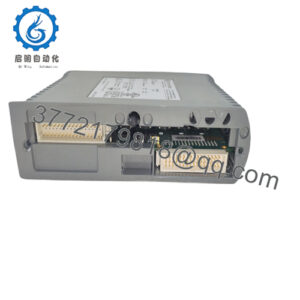
Parker describes the Compax-S as a packaged version of the Compax-M servo controller with an integrated direct-on-line power supply. The Compax-S family has 2.5 kVA, 4.5 kVA, and 8.5 kVA models; the COMPAX 2500S/F3 is the 2.5 kVA class.
Product Introduction
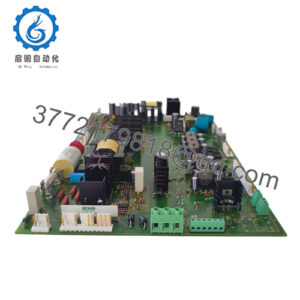
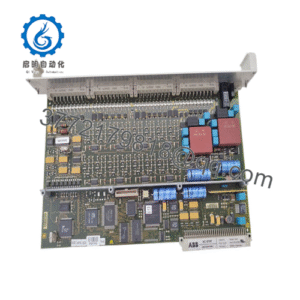
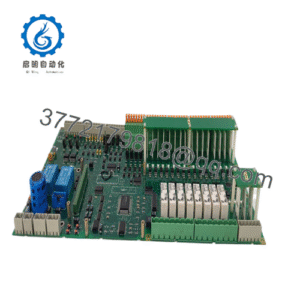
Parker Compumotor COMPAX 2500S/F3 is a 2.5 kVA integrated brushless servo drive controller from the legacy Compax-S series. It combines servo-control electronics with a direct-on-line power supply for machine applications requiring controlled position, speed, and torque, including CNC equipment, packaging machines, automation stations, handling systems, and specialized production machinery.
This is not a generic VFD or a universal servo amplifier. The exact replacement must match the supply variant, motor model, feedback type, resolver or encoder wiring, application program, I/O logic, and host connection. Parker identifies the Compax-S platform as an integrated version of the Compax-M controller.
Troubleshooting Quick Reference
| Symptom | Possible Cause | Relevance to This Part | Quick Check Method | Recommendation |
|---|---|---|---|---|
| Drive display is dark or no status indication | Missing AC supply, blown fuse, open disconnect, failed control transformer, damaged input wiring, failed drive | ✅ High | Using correctly rated PPE and meter leads, measure input voltage at the drive line terminals; verify all phases, upstream fuses, breaker, and control-power circuit | Verify the exact nameplate input requirement before replacing the drive. Do not apply power based on an assumed voltage class. |
| Drive powers up but servo will not enable | Emergency-stop chain open, servo-enable input missing, external drive fault, interlock active, motor-feedback fault, configuration problem | ✅ High | Check E-stop status, safety relay outputs, enable input state, drive diagnostic code, and servo amplifier interlock wiring | Diagnose the external safety and enable circuit first. Do not jumper safety circuits to force a servo enable. |
| Motor hums, vibrates, or will not rotate | Feedback wiring fault, motor phase issue, wrong motor data, incorrect commutation setup, mechanical brake engaged, drive fault | ✅ High | Verify motor brake release, inspect power and feedback connectors, compare motor/drive setup with machine records, and test with load mechanically safe | Confirm feedback and motor compatibility before replacing the drive. Incorrect feedback can cause unstable torque or no motion. |
| Axis runs away or moves unexpectedly | Encoder/resolver polarity error, wrong commutation, reversed feedback, corrupted configuration, unstable gain tuning | ✅ High | Secure the axis; reduce command limits; compare encoder/resolver wiring and configuration to documented values; monitor commanded versus actual position | Stop commissioning immediately. Restore verified parameters and test at low speed with safe mechanical restraint. |
| Following error or position fault occurs | Loose encoder cable, poor shield grounding, failed feedback device, mechanical binding, excessive load, gain settings changed | ✅ Medium | Inspect feedback cable, connector locking, shield termination, couplings, and mechanics; compare following error at rest and during motion | Correct mechanical and feedback faults first. Replace the drive only if the fault follows a known-good drive test. |
| Motor does not hold position | Servo disabled, brake circuit failure, torque limit set too low, motor current limit reached, feedback error | ✅ Medium | Verify servo-enable status, brake voltage, torque command, current limit, and encoder feedback count stability | Check brake and enable circuits before replacing COMPAX 2500S/F3. |
| Drive faults during acceleration | Mechanical jam, acceleration too aggressive, motor oversized, load inertia too high, incorrect tuning, failing power stage | ✅ High | Compare load inertia and acceleration profile with machine documentation; inspect mechanics; record fault code and motor current | Reduce acceleration only after confirming safe production requirements. Replace the drive if it faults with a known-good motor and correct parameters. |
| Drive trips during deceleration | Regenerative energy, braking configuration issue, deceleration too short, high-inertia load | ✅ High | Record fault code, compare deceleration profile with the original configuration, and inspect any external braking arrangement | Restore approved deceleration settings and verify braking design before replacing the servo drive. |
| Host controller cannot communicate with drive | Wrong cable, serial/fieldbus setting mismatch, host configuration missing, damaged port, firmware mismatch | ✅ High | Verify host-port wiring, address, baud rate, protocol, and application configuration; compare connector pinout to the original drive | Restore known-good communications settings. A replacement drive may not have the original configuration. |
| New replacement powers up but machine behavior is wrong | Program not restored, wrong firmware, I/O mapping changed, motor parameters incorrect, feedback mismatch | ✅ High | Compare full labels, firmware, parameter backup, motor type, feedback wiring, I/O signals, and axis limits | Do not run production. Restore the verified machine configuration and complete low-speed commissioning. |
| Drive overheats or shuts down after running | Fan failure, blocked airflow, high cabinet temperature, continuous overload, poor grounding, excessive switching losses | ✅ Medium | Inspect cooling paths and fan; measure cabinet ambient and motor current; review duty cycle and fault history | Correct cooling and load conditions before replacing the drive. |
❗ Supply-variant warning: F3 identifies a specific power-input variant, but do not infer the exact line voltage from the base model alone. Read the actual nameplate and compare it with the original machine electrical drawing. Applying the wrong three-phase voltage can destroy the input stage immediately.
❗ Feedback warning: Servo feedback is not interchangeable. A motor that uses an encoder, resolver, Hall sensors, or another feedback arrangement must match the configured Compax drive interface. I have seen an axis command full torque in the wrong direction because encoder polarity was reversed during a rushed replacement. Start with torque and speed limits reduced.
❗ Configuration warning: Back up the original drive before removal. Save program files, parameters, motor data, gains, current limits, I/O mapping, home offsets, travel limits, fault behavior, serial settings, and host-controller logic. A bare replacement drive is not a ready-to-run machine spare.
❗ Motor-brake warning: Vertical axes, suspended loads, and spring-loaded mechanisms can move when servo power or brake control is removed. Secure the load mechanically and verify brake wiring before replacing the drive. Never depend only on servo holding torque during service.
❗ Grounding and shielding warning: Use the original grounding method and shield termination. Poor shielding on motor feedback cables can create following errors, position drift, or intermittent faults that look like a defective drive.
❗ DC-bus warning: Disconnect input power, wait the manufacturer-specified discharge time, and verify DC-bus voltage is safe before accessing terminals or internal parts. The bus can retain lethal voltage after line power is removed.
Keep these checks in mind and you will save yourself 90% of typical rework time. If the fault remains unresolved, provide technical support with full COMPAX 2500S/F3 nameplate photos, drive fault codes, motor nameplate, feedback connector photo, input-voltage readings, parameter backup, I/O schematic, host-controller interface details, and axis mechanical information.
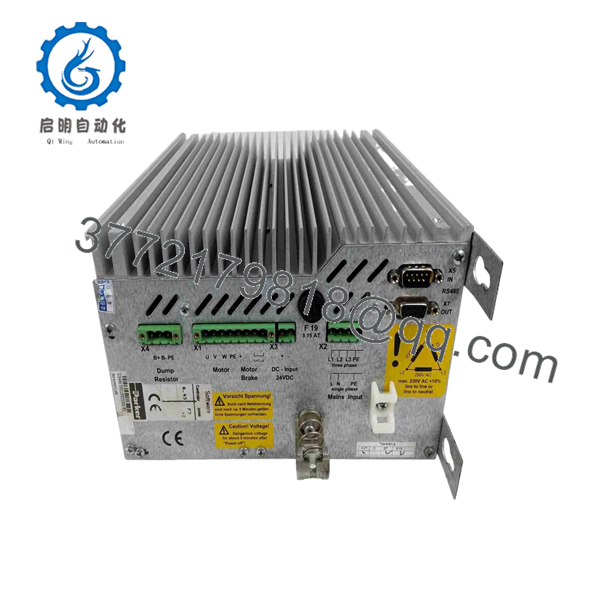
COMPAX 2500SF3
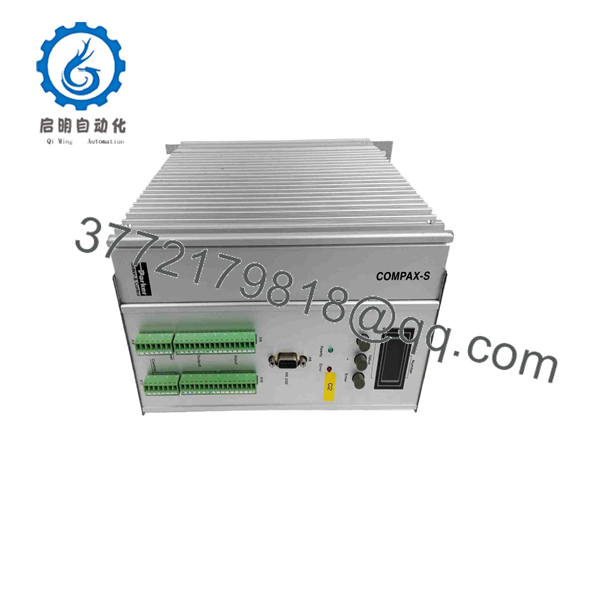
COMPAX 2500SF3
Frequently Asked Questions
What is the Parker COMPAX 2500S/F3?
Parker Compumotor COMPAX 2500S/F3 is a 2.5 kVA integrated brushless servo drive controller from the Compax-S family. It combines the Compax-M controller with a direct-on-line power supply and is used for controlled position, velocity, and torque applications.
It is commonly found in older machine automation, CNC equipment, packaging machinery, positioning systems, and OEM motion-control assemblies.
Is COMPAX 2500S/F3 a VFD?
No. A standard VFD controls motor speed, usually for induction motors and variable-torque loads. COMPAX 2500S/F3 is a closed-loop brushless servo controller intended for precise motion applications that rely on motor feedback, servo tuning, programmed motion, and axis-position control.
Do not substitute a generic VFD for a servo controller. A VFD cannot normally reproduce encoder/resolver feedback control, position accuracy, torque behavior, or motion sequencing required by the machine.
What does the 2500 designation mean?
The 2500 designation identifies the 2.5 kVA power class within the Compax-S family. Parker documentation lists Compax-S versions at 2.5 kVA, 4.5 kVA, and 8.5 kVA.
Do not select a replacement by kVA alone. Confirm motor rated current, peak-current requirement, supply variant, feedback interface, application load inertia, and existing drive configuration.
Can I replace COMPAX 2500S/F3 with a newer Parker drive?
Possibly, but it is usually not a direct substitution. A newer drive may use different power requirements, feedback hardware, motor cables, software, programming tools, fieldbus interface, safety functions, mounting dimensions, and tuning procedures.
For an urgent repair, a verified like-for-like COMPAX 2500S/F3 replacement is usually the lower-risk path. For a planned modernization, treat replacement as an engineering project that includes motor compatibility checks, mechanical and electrical redesign, controller-program conversion, servo tuning, safety review, and site acceptance testing.
Can I hot-swap the COMPAX 2500S/F3?
No. De-energize the incoming supply, control supply, and servo-enable circuit under the site’s lockout/tagout procedure. Confirm that stored energy has discharged and that vertical axes, suspended loads, pneumatic devices, and other moving components are mechanically secured.
To be honest, live replacement of a servo controller is unsafe. It can expose personnel to lethal DC-bus voltage, unexpected axis motion, brake release, high fault current, and machine damage.
Will a replacement drive retain my program and parameters?
Do not assume it will. A New Surplus or refurbished COMPAX 2500S/F3 may have default settings, an unknown customer configuration, a different firmware version, or no usable program. Your original machine setup may include servo gains, commutation data, motor configuration, position limits, I/O assignments, communications settings, homing behavior, and application-specific motion code.
Before removing the original drive, save and verify:
- Full drive label, serial number, firmware version, and power variant
- Motor nameplate, motor cable, feedback connector, and brake wiring
- Drive parameter set and application program
- Current, velocity, acceleration, deceleration, torque, and travel limits
- Servo tuning values and commutation data
- Digital and analog I/O wiring and logic
- Host-controller protocol, cable type, address, baud rate, and register mapping
- Machine homing routine, safety interlocks, and fault-reset procedure
Is COMPAX 2500S/F3 obsolete?
Yes. The Compax-S family is a legacy servo-drive platform. Parker’s current product pages focus on later Compax servo-drive families, while secondary-market sources identify the older Compax 2500S line as discontinued.
Availability is therefore dependent on New Surplus, refurbished, or used-tested inventory. For a critical machine, procure and test a spare before an emergency failure, then store it with the matching parameter backup and wiring documentation.
Why is a New Surplus COMPAX 2500S/F3 cheaper than factory supply?
New Surplus inventory often comes from cancelled OEM machine builds, unused warehouse spares, distributor overstock, service inventory releases, or decommissioned equipment stock. Lower pricing reflects legacy-product status and secondary-market supply rather than automatic functional problems.
Before purchase, request:
- Actual photographs of the full front and side nameplates
- Confirmation of the exact
COMPAX 2500S/F3orCPX2500S/F3model marking - Input-supply and motor-output information from the label
- Firmware version and installed option/communications interfaces
- Photos of all terminals, motor/feedback connectors, heatsink, and enclosure
- Clear condition statement: Factory Sealed, New Original / New Surplus, or Refurbished (tested)
- Written warranty, return terms, actual quantity, and dispatch lead time
What test process should a supplier complete before shipment?
A supplier should complete a documented servo-drive test process:
- Inbound inspection and traceability: Verify Parker/Compumotor labels, exact model marking, serial number, source documents, factory seals, and visible component condition. Inspect for corrosion, heatsink damage, burnt terminals, capacitor leakage, altered labels, rework marks, cracked connectors, fan damage, or UV-yellowed plastic.
- Power-on inspection: Apply the exact nameplate-rated AC supply through appropriately rated protection and isolation. Confirm controlled startup, normal status indication, stable internal supply rails, absence of fault codes, and no abnormal current draw or heating.
- Motor and feedback test: Connect a compatible brushless test motor with the correct feedback device. Verify controlled enable, direction, commutation, low-speed rotation, velocity control, position response, and feedback stability. Start with conservative current, speed, and torque limits.
- I/O test: Verify servo enable, inhibit, reset, fault output, digital inputs, analog command interfaces, and any documented auxiliary I/O using a protected test fixture. Confirm that the drive does not enable when safety-related inputs are absent.
- Host communications test: Connect the drive through its installed interface using a known-good host configuration. Verify communications, parameter access, command handling, diagnostics, and stable operation through the applicable port.
- Load and thermal test: Run the drive with a representative motor load for more than 24 hours where the test bench permits. Monitor phase current, feedback stability, position error, drive temperature, fan operation, fault history, and communications.
- Configuration verification: Record firmware, parameter state, option cards, and test configuration. Disclose whether the unit ships blank, with unknown settings, or with a buyer-provided configuration. Never represent an unknown parameter set as ready for an installed machine.
- Final QC and packaging: Require inspector sign-off, terminal covers, connector protection, ESD-safe packaging, foam or bubble wrap, heavy-duty corrugated boxing, and a dated QC-passed label. Test photos, measured results, and the test report should be available upon request.