WhatsApp: +86 16626708626
 Email:
  Phone: +86 16626708626
Description
Key Technical Specifications
| Parameter | HiD2082 Specification |
|---|---|
| Manufacturer | Pepperl+Fuchs |
| Model | HiD2082 |
| Function | Temperature signal conversion / isolation |
| Channels | 2 |
| Input | RTD, thermocouple, potentiometer, mV |
| RTD Types | Cu10, Cu50, Cu100, Pt10, Pt50, Pt100, Pt500, Pt1000, Ni100 |
| Thermocouple Types | B, E, J, K, N, R, S, T; L and selected regional types |
| RTD Wiring | 2-, 3-, or 4-wire |
| Potentiometer Range | 0.1–20 kΩ |
| Voltage Input | Selectable within -100 to +100 mV |
| Output | 0/4–20 mA or 0/1–5 V |
| Supply | 20.4–30 V DC |
| Power Consumption | ≤1.95 W |
| Ambient Temperature | -20 to +60 °C |
| Humidity | 5–90%, non-condensing to 35 °C |
| Protection Rating | IP20 |
| Dimensions | 18 × 114 × 130 mm |
| Weight | Approx. 140 g |
| Functional Safety | SIL 2 |
| Configuration | DIP switches / PACTware |
| Mounting | Termination Board |
The unit provides two isolated signal channels and can also operate as a signal splitter, with one input routed to two outputs. Its outputs can be configured as current source, current sink, or voltage source.
For hazardous-area applications, the documented intrinsic-safety parameters include Uo = 10 V, Io = 15 mA, and Po = 38 mW. The manufacturer documentation also identifies ATEX, IECEx, and North American approvals for applicable configurations.
Product Introduction
The Pepperl+Fuchs HiD2082 is a two-channel temperature converter and isolated barrier for process instrumentation. It accepts RTDs, thermocouples, potentiometers, or millivolt signals from hazardous areas and converts them into isolated linear analog outputs for the control side.
The module supports sensor-break detection, line-fault detection, configurable current or voltage outputs, and PACTware configuration. It mounts on a dedicated HiD Termination Board and supports applications requiring intrinsic-safety separation and SIL 2 functionality.
Installation & Configuration Guide
Stage 1 — Pre-Installation Preparation
Estimated time: 15–30 minutes
- Confirm the replacement marking is HiD2082.
- Verify that the existing system uses the compatible HiD Termination Board.
- Record the existing DIP-switch configuration before removal.
- Photograph field wiring and terminal positions.
- Confirm the sensor type: RTD, thermocouple, potentiometer, or mV input.
- Check the required output mode: current source, current sink, or voltage output.
- For hazardous-area work, verify the applicable Ex documentation and system entity parameters.
⚠️ Do not change intrinsic-safety wiring or barriers without confirming the complete loop design.
Stage 2 — Removing the Existing Module
Estimated time: 10–15 minutes
- Isolate the associated control and instrumentation circuits according to site procedures.
- Verify that the module is de-energized.
- Disconnect the field and control-side wiring through the termination arrangement.
- Record the module’s DIP-switch positions and configuration.
- Remove the HiD module from the Termination Board.
- Inspect the termination-board contacts for contamination or mechanical damage.
Stage 3 — Installing the New Module
Estimated time: 10–20 minutes
- Confirm the replacement module’s coding matches the intended HiD Termination Board.
- Set the DIP switches to the documented configuration.
- Mount the HiD2082 onto the Termination Board.
- Reconnect the field and control-side circuits.
- Confirm RTD wiring is correctly configured as 2-, 3-, or 4-wire.
- For thermocouples, verify the correct thermocouple type and cold-junction-compensation arrangement.
- Confirm output wiring and current-source/current-sink selection.
⚠️ Incorrect DIP-switch settings can produce a valid-looking output with the wrong engineering value.
Stage 4 — Power-On & Testing
Estimated time: 20–40 minutes
- Restore the 24 V DC bus supply.
- Check module status LEDs.
- Verify the sensor input without applying abnormal process conditions.
- Compare the converted value against an independent reference where practical.
- Check the 0/4–20 mA or voltage output at the control-system input.
- Test sensor-break and line-fault detection if these functions are used.
- If PACTware is used, verify the configured sensor and output parameters.
- Record the final configuration for future maintenance.
⚠️ For SIL or Ex applications, commissioning must follow the approved safety-system and hazardous-area procedures rather than relying only on a basic loop test.
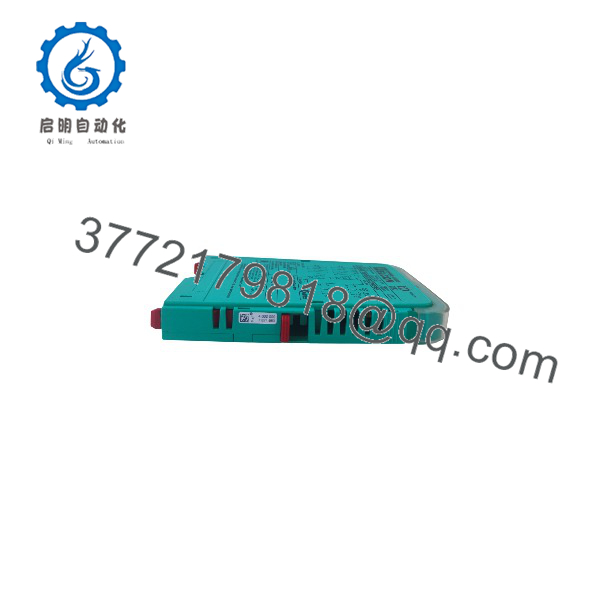
HiD2082
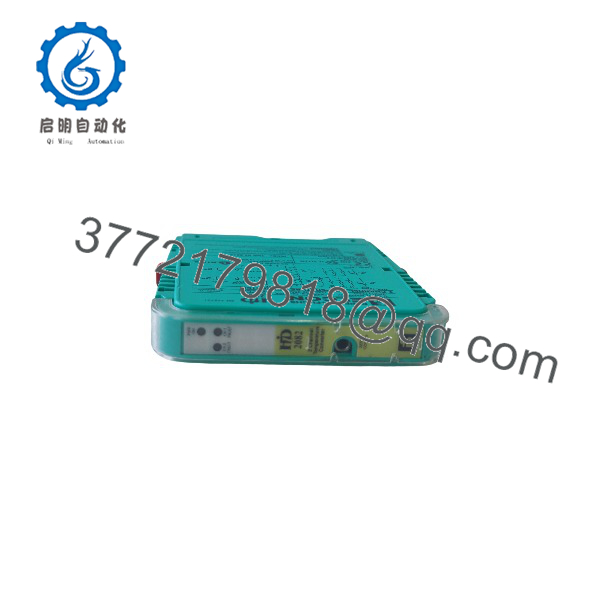
HiD2082
FAQ
1. What is the Pepperl+Fuchs HiD2082 used for?
It converts temperature-related signals from hazardous areas into isolated analog signals for a control system. It accepts RTD, thermocouple, potentiometer, and millivolt inputs.
2. Is HiD2082 a standard 4–20 mA isolator?
Not exactly. It is a universal temperature converter and two-channel isolated barrier. Its output can be configured for 0/4–20 mA or 0/1–5 V, while its input supports several sensor technologies.
3. Can HiD2082 handle Pt100 sensors?
Yes. Pt100 is one of the supported RTD types. The module also supports 2-, 3-, and 4-wire RTD configurations, with approximately 200 µA measuring current and a specified lead resistance limit.
4. Can the HiD2082 be used with thermocouples?
Yes. Documented supported thermocouple types include B, E, J, K, N, R, S, and T, with additional L and regional types listed in the technical documentation. Cold-junction compensation is provided at the field terminals.
5. Does HiD2082 support PACTware?
Yes. Pepperl+Fuchs specifies configuration through PACTware, in addition to DIP-switch configuration. The module also provides a programming interface.
6. What termination board does HiD2082 require?
The HiD2082 is designed for mounting on a HiD Termination Board rather than being installed as a conventional standalone DIN-rail signal conditioner. Verify the existing termination-board type before ordering a replacement.
7. Is HiD2082 suitable for hazardous-area applications?
Yes. It is specifically documented as an intrinsic-safety isolated barrier, with ATEX and other hazardous-area certification information. The exact installation must still comply with the applicable certificate, entity parameters, wiring, and plant hazardous-area classification.