WhatsApp: +86 16626708626
 Email:
  Phone: +86 16626708626
Description
Key Technical Specifications
| Parameter | 3646 HE 1540 |
|---|---|
| Manufacturer | Photonetics / NetTest / EXFO |
| Product Family | TUNICS-OM |
| Model | 3646 HE 1540 |
| Product Type | Tunable laser source module |
| Optical Technology | Single-mode tunable laser |
| Wavelength Range | Typically 1,500–1,570 nm |
| Alternate Published Range | 1,520–1,570 nm |
| Nominal Wavelength | 1,540 nm |
| Optical Connector | FC/APC |
| Wavelength Adjustment | 14-turn potentiometer |
| Power Adjustment | 1-turn potentiometer |
| Typical Peak Output | Approx. 4 dBm |
| Optional Peak Output | Approx. 6 dBm with P6 option |
| Tuning Resolution | Better than 10 pm, typical TUNICS-OM specification |
| Modulation Input Bandwidth | ≥1 GHz, typical TUNICS-OM specification |
| Operating Principle | Manually tunable optical source |
| Chassis Capacity | Up to 8 modules |
| Primary Application | Optical component and fiber-system testing |
The broader TUNICS-OM platform is described as a compact modular manually tunable source. Up to eight modules can be installed in one 19-inch chassis, with wavelength adjustment over approximately 70 nm and resolution better than 10 pm.
Wavelength Configuration
There is an important specification discrepancy among surviving secondary-market documentation:
- 1,500–1,570 nm is repeatedly listed for the TUNICS-OM 3646 HE 1540 configuration.
- Another tested unit is explicitly listed as 1,520–1,570 nm.
- The broader TUNICS-OM family was offered in different wavelength ranges, including 1,500–1,570 nm and 1,530–1,600 nm.
Therefore, do not use “1540” alone to determine the complete tuning range. Confirm the range from the module label, original configuration record, or optical test report.
Output-Power Configuration
The output power also varies by configuration.
One documented 3646 HE 1540 unit has Option P6, with technician measurements of approximately 5.97 dBm at 1,520 nm, 6.40 dBm at 1,545 nm, and 5.70 dBm at 1,570 nm.
Another tested unit is listed at approximately 4 dBm peak output.
For procurement, specify the required output-power option, not simply the 3646 HE 1540 model designation.
Product Introduction
The Photonetics 3646 HE 1540 is a TUNICS-OM manually tunable optical source intended for laboratory and telecommunications test applications. The module generates single-mode optical output in the C-band and allows the operator to adjust wavelength and optical power using front-panel controls. Its FC/APC interface is intended for controlled fiber-optic test connections.
The TUNICS-OM architecture is modular: individual laser modules can be installed into a common chassis, with up to eight modules supported by the documented system architecture. The platform also provides a modulation input with bandwidth of at least 1 GHz in typical configurations, making it useful for optical-component and transmission-system testing rather than general industrial automation.
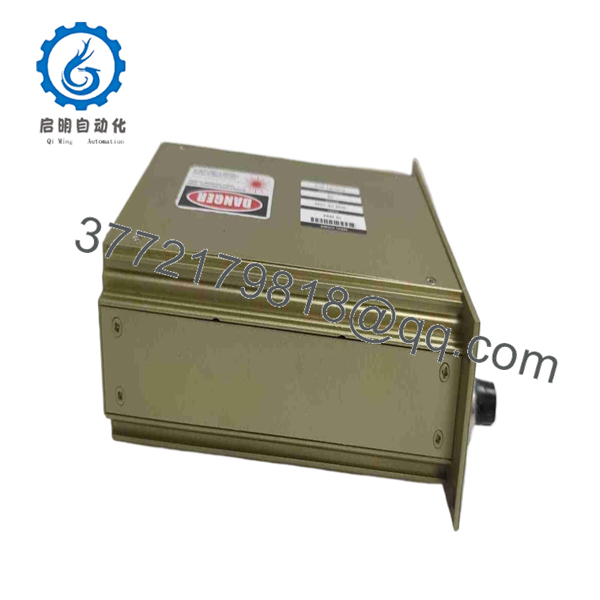
3646 HE 1540
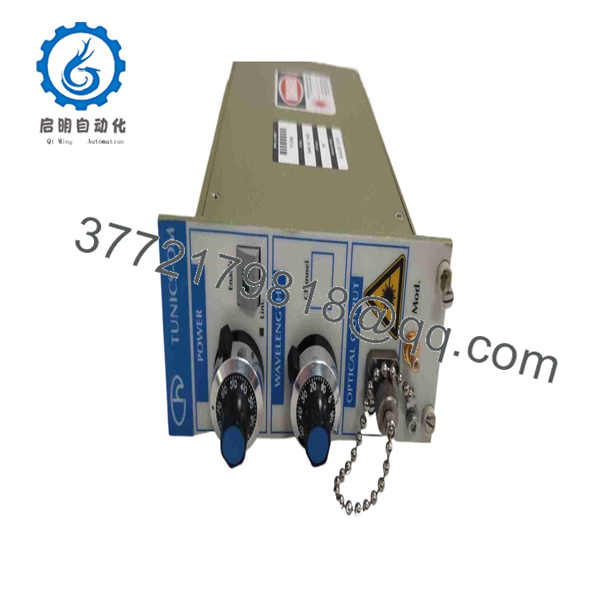
3646 HE 1540
Installation & Configuration Guide
Stage 1 — Verify the Optical Module
Estimated time: 10–15 minutes
- Confirm the module marking reads 3646 HE 1540.
- Identify the manufacturer marking: Photonetics, NetTest, or EXFO.
- Record the exact wavelength range.
- Check whether the unit carries an output-power option such as P6.
- Inspect the FC/APC connector.
- Confirm the module is intended for the available TUNICS-OM chassis.
Warning: Do not assume every 3646 HE 1540 has identical wavelength and power specifications.
Stage 2 — Install in the TUNICS-OM Chassis
Estimated time: 10–20 minutes
- Power down the optical test chassis.
- Insert the module into the designated slot.
- Secure the module mechanically.
- Confirm the electrical connector is fully seated.
- Connect the appropriate optical patch cable.
- Use an FC/APC-compatible connection.
- Keep the optical connector clean and capped whenever it is disconnected.
Stage 3 — Establish Optical Configuration
Estimated time: 10–20 minutes
- Connect the optical output to the intended test device.
- Set the optical power to the required level.
- Adjust wavelength using the multi-turn wavelength control.
- Confirm wavelength with an optical spectrum analyzer or calibrated wavelength meter when measurement accuracy is important.
- Avoid connecting the source directly to equipment that could be damaged by excessive optical power.
Warning: Optical power should be verified with suitable test instrumentation before connecting sensitive photodetectors or receivers.
Stage 4 — Performance Verification
Estimated time: 20–45 minutes
- Confirm the laser source starts correctly.
- Measure optical output power.
- Verify wavelength tuning.
- Check output stability across the required tuning range.
- Confirm the FC/APC connection remains clean and mechanically secure.
- If modulation is used, verify the modulation input path.
- Record measured wavelength and output power at representative points.
- Store the calibration/test results with the module’s maintenance record.
Frequently Asked Questions
What is the Photonetics 3646 HE 1540?
It is a TUNICS-OM tunable laser source module manufactured within the Photonetics/NetTest/EXFO product lineage. It is intended primarily for optical test and measurement rather than industrial PLC control.
What wavelength does the 3646 HE 1540 operate at?
The model is associated with the 1,540 nm C-band region. Published units show tuning ranges around 1,500–1,570 nm or 1,520–1,570 nm, depending on configuration.
Is 3646 HE 1540 a fixed 1540 nm laser?
No. It is a tunable laser source. The 1,540 nm designation identifies the model/configuration family rather than a single fixed optical wavelength.
What connector does it use?
The documented module uses an FC/APC optical interface.
What is the output power?
This depends on the configuration. A standard tested unit is reported at approximately 4 dBm peak, while an example equipped with Option P6 measured approximately 6 dBm.
Can the 3646 HE 1540 be installed in any TUNICS-OM chassis?
It belongs to the modular TUNICS-OM platform, which supports multiple plug-in laser modules. The documented architecture allows up to eight modules per chassis. Verify chassis compatibility and the module’s electrical/optical configuration before installation.
Is the 3646 HE 1540 still available new?
The product is a legacy optical-test instrument, and current listings are predominantly used/tested/calibrated units. One current secondary-market listing identifies the module as used and tested, while another states that the TUNICS-OM may remain available through specialist surplus-equipment suppliers after OEM end-of-life.
For procurement, request a recent optical power measurement and wavelength-sweep test rather than accepting a generic “tested” description.