 WhatsApp: +86 16626708626
 Email:
 Phone: +86 16626708626
Description
Core Product Summary
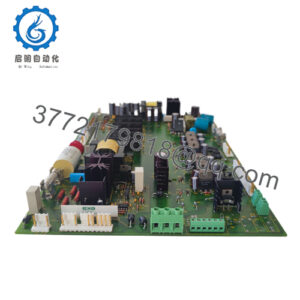
The Proces-Data PD3100 is a specialized process interface module engineered for signal conditioning within industrial process automation applications. Operating as an integral hardware component within the P-NET fieldbus ecosystem, this unit manages signal processing tasks to bridge field-level instrumentation with system controllers.
The module integrates seamlessly into distributed P-NET architectures, supporting reliable data exchange over RS-485 physical layers using token-passing communication. It is built to support robust industrial network configurations, providing dependable performance for discrete and analog signal handling within multi-node automation environments.
Key Technical Specifications
| Technical Parameter | Specification / Value |
| Product Type | Process Interface / Signal Conditioning Module |
| System Family | P-NET Fieldbus Architecture |
| Function | Signal conditioning and process interface handling |
| Communication Physical Layer | RS-485 (P-NET protocol standard) |
| Network Topology Support | Multi-node token-passing segment |
Detailed Product Overview
The Proces-Data PD3100 is built to fulfill strict signal processing requirements in industrial control schemes. Within an automation hierarchy, distributed interface modules minimize host controller overhead by managing localized signal conditioning and conversion tasks directly near the measurement source.
Integration requires strict adherence to P-NET network parameters, including proper node addressing and balanced RS-485 line termination. By maintaining consistent telegram structures and deterministic token-passing communication, the PD3100 ensures that process data remains stable and synchronized across the network segment.
Engineering Selection Highlights
- P-NET System Architecture Fit → Designed specifically for integration into P-NET fieldbus networks alongside master controllers like the PD3000.
- Signal Conditioning Role → Acts as a dedicated process interface to handle accurate signal conditioning tasks in distributed automation setups.
- Network Compatibility → Operates natively on standard P-NET RS-485 multi-node network rules, supporting multi-device layouts per segment.
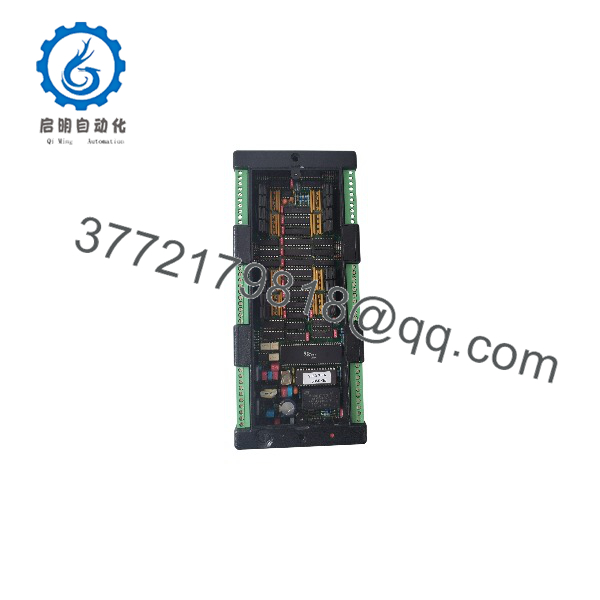
PD3100
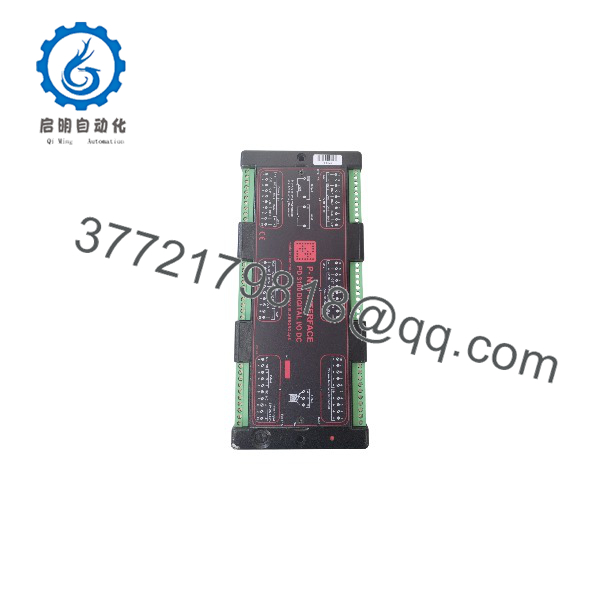
PD3100
Applications & System Role
The Proces-Data PD3100 functions as an essential distributed node in process automation environments. By executing localized signal conditioning, it preprocesses field variables before transmitting data across the P-NET serial communication highway. Its architecture is tailored for industrial settings that rely on deterministic token-passing fieldbus networks to link distributed input/output points with supervisory control hardware.
System Compatibility & Integration Requirements
| Item / Dependency | Verified Compatibility or Requirement | Practical Note |
| Master Controller | Proces-Data PD3000 or compatible P-NET master nodes | Required to coordinate network communication and master-level control tasks. |
| Network Protocol | P-NET Fieldbus | Utilizes token-passing data exchange architecture. |
| Communication Bus | RS-485 physical layer | Requires correct bus termination (120-ohm resistors) at segment ends. |
FAQ
- What is the Proces-Data PD3100?
The PD3100 is a process interface module built for signal conditioning duties within industrial automation systems.
- Which system family does the PD3100 belong to?
It belongs to the P-NET fieldbus product ecosystem.
- What role does the PD3100 perform in a network?
It operates as a node dedicated to signal conditioning, linking field signals to the broader P-NET control network.
- What communication standard does the module utilize?
It communicates via the P-NET protocol over an RS-485 physical layer.