 WhatsApp: +86 16626708626
 Email:
 Phone: +86 16626708626
Description
Core Product Summary
PROCES-DATA PD5010-LCD identifies the LCD-equipped PD 5010 P-NET controller, combining programmable control and a local operator interface. Part of the PD 5000 series, the controller uses a 32-bit 68020 microprocessor and supports multitasking through Process-Pascal applications. Its 256 × 64-pixel graphics LCD and 48 programmable membrane keys provide local display and operator input within a distributed P-NET control system.
Two galvanically isolated RS485 P-NET ports support multi-master and multi-net communication, while a separate RS232 interface connects programming equipment or serial peripherals. Standard memory comprises 512 KB of FLASH and 512 KB of lithium-backed RAM, with an optional PD 5090 board expanding each to 1 MB. The controller requires 24 V DC ±15% and consumes 6 W.
Key Technical Specifications
| Parameter | Specification |
|---|---|
| Controller designation | PD 5010 |
| System family | PD 5000 series |
| Product function | Programmable P-NET fieldbus controller with operator interface |
| Processor | 32-bit 68020 |
| Programming language | Process-Pascal |
| Execution capability | Multitasking |
| Display | Supertwist graphics LCD, 256 × 64 pixels |
| Display adjustment | Adjustable contrast and LED backlight |
| Keyboard | 48 programmable membrane keys |
| Keyboard sealing | IP65 |
| Standard FLASH memory | 512 KB |
| Standard RAM | 512 KB, lithium-backed |
| Operating-system memory | 128 KB EPROM |
| Optional memory expansion | PD 5090; expands FLASH and RAM to 1 MB each |
| P-NET interfaces | Two galvanically isolated RS485 ports |
| P-NET communication rates | 76.8 kbaud or 9.6 kbaud |
| RS485 rates outside PNETmode | Adjustable from 1.2 to 76.8 kbaud |
| Additional serial interface | One RS232 port |
| RS232 communication rate | Adjustable from 1,200 to 9,600 baud |
| Supply | 24 V DC ±15% |
| Power consumption | 6 W |
| Operating ambient temperature | −10 to +45°C |
| Storage temperature | −20 to +60°C |
| Weight | 1.5 kg |
| Additional functions | Internal clock, battery backup, digital alarm output |
The IP65 specification applies to the sealed keyboard; it is not stated as a complete-enclosure rating.
Engineering Selection Highlights
- Two isolated P-NET ports → the controller can link two P-NET sections in a multi-net architecture rather than serving only one network segment.
- Process-Pascal programming → the installed application and engineering workflow must use this programming environment, which includes P-NET variable and object handling.
- Integrated graphics display and programmable keyboard → one device provides both control execution and local operator interaction.
- RS232 peripheral interface → printers, modems, barcode readers, and other supported serial equipment can use a separate communication channel.
- Optional PD 5090 memory board → available program and data capacity depends on whether the expansion board is fitted.
- IP65-sealed keyboard → the protection claim must remain limited to the keyboard rather than being extended to the rear connections or entire controller.
- −10 to +45°C operating range → cabinet and installation conditions must keep the controller within its documented ambient limit.
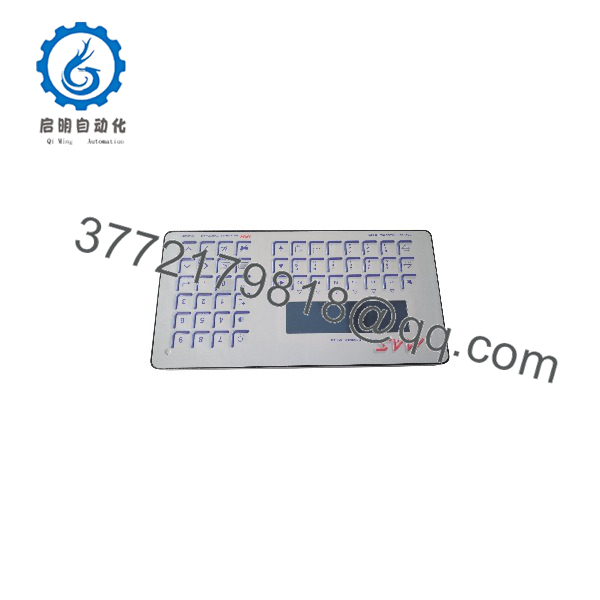
PD5010-LCD
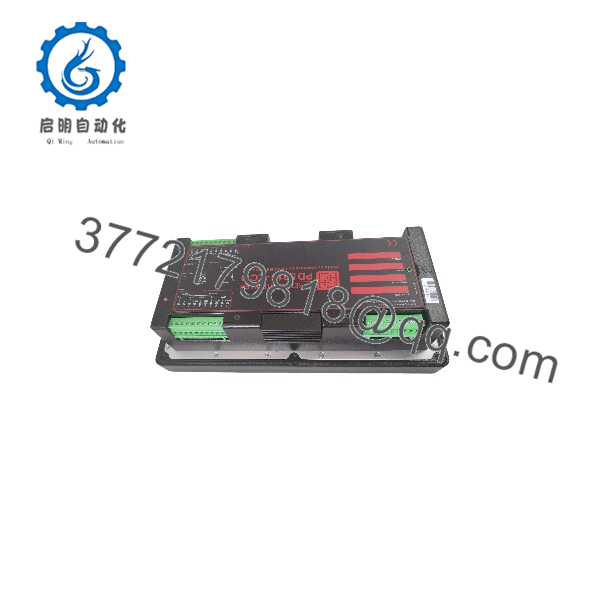
PD5010-LCD
System Compatibility & Integration Requirements
| Item / Dependency | Verified Compatibility or Requirement | Practical Note |
|---|---|---|
| Distributed control network | P-NET fieldbus, EN 50170 Vol. 1 | Intended for a P-NET control architecture. |
| Distributed I/O | P-NET digital, analogue, flow, and weight slave nodes | Field signals are handled through appropriate network modules. |
| Network interfaces | Two isolated RS485 P-NET ports | Supports multi-master and multi-net arrangements. |
| Programming environment | Process-Pascal | Programs are developed and compiled on a PC. |
| Program transfer | PC/P-NET interface card or RS232 | Provides two documented download paths. |
| Program storage | FLASH or battery-backed RAM | Program code can be downloaded to either memory type. |
| Memory expansion | PD 5090 RAM Extension Board | Expands both FLASH and RAM capacity to 1 MB each. |
| Serial peripherals | RS232, 1,200–9,600 baud | Used for devices such as printers, modems, and barcode readers. |
| Power | 24 V DC ±15%, 6 W | Match the controller supply to the stated voltage tolerance. |
These relationships describe the PD 5010 hardware and programming architecture.
Detailed Product Overview
Control execution and operator interaction in one unit
PD 5010 is more than a display terminal. Its microprocessor executes Process-Pascal programs, while the keyboard and graphics LCD provide the local human-machine interface. The programmable keys allow the application to define operator actions, and a custom self-adhesive overlay can label the keyboard for the intended control function. Adjustable display contrast and LED backlighting support configuration of the visual interface.
This combination matters when identifying an existing unit: the visible screen and keypad represent only part of its role. The installed control program, network configuration, and operator-interface logic also determine how it functions within the system. Process-Pascal explicitly supports the declaration and use of P-NET variables and objects, connecting the application program to distributed network resources.
Communication modes define the integration boundary
The controller provides three serial interfaces with configurable modes: PNETmode, DatamodeIn, DatamodeOut, and DatamodeInOut. Two channels use isolated RS485 and provide P-NET multi-master and multi-net communication. Outside PNETmode, those channels can support other protocol implementations over RS485, with baud rates adjustable between 1.2 and 76.8 kbaud. This capability does not establish support for a particular named protocol such as Modbus.
The RS232 port has a separate range of 1,200–9,600 baud and supports connections to serial peripherals and programming equipment. Integration therefore requires matching both the electrical interface and the application’s communication implementation—not merely choosing a connector or baud rate.
Memory configuration affects application capacity
Standard hardware provides 512 KB of FLASH and 512 KB of lithium-backed RAM. A separate 128 KB EPROM holds the operating system. The optional PD 5090 extension increases both FLASH and RAM to 1 MB each, so expanded capacity should not be assumed for every controller. Programs can be transferred from a PC through a PC/P-NET interface or RS232 and stored in FLASH or battery-backed RAM.
The controller also uses an object-oriented channel structure for communication-port configuration, program control, keyboard and display functions, and the digital alarm output. Its service channel provides device identification and node-address setting, supporting integration into the wider P-NET system.
Dimensions, Mounting & Connection Notes
The controller weighs 1.5 kg. Its front operator interface incorporates the graphics LCD, 48-key membrane keyboard, and a program-controlled LED. A digital alarm output is available at the rear of the controller.
Two communication channels use galvanically isolated RS485 interfaces; the third uses RS232. Their electrical interfaces and supported baud-rate ranges differ, so they should not be treated as interchangeable serial connections.
The operating ambient range is −10 to +45°C, and the storage range is −20 to +60°C. The stated IP65 sealing applies specifically to the keyboard.
Applications & System Role
PD 5010 acts as a distributed computing element and fieldbus master within a P-NET process-control system. It communicates with distributed digital, analogue, flow, and weight nodes and can operate alongside other controllers and PCs. Its built-in keyboard and display add local operator interaction to that control role.
The dual P-NET interfaces support linking two network sections, while RS232 provides access to other serial equipment. A documented technical-fit scenario is therefore a distributed control station that combines process logic, local operating screens, and communication between P-NET sections.
FAQ
What is PD5010-LCD?
PD5010-LCD is a commercial designation associated with the LCD-equipped PD 5010 P-NET controller. The underlying PROCES-DATA controller combines programmable control, a graphics display, and a membrane keyboard.
Is it only an HMI?
No. PD 5010 executes Process-Pascal control programs and functions as a P-NET fieldbus master, in addition to providing a local operator interface.
What display and keyboard does it have?
It has a 256 × 64-pixel Supertwist graphics LCD with adjustable contrast and LED backlighting, plus 48 programmable membrane keys.
Which communication ports are provided?
The controller has two galvanically isolated RS485 P-NET ports and one RS232 port. The P-NET ports support multi-master and multi-net communication.
How is the controller programmed?
It is programmed in Process-Pascal. Programs are developed and compiled on a PC, then downloaded through a PC/P-NET interface card or the RS232 connection.
Can its memory be expanded?
Yes. The optional PD 5090 board increases FLASH and RAM from 512 KB each to 1 MB each.
Does IP65 apply to the complete controller?
The documented IP65 rating applies to the sealed keyboard. It should not be presented as a complete-controller enclosure rating.
What supply and operating temperature does it require?
The controller requires 24 V DC ±15%, consumes 6 W, and has an operating ambient range of −10 to +45°C.