WhatsApp: +86 16626708626
 Email:
  Phone: +86 16626708626
Description
Key Technical Specifications
| Parameter | Value |
|---|---|
| Manufacturer | PRSTECH |
| Model | DMP10.24-20 |
| Product Type | Industrial DIN rail switching power supply |
| Nominal Output Voltage | 24 V DC |
| Rated Output Current | 20 A |
| Rated Output Power | 480 W |
| Output Adjustment | Reported 24–28 V DC adjustment range; verify on the physical unit |
| Input Supply | Single-phase AC |
| Reported Input Range | 90–264 V AC or 100–240 V AC, depending on aftermarket source; verify against the nameplate before installation |
| Input Frequency | Verify from the physical label and OEM documentation |
| Mounting Method | 35 mm DIN rail |
| Enclosure Rating | IP20, intended for installation inside a suitable electrical enclosure |
| Protection Functions | Overload, short-circuit, and overvoltage protection reported by aftermarket sources; verify unit-specific documentation |
| Operating Temperature | One aftermarket source reports −25 to +70 °C with temperature-dependent derating; confirm against the actual data sheet |
| Parallel / Redundancy Use | Verify with manufacturer documentation; do not parallel supplies based only on a reseller claim |
| Typical Loads | PLCs, DCS I/O, remote I/O, sensors, relays, contactors, solenoid valves, and 24 V DC control circuits |
| Lifecycle Status | Verify directly with PRSTECH; no reliable OEM lifecycle record was located in the available search results |
Available sources consistently identify DMP10.24-20 as a PRSTECH industrial DIN rail power supply with a nominal 24 V DC, 20 A output rating and 480 W output capacity. However, available search results conflict on the AC input range and other performance details. Confirm all installation-critical specifications from the exact unit nameplate and an authentic manufacturer data sheet before energizing.
Product Introduction
The PRSTECH DMP10.24-20 is a DIN rail-mounted industrial switching power supply that converts AC mains power to a regulated 24 V DC control voltage. Its 20 A, 480 W rating makes it suitable for supplying PLC racks, remote I/O, 24 V DC sensors, interposing relays, control valves, and distributed machine-control circuits.
This is not a direct replacement based only on “24 V DC.” Verify the input-voltage range, output-adjustment setting, load profile, inrush demand, cabinet temperature, terminal layout, polarity, and redundancy requirements. A 20 A supply may still trip if multiple solenoids, contactors, or DC motors start together without an inrush calculation.
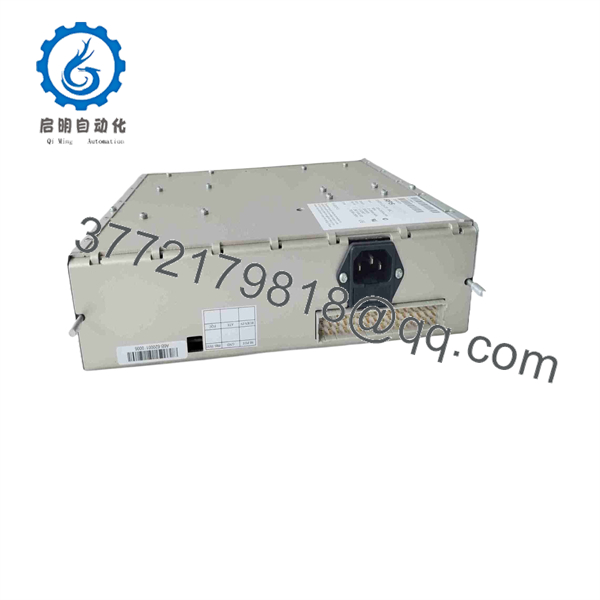
DMP10.24-20
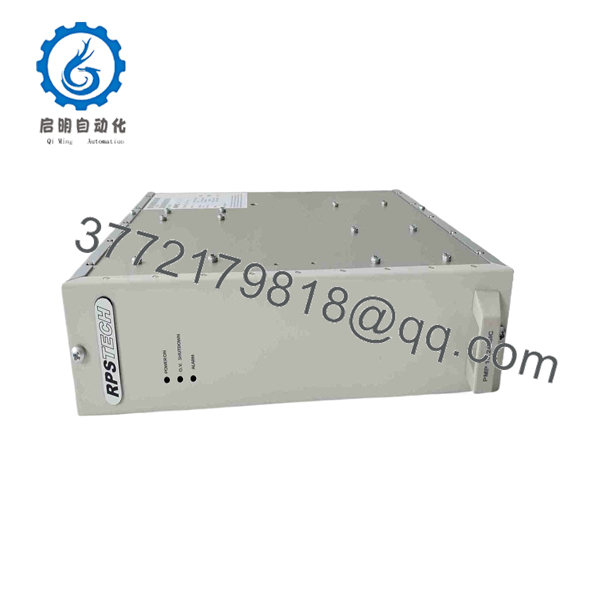
DMP10.24-20
Troubleshooting Quick Reference
| Symptom | Possible Cause | Relevance to This Part | Quick Check Method | Recommendation |
|---|---|---|---|---|
| No 24 V DC output | AC supply absent, upstream breaker open, blown fuse, incorrect input wiring, failed power supply | ✅ High | Measure the AC voltage at the DMP10.24-20 input terminals using a properly rated multimeter. Then measure output voltage directly across the +V and −V terminals. | Correct incoming power and wiring before replacing the supply. Confirm the physical unit’s accepted AC range first. |
| Output is low, such as 18–22 V DC | Overload, shorted field device, excessive cable drop, incorrect voltage adjustment, failing supply | ⚠️ Medium | Measure output at the supply terminals and at the farthest load. Use a DC clamp meter to measure total current. Disconnect branch loads one at a time. | If voltage is correct at the supply but low at the load, repair wiring or increase conductor size. If it is low at the supply under load, check for overload or replace the unit. |
| PLC or remote I/O resets when solenoids energize | High inrush current, undersized supply, weak upstream AC feed, poor 0 V distribution, output voltage sag | ❌ Usually low | Trend 24 V DC at the PLC power terminals during the event. Measure current on solenoid branches and compare total demand with the 20 A, 480 W rating. | Separate high-inrush loads from logic power, add properly designed buffer or redundancy equipment if required, and maintain at least 20% supply margin. |
| Supply repeatedly enters protection mode | Short circuit, overloaded output, failed solenoid coil, reversed branch wiring, defective supply | ⚠️ Medium | Isolate outgoing 24 V DC branches. Reconnect one circuit at a time while monitoring output voltage and current. Inspect for overheated terminal blocks or damaged conductors. | Find the short or overload before ordering a power supply. Repeated reset attempts can damage wiring and loads. |
| Output rises above expected voltage | Incorrect adjustment setting, failed regulation circuit, external backfeed from another 24 V DC supply | ✅ Medium | Measure output with all parallel or redundant supplies isolated. Check the voltage-adjustment potentiometer position against the approved setting. | Set voltage only within the manufacturer-approved range. If it remains high or unstable, replace the supply and inspect equipment exposed to overvoltage. |
| Power supply is hot or shuts down after several hours | High continuous load, poor ventilation, high cabinet temperature, loose terminal creating resistance heating, aged internal components | ✅ High | Measure output current, inspect airflow, measure cabinet ambient temperature, and check terminal torque with power isolated. Look for discoloration or heat damage. | Reduce continuous loading, improve enclosure cooling, and replace damaged terminals. Keep the supply below its thermal derating limit. |
| Output voltage fluctuates or has visible ripple | Overload, failing internal capacitors, unstable AC input, loose terminal, poor grounding, external DC backfeed | ✅ Medium | Measure output with a true-RMS meter and, where safe and available, inspect ripple using an isolated oscilloscope. Check AC input stability and terminal connections. | Remove overloads and backfeeds first. Replace the supply if ripple persists with a verified input and known-good resistive load. |
| Only one 24 V branch is dead | Blown branch fuse, failed electronic circuit protector, open terminal, broken conductor | ❌ Low | Measure 24 V DC at the supply, branch fuse input, branch fuse output, and field terminal. | Repair the downstream branch. The main DMP10.24-20 is unlikely to be the cause if other branches remain stable. |
| Replacement unit will not fit or wiring does not match | DIN rail depth issue, different terminal orientation, different width, input-range mismatch, missing earth connection | ⚠️ Medium | Compare unit dimensions, terminal labels, wire-entry direction, PE terminal location, and required clearance before installation. | Do not force wiring to reach. Verify the exact mechanical drawing and label before purchase. |
| Two supplies connected in parallel fight each other | Output setpoints differ, no approved redundancy module, supplies not rated for parallel operation, reverse current path | ✅ High | Isolate one supply at a time and measure output voltage. Check for reverse current or uneven current sharing with a DC clamp meter. | Use a manufacturer-approved redundancy module or power distribution design. Do not directly parallel supplies unless the exact model documentation permits it. |
❗ Critical warning: Before removing the old supply, photograph every terminal and wire marker. AC line, neutral, protective earth, +24 V DC, and 0 V DC are easy to transpose in a crowded cabinet. A wrong connection can damage PLCs, I/O cards, sensors, and communication equipment in seconds.
❗ Load-calculation warning: A 24 V × 20 A supply has a nominal 480 W capacity, but do not design a production cabinet at the full nameplate limit. Add all steady-state loads, evaluate coil inrush and capacitive startup current, account for temperature derating, and keep practical operating headroom. A 20% margin is a sensible starting point unless the OEM design requires more.
If troubleshooting stalls, provide technical support with clear label photos, input and output voltage readings, total load current, cabinet temperature, photos of terminal wiring, and a list of downstream loads.
Frequently Asked Questions
What is the PRSTECH DMP10.24-20?
The PRSTECH .24-20 is an industrial DIN rail switching power supply that provides 24 V DC output at a rated 20 A, or 480 W. It is intended for control-cabinet loads such as PLCs, DCS I/O, sensors, relays, and 24 V DC actuators.
What is the output rating of .24-20?
The available product listings identify a nominal 24 V DC output with 20 A rated current and 480 W rated output power. The basic calculation is 24 V×20 A=480 W24\ V \times 20\ A = 480\ W. Verify the actual output-voltage adjustment range and permissible continuous load from the supplied unit’s data sheet.
What AC input voltage does .24-20 accept?
This must be confirmed from the physical nameplate. The available aftermarket information is inconsistent: one source reports 90–264 V AC, while another reports 100–240 V AC. Do not connect mains power based on a generic listing. Verify the unit’s exact AC input range, frequency, terminal identification, and protective-earth requirement before installation.
Can I use .24-20 as a direct replacement for any 24 V DC supply?
Not automatically. Confirm the AC input range, current capacity, 24 V DC output adjustment, terminal positions, enclosure width, DIN rail fit, load inrush capability, environmental temperature, approvals, output protection behavior, and redundancy requirements. A smaller supply may be intentionally used with external electronic circuit protection, while a larger supply can create different fault-current behavior.
Can this power supply run a PLC and solenoid valves together?
Yes, if the total steady-state and transient demand stays within the supply’s permitted output limits. In practice, isolate sensitive PLC and communication loads from high-inrush solenoid, relay, and contactor loads using separate fused branches or separate supplies. Measure actual load current during startup and worst-case machine operation instead of relying only on coil nameplate values.
Can I connect two .24-20 units in parallel for redundancy?
Do not assume that you can. One aftermarket source claims redundancy capability, but that statement is not enough for a control-system design. Check official PRSTECH documentation for approved parallel operation, required external redundancy modules, output-voltage matching, allowable reverse current, and failure-mode behavior. For critical systems, use a documented ORing or redundancy design.
Can I hot-swap the .24-20?
Do not hot-swap a standard DIN rail power supply unless the complete cabinet design explicitly supports it. Removing the unit can interrupt 24 V DC logic power, reset PLCs, de-energize relays, drop safety circuits, or cause process trips. Isolate AC input and downstream loads under the site’s lockout/tagout procedure before replacement.
Why is a New Surplus .24-20 cheaper than an OEM-distributed unit?
New Surplus stock can originate from unused panel-builder inventory, canceled projects, maintenance spares, distributor overstock, or equipment decommissioning. The price may be lower because the supply is legacy inventory or sold outside an authorized channel. Request exact-unit photos, serial and lot details where available, packaging condition, written warranty, return terms, and verification of basic input/output function.
What testing should a supplier perform before shipping a refurbished .24-20?
Ask for incoming visual inspection, label verification, terminal inspection, controlled AC power-up at the rated input voltage, output-voltage setting check, load test at a documented current, thermal observation, protection test where safely applicable, and a QC report. For a 20 A supply, a credible test should include a sustained load run rather than only measuring 24 V DC with no load. The supplier should also package the unit in ESD-safe materials with protected terminals and heavy-duty boxing.