WhatsApp: +86 16626708626
 Email:
  Phone: +86 16626708626
Description
Key Technical Specifications
| Parameter | Value |
|---|---|
| Model | BLM-2202U-LP120-7 |
| Manufacturer | Reliance Electric |
| Product Type | Brushless DC servo motor with planetary gearbox |
| Rated Power | 200 W / 0.27 HP |
| Reported Rated Voltage | 24 V DC / 48 V DC |
| Rated Current | 8.5 A at 24 V / 4.2 A at 48 V |
| Rated Motor Speed | 3,000 RPM |
| Gearbox | LP120 planetary gearbox |
| Reduction Ratio | 7:1 |
| Rated Output Speed | Approximately 428 RPM |
| Rated Output Torque | 4.4 N·m / 38.9 lb-in |
| Peak Output Torque | 13.2 N·m / 116.7 lb-in |
| Feedback | Incremental encoder, reported 1,000 / 2,000 lines |
| Gearbox Backlash | ≤5 arcmin, reported |
| Insulation Class | Class B, 130 °C |
| Protection Rating | IP54 |
| Cooling | Self-cooled, IC410 |
| Shaft Diameter | 14 mm |
| Reported Weight | 2.8 kg including gearbox |
| Operating Temperature | −10 °C to +40 °C |
| Storage Temperature | −40 °C to +85 °C |
The published specification source gives the 200 W rating, 7:1 reduction, 3,000 RPM motor speed, 4.4 N·m rated output torque, and IP54 enclosure rating.
Procurement caution: I would not treat the 24/48 V rating, encoder resolution, dimensions, or drive compatibility as independently verified OEM data. The accessible information is from secondary sources, and another marketplace labels the same part number as a “relay output module,” indicating catalog-data quality issues.
Product Introduction
The Reliance Electric BLM-2202U-LP120-7 is listed as a brushless DC servo motor fitted with an LP120 planetary gearbox and 7:1 reduction. The published rating is 200 W with a 3,000 RPM motor speed and approximately 428 RPM gearbox output at rated speed.
The gearbox increases available output torque while reducing shaft speed, making the assembly suitable for compact positioning applications. Before replacing an installed motor, verify the flange, shaft, encoder connector, motor voltage, and compatible servo amplifier against the original nameplate.
Installation & Configuration Guide
Stage 1: Pre-Installation Preparation — Approximately 10 Minutes
⚠️ Safety First: Stop the machine and place the motion system in its approved maintenance state. Apply lockout/tagout to the applicable electrical and mechanical energy sources. A servo motor can retain hazardous mechanical energy even after electrical power is removed.
Tools Required
- ESD wrist strap
- Appropriate Phillips/hex tools
- Digital multimeter
- Wire labels
- Smartphone or camera
- Torque wrench where specified by the machine OEM
- Existing servo drive documentation
Data Backup
- Record the complete BLM-2202U-LP120-7 nameplate.
- Photograph the motor, gearbox, connectors, shaft, and mounting flange.
- Record the servo amplifier model.
- Save the drive configuration.
- Record motor parameters from the drive.
- Photograph encoder and power connections.
- Record cable routing and shielding termination.
⚠️ Do not assume that a replacement motor with the same mechanical dimensions has the same electrical characteristics. Motor current, voltage, feedback type, and commutation data must match the drive.
Stage 2: Removing the Old Motor — Approximately 10 Minutes
- Confirm the machine is mechanically secured.
- Isolate the servo amplifier and associated power sources.
- Verify the DC bus has discharged according to the drive manufacturer’s procedure.
- Measure and confirm absence of hazardous voltage before touching conductors.
- Label motor power and feedback cables.
- Disconnect the encoder/feedback connector carefully.
- Disconnect motor power wiring.
- Support the motor before removing mounting bolts.
- Remove the mounting hardware.
- Withdraw the motor without applying side loads to the gearbox output shaft.
- Inspect the coupling, shaft, flange, and gearbox interface.
⚠️ Do not rotate or force the gearbox output shaft while the machine coupling is still loaded. If the motor drives a vertical or spring-loaded mechanism, secure the mechanism before removing the motor.
Stage 3: Installing the New Motor — Approximately 10 Minutes
- Confirm the replacement marking is BLM-2202U-LP120-7.
- Compare the gearbox, flange, shaft diameter, connector arrangement, and cable exit with the original.
- Verify the motor voltage and current requirements against the servo amplifier.
- Confirm encoder type and resolution.
- Install the motor without forcing the coupling.
- Align the motor shaft with the driven mechanism.
- Tighten mounting hardware using the machine/OEM torque specification.
- Reconnect motor power wiring.
- Reconnect the encoder cable.
- Verify cable shielding and grounding according to the drive documentation.
Self-Checklist
- Exact model verified
- Motor voltage verified
- Drive compatibility checked
- Encoder type verified
- Shaft/coupling aligned
- Mounting hardware secured
- Power wiring checked
- Feedback wiring checked
- Shielding restored
Stage 4: Power-On & Testing — Approximately 10–15 Minutes
- Keep personnel clear of the machine’s movement envelope.
- Confirm the mechanical load can move safely.
- Restore control power first where the drive architecture permits.
- Check the servo amplifier for motor/encoder faults.
- Verify motor feedback is being detected.
- Confirm the configured motor parameters.
- Do not immediately command full-speed operation.
- Enable the servo at low speed or under the approved commissioning procedure.
- Check direction of rotation.
- Verify position feedback.
- Check abnormal vibration, noise, or gearbox heating.
- Perform a controlled positioning test.
- Return the machine to production only after the required functional checks pass.
⚠️ If the drive reports an encoder, commutation, overcurrent, or motor-identification fault, stop commissioning. Check the feedback connector, motor parameters, supply voltage, and drive compatibility before attempting repeated starts.
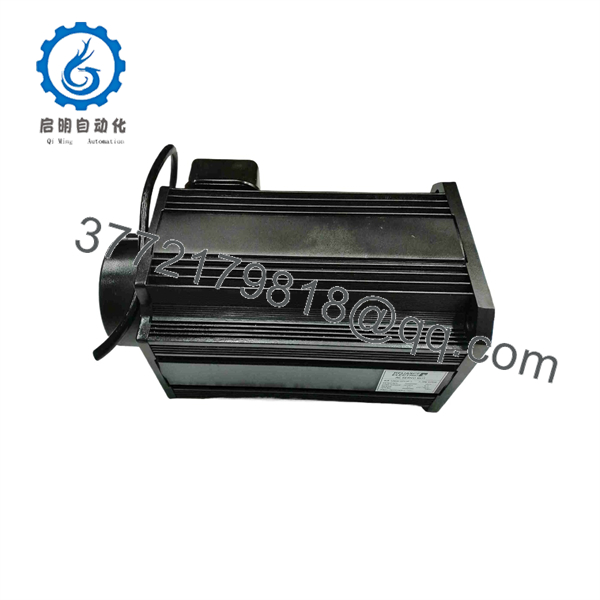
BLM-2202U-LP120-7
Frequently Asked Questions (FAQ)
Q1. What is the Reliance BLM-2202U–7?
Available technical listings identify it as a Reliance Electric brushless DC servo motor with an planetary gearbox and 7:1 reduction ratio. The published motor rating is 200 W.
Q2. What does “-7” mean?
The available listing identifies as the planetary gearbox designation and 7 as the 7:1 reduction ratio. At a reported 3,000 RPM motor speed, the corresponding nominal gearbox output speed is approximately 428 RPM.
Q3. What is the rated output torque?
The published specification gives approximately 4.4 N·m (38.9 lb-in) rated output torque and 13.2 N·m (116.7 lb-in) peak output torque. Treat these as secondary-source specifications until confirmed against the original Reliance documentation for the exact motor revision.
Q4. What voltage does BLM-2202U–7 use?
A secondary listing reports 24 V DC / 48 V DC, with 8.5 A at 24 V and 4.2 A at 48 V. Because these are critical drive-selection parameters, verify the actual nameplate and servo-amplifier documentation before applying power.
Q5. What encoder does this motor use?
The available specification reports an incremental encoder, with 1,000/2,000-line variants listed. Do not assume the encoder resolution of an individual motor from the base model alone; confirm the nameplate, connector pinout, and installed drive configuration.
s a relay output module?
There is a marketplace listing that labels the part number as a “relay output module,” but another detailed listing identifies the exact same number as a Reliance Electric brushless servo motor with gearbox. The motor/gearbox description is consistent with the model structure and available technical specifications. Request a nameplate photograph before purchasing if the application is critical.
s obsolete?
I did not find an authoritative Reliance Electric lifecycle notice confirming the current production status of this exact part number. It appears in current secondary-market industrial automation catalogs, but that does not establish OEM production status. For a legacy machine, specify the exact part number and request the actual unit’s nameplate, condition, and test documentation before ordering.