WhatsApp: +86 16626708626
 Email:
  Phone: +86 16626708626
Description
Key Technical Specifications
| Parameter | Specification |
| Manufacturer | Reliance Electric (Baldor / ABB / Rockwell Automation) |
| Model Number | DDS-LPS |
| System Compatibility | Reliance Direct Digital System (DDS) Racks & Drive Cabinets |
| Primary Category | VDC Logic I/O Brain & System Processor Module |
| Input Logic Voltage | 24V DC nominal (Logic I/O power rails) |
| Analog Input Range | 0 to 10 VDC (100 kΩ input impedance) |
| Communication Bus | Proprietary Reliance DDS backplane interface |
| Operating Temperature | 0°C to +55°C (32°F to 131°F) |
| Storage Temperature | -40°C to +85°C (-40°F to 185°F) |
| Ambient Humidity | 5% to 95% RH (Non-condensing) |
| Physical Weight | 2.72 kg (6.00 lbs) |
| Mounting Format | Multi-pin edge connector for DDS rack chassis installation |
Product Introduction
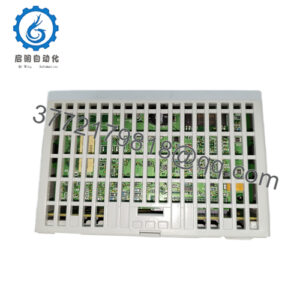
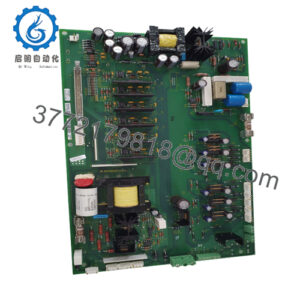
The Reliance Electric DDS-LPS serves as the primary logic processing unit and VDC I/O interface module within legacy Reliance Direct Digital System (DDS) drive assemblies. It coordinates real-time speed/torque regulation sequences, executes drive protection interlocks, and routes analog and digital feedback signals between external field devices and the drive’s main control loop. Designed specifically for heavy-duty industrial processing lines, the module processes fast control loops required for precise motor control.
Installing a verified replacement DDS-LPS card keeps existing legacy drive infrastructure running without forcing an expensive controller upgrade. Replacing this board directly restores drive synchronization and communication routines on your existing rack backplane, eliminating the need to rewire cabinet harnesses or modify legacy control logic.
Core Strategy 1: SOP Quality Transparency
To ensure obsolete Reliance Electric stock functions correctly out of the box, every DDS-LPS module undergoes a strict 5-step hardware evaluation:
- Inbound Traceability & Visual Inspection
- Verification of OEM serial tags, circuit board lot numbers, and revision stampings.
- Microscopic inspection of gold edge-connector fingers for scoring or oxidation.
- Visual audit for heat-stressed components, leaking electrolytic capacitors, or cracked solder joints around high-current pulse transformers.
- Live Functional Testing
- Mounted in an authentic Reliance DDS system test rack powered by a verified system power supply card.
- Power-On Self-Test (POST): Monitoring voltage regulation across onboard logic buses to confirm proper startup logic.
- Loop Simulation Test: Exercised on an automated test fixture for 24 hours, running continuous 0–10 VDC analog control swings and cycling digital inputs while monitoring internal thermal response.
- Generation of a formal bench diagnostic report documenting test performance.
- Electrical Parameter Testing
- Insulation Resistance: Tested using a 500V Megger between isolated logic ground planes and the frame ground line (>10 MΩ rating).
- Backplane Power Rail Draw: Using a Fluke 115 multimeter, logic current draw on the 24V DC bus is measured to verify it stays within OEM operating tolerances.
- Firmware & Configuration Verification
- Verification of onboard ROM chips and revision levels.
- Inspection and mechanical audit of configuration DIP switches and jumper headers to ensure contacts are clean and operational.
- Final QC & ESD Packaging
- Lead inspector sign-off on the physical quality tracking log.
- Sealed in a static-shielding ESD pouch with a desiccant pack.
- Encapsulated in dense anti-static foam inside a heavy-duty 200 lb test shipping box.
Complete bench test photos and live run verification logs are available upon request prior to shipping.
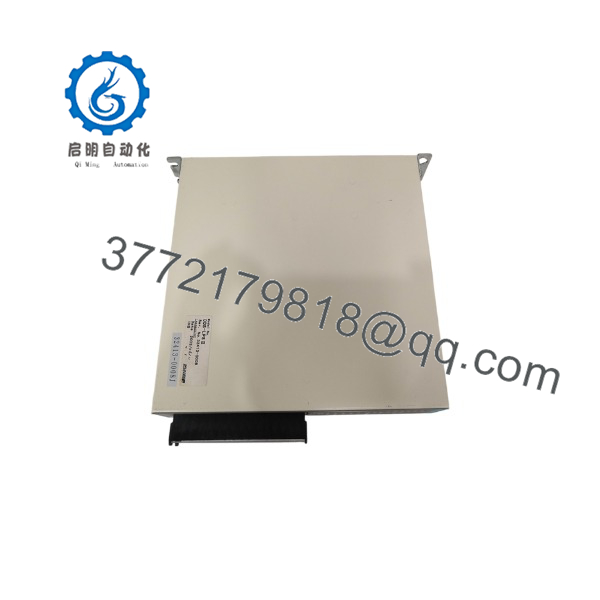
DDS-LPS
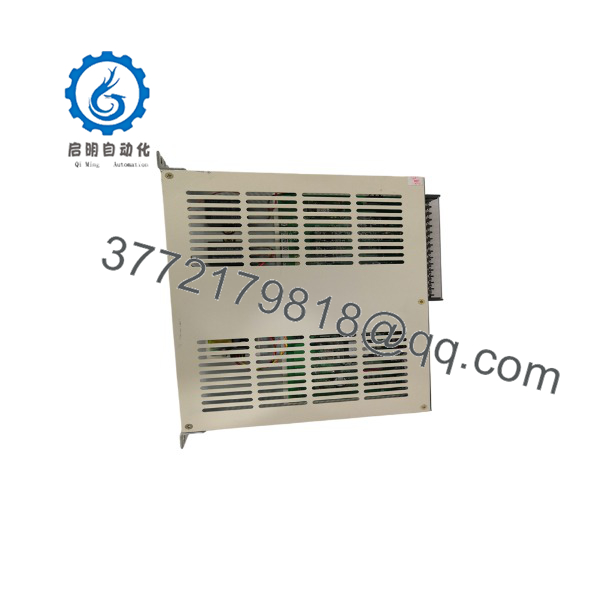
DDS-LPS
Troubleshooting Quick Reference
| Symptom | Possible Cause | Relevance to this Part | Quick Check Method | Recommendation |
| Drive fails to initialize; Logic fault LED lit | Onboard processor corruption or backplane 24V drop | ✅ High | Measure logic power at backplane edge connector pins with a multimeter. | If 24V supply is clean and stable but module fails POST, replace the DDS-LPS board. |
| Analog speed reference signal not reading | Failed high-impedance input stage or op-amp IC | ✅ High | Apply a known 0–10 VDC signal across input terminals and monitor software/bus value. | If input signal is present at board pins but unread by system logic, replace module. |
| Intermittent drive trip during acceleration | Solder joint micro-cracking due to thermal cycling | 🟡 Medium | Flex chassis lightly under low voltage test or monitor board with thermal camera. | If fault tracks with board vibration or thermal expansion, replace the module. |
| Digital I/O points stuck OFF or ON | Blown optocoupler or damaged output transistor | ✅ High | Check voltage drop across input/output optocoupler pins during operation. | Replace the board if isolated channel drivers are shorted or open-circuit. |
| Complete loss of backplane comms | Edge connector corrosion or bus transceiver failure | 🟡 Medium | Inspect backplane gold fingers for dark oxidation or wear marks. | Clean edge connector with non-conductive cleaner. If comms fail to restore, replace card. |
If diagnostic steps leave room for doubt, document your drive status code and contact our engineering team before pulling the board.
Core Strategy 2: Technical Pitfall & Survival Guide
Replacing a Reliance DDS controller card requires attention to physical setup and hardware settings to avoid trip conditions on restart.
- DIP Switch and Jumper Configuration Mismatch
- The Trap: Installing a replacement DDS-LPS card with factory-default jumpers can misconfigure analog input scaling (e.g., 0–10V vs 4–20mA) or node addresses, causing immediately faulted drive states.
- Avoidance: Photograph the exact positions of every jumper block and DIP switch on the original board before removing it. Set the replacement module to match prior to installation.
- ❗ It’s the most common rookie mistake on legacy drive retrofits. Take a clear photo of every single switch bank before you touch anything. Seriously.
- Edge Connector Realignment Damage
- The Trap: Inserting the module into the card cage at an angle can bend backplane pins or scrape the gold contact traces off the edge connector.
- Avoidance: Align the board precisely with the card cage guide tracks. Slide it straight back and seat it firmly using two-thumb pressure on the card ejectors without forcing it.
- ❗ Don’t force it. If it doesn’t slide in smoothly, an edge guide is misaligned. Forcing it can destroy both the card and the rack backplane.
- Unregulated 24V DC Logic Power Supplies
- The Trap: Powering a replacement logic card from a degraded or noisy 24V DC power supply can cook sensitive onboard logic components.
- Avoidance: Measure ripple voltage on the cabinet 24V DC logic supply using an oscilloscope or AC-mV multimeter mode. Ensure AC noise ripple is under 100 mV peak-to-peak.
- ❗ I’ve seen techs ruin replacement logic boards within 10 minutes because they didn’t realize the cabinet supply was putting out 32V spikes. Check power first.
- Electrostatic Discharge (ESD)
- The Trap: Older control boards use CMOS logic components that are sensitive to ESD damage during handling.
- Avoidance: Wear a grounded wrist strap attached to the metal enclosure frame before pulling the board from its static bag.
- ❗ Handling a $3,000 drive card in the dead of winter without a strap can destroy the logic components before you even power up. Use an ESD wrist strap.
Follow these steps during replacement to avoid unnecessary rework and get your machine back online quickly.
Frequently Asked Questions (FAQ)
Is the Reliance DDS-LPS card hot-swappable?
No. Standard Reliance DDS rack assemblies do not support hot-swapping control cards. Inserting or removing the DDS-LPS module while the backplane power supply is active can cause high-current transients across edge connector pins, damaging the logic processor and adjacent drive boards. Always isolate cabinet supply power before pulling or inserting cards.
How do I verify if my issue is with the DDS-LPS card or the power supply board?
Check the status indicators on the rack power supply card first. If the power supply outputs (typically +5V, +15V, -15V, and +24V logic rails) measure within a ±2% tolerance using a multimeter, but the drive remains unresponsive or fails to process speed references, the fault is isolated to the DDS-LPS processor module.
Will I need to reprogram this card using specialized Reliance software?
The DDS-LPS acts as a hardware execution brain. While fundamental operating firmware resides on onboard ROMs, system parameters and scaling configs are set via physical DIP switches, jumpers, or transferred from the master drive processor upon initialization. Match all physical board jumpers to your original card prior to power-up.
Why choose a New Surplus DDS-LPS instead of upgrading to a modern AC/DC drive?
A complete drive retrofit requires replacing the drive module, motor feedback devices, cabinet line reactors, control wiring, and updating PLC communication code. Installing a New Surplus DDS-LPS board gets your existing production line running in under an hour for a fraction of the cost of a full drive system migration.
What is the difference between Baldor, Reliance Electric, and ABB labels on this part?
Reliance Electric originally designed the DDS drive line. Over time, manufacturing rights moved through corporate acquisitions to Baldor Electric and subsequently ABB. A unit branded Reliance, Baldor, or ABB with the part number DDS-LPS is functionally identical and fully interchangeable on the backplane.