WhatsApp: +86 16626708626
 Email:
 Phone: +86 16626708626
Description
Core Product Summary
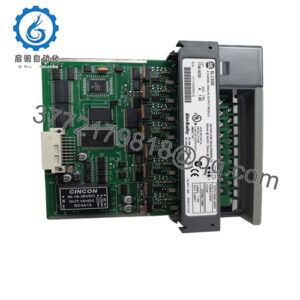
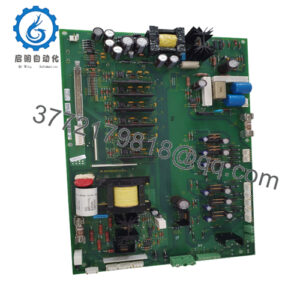
The Reliance Electric WR-D4007 is the MCPS power supply card — also catalogued as the Power Supply II Card — used with the PSC7000 control system. Within the PSC7000 architecture, it is one of the defined option card types that plug into the controller card rack, alongside modules such as the DIO-1 digital I/O card, the AIO-1 analog I/O card, and the PNET-1 network card.
The card accepts an AC input of 85–132 V at 47–63 Hz. Its engineering role is to supply regulated DC power to the rack’s control boards and option cards, which makes it a shared-resource component: the PSC7000 control card and its option cards depend on it, so a failing MCPS card typically affects the whole controller rather than a single I/O channel. Engineers sourcing this part are usually maintaining or commissioning PSC7000-based drive and motion control installations.
Key Technical Specifications
| Parameter | Value |
|---|---|
| Manufacturer | Reliance Electric |
| Part number / drawing number | WR-D4007 |
| Option card type designation | MCPS (Power Supply II Card; also referred to as MCPS2 in supplier catalogs) |
| Host system | PSC7000 control card system |
| Input voltage | 85–132 VAC |
| Input frequency | 47–63 Hz |
| Function | Regulated DC power supply for the controller rack |
| Format | Plug-in option card within the PSC7000 card set |
Engineering Selection Highlights
- Defined option-card slot. The PSC7000 instruction manual lists MCPS (WR-D4007) alongside the other option card types in the PSC7000 card set — DIO-1 (S-D4006), AIO-1 (S-D4008), PNET-1 (S-D4007), SYNC-1 (S-D4011), and others — confirming this is a rack-level card with a defined role in the PSC7000 architecture, not a standalone power supply.
- Input range check. The 85–132 VAC, 47–63 Hz input range must match the control cabinet’s supply. Cabinets fed from 230/240 VAC control power fall outside this card’s documented range, so verifying supply voltage is the first selection gate.
- Shared-resource failure mode. Because the card powers the rack’s control boards, its degradation shows up as controller-level faults — resets, erratic option-card behavior, or total rack failure — rather than single-point I/O errors. This is why it is commonly stocked as a critical spare.
- Configuration limits come from the host controller. The PSC7000 manual places limits on the option-card configuration (for example, the permitted number of AIO-1 cards per controller), so power and slot budgeting should be validated against the controller configuration, not assumed from the power card alone.
- Catalog naming awareness. Supplier listings variously use “Power Supply II Card,” “MCPS,” and “MCPS2” for this part number. All refer to the same WR-D4007 drawing number, so the part number itself is the reliable ordering reference.
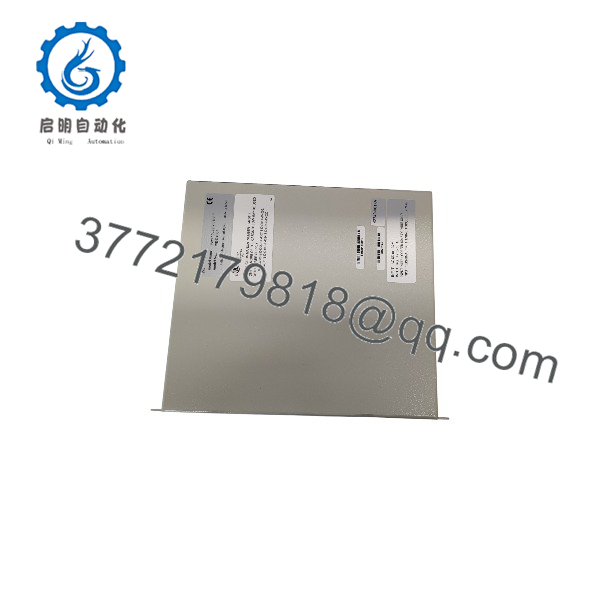
WR-D4007
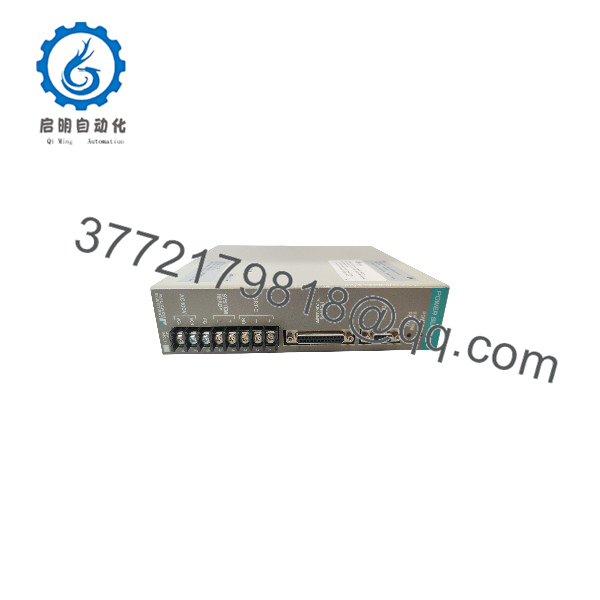
WR-D4007
System Compatibility & Integration Requirements
| Item / Dependency | Verified Compatibility or Requirement | Practical Note |
|---|---|---|
| Host controller | PSC7000 control card | MCPS (WR-D4007) is listed as an option card type used in combination with the PSC7000 control card |
| Option-card family | DIO-1 (S-D4006), AIO-1 (S-D4008), PNET-1 (S-D4007), SYNC-1 (S-D4011), SAEI-1 (S-D4009), PCNA-1 (S-D4019), CCLK-1 (S-D4030), plus SRO, FSBP, SSBP, and PRIO card types | The MCPS supplies the rack these option cards occupy |
| Related controller families | The option-card documentation also covers PSC4000 and DDS5000 series controllers | The same option-card numbering series is referenced across these controller lines; confirm the host controller before ordering |
| Supply requirement | 85–132 VAC, 47–63 Hz | Verify cabinet control-power voltage matches this range |
| Installation reference | PSC7000 instruction manual | Configuration and restriction rules for option cards are defined in the host system manual |
Detailed Product Overview
The Reliance Electric WR-D4007 should be understood through the architecture it serves. The PSC7000 control system is built around a control card that hosts a rack of plug-in option cards, each adding a specific capability: digital and analog I/O, a network interface, synchronization functions, or encoder inputs. This modular structure is what lets one controller family serve different drive and motion applications with different I/O and network needs. The MCPS card — designated WR-D4007 in the system’s option-card tables — is the power card in that structure.
For a maintenance engineer, the card’s rack-level role has concrete consequences. First, power problems on this card do not stay local: because the control card and every option card depend on the MCPS, symptoms of a weak or failing supply appear as system-wide misbehavior — unplanned controller resets, option cards dropping out, or intermittent faults across multiple functions at once. Second, the card is a defined, plug-in component in the PSC7000 parts set, which makes board-level replacement the standard repair approach; the system manual, not general-purpose power-supply knowledge, is the reference for how the rack is configured and re-assembled around it.
Selection is straightforward but has one hard gate: the supply voltage. The card’s documented input range is 85–132 VAC at 47–63 Hz. A control cabinet with 230 VAC control power is outside this range, so the MCPS card is selected for installations wired for the low-voltage control supply. Checking the cabinet’s control-power circuit against this range before ordering prevents the most common mis-procurement.
Configuration context also matters. The PSC7000 manual defines how many option cards of each type may be used with the control card — for example, limits on the number of analog I/O cards per controller. Since all of these cards share the rack that the MCPS powers, the power card should be ordered and commissioned as part of a validated controller configuration rather than in isolation.
Finally, buyers should be aware of naming drift in the secondary market. The same drawing number appears in supplier catalogs as “Power Supply II Card,” “MCPS,” and “MCPS2,” sometimes with the PSC7000 or PSC5000 system attached to it. The part number WR-D4007, checked against the host controller in the installation, is the dependable identity reference; condition claims (new, refurbished) are attributes of a specific offer, not of the part number.
Applications & System Role
The WR-D4007 occupies the power position in the PSC7000 card rack. The PSC7000 is a drive and motion control platform: its control card executes the control application, while option cards extend it with digital I/O, analog I/O, network communication, synchronization, and encoder input capabilities. The MCPS card is the component that energizes this environment — without it, neither the control card nor the option cards operate.
Its position in the architecture explains its maintenance relevance. As a single power card serving the whole rack, it is one of a small number of components whose failure stops the entire controller. In practice this makes the WR-D4007 a standard spare for facilities that keep PSC7000-based systems in service.
Technical-fit scenarios for this part are the repair and maintenance of PSC7000 controller racks and the recommissioning of systems that use the PSC7000 option-card set. No specific industry deployments can be attributed to the exact part number from available documentation.
FAQ
What is the Reliance WR-D4007?
It is the MCPS power supply card for the Reliance Electric PSC7000 control system, catalogued as the Power Supply II Card.
Which system does it belong to?
It belongs to the PSC7000 control card system, where it is one of the defined option card types alongside DIO-1, AIO-1, PNET-1, SYNC-1, and other option cards.
What does it do?
It provides regulated DC power for the PSC7000 controller rack, supplying the control card and the option cards installed in the rack.
What is its input power requirement?
Its documented input is 85–132 VAC at 47–63 Hz.
What happens when this card fails?
Because it powers the entire rack, its failure affects the whole controller — control card and option cards together — rather than a single I/O function.
What is the difference between MCPS, MCPS2, and Power Supply II Card?
These are naming variants used in supplier catalogs for the same WR-D4007 part number; the part number itself is the reliable ordering reference.
Which manual covers this card?
The PSC7000 instruction manual, which defines the option-card types, their part numbers, and the configuration limits that apply when building the controller rack.
Do related controllers use the same card series?
The option-card documentation also covers PSC4000 and DDS5000 series controllers, so the same card-numbering series appears across those controller families — confirm the host controller before ordering.