WhatsApp: +86 16626708626
 Email:
  Phone: +86 16626708626
Description
Key Technical Specifications
| Parameter | Specification Details |
| Microprocessor | Intel 80C196NP running at 16 MHz |
| System Memory | 56 KB Primary RAM |
| Non-Volatile Memory | 32 KB EEPROM (Parameter Storage) |
| Application Memory | 128 KB – 512 KB EPROM (EPROM socketed logic) |
| Network Interfaces | 3 x Independent CAN Controllers (A-Bus, B-Bus, S-Bus) |
| Serial Communication | 1 x RS-232 Port for VT100 Terminal / Maintenance Interface |
| Supply Voltage | 24 VDC Nominal (Dual Redundant Input Circuitry) |
| Galvanic Isolation | 1.5 kV isolation between system bus and field communications |
| Mounting Format | Multi-slot Eurocard edge-connector module / Engine Room Sub-rack |
| Operating Temperature | −25°C to +70°C (−13°F to +158°F) |
| Weight | 0.38 kg (0.84 lbs) |
Product Introduction & Supply Chain Strategy
The ROLLS-ROYCE CCN-01 serves as the central processing and network arbiter within the proprietary CANman control architecture. Deployed extensively across commercial vessels, offshore supply hulls, and drilling units, this module executes real-time propulsion algorithms, pitch loop positioning, waterjet steering, and bridge-to-engine-room command multiplexing. It processes inputs from distributed field nodes (such as SLIO 01 and SLIO 02 modules) and translates sensor data across high-speed CAN networks with sub-10ms response times.
From a supply chain perspective, the CCN-01 is an obsolete component with no direct drop-in alternative manufactured by the OEM today. Sourcing this unit as New Surplus eliminates the immense risks tied to aging, rebuilt marine electronics. Marine engineers cannot afford dynamic positioning or steering failure at sea caused by worn capacitors or thermal fatigue on second-hand boards. Keeping a factory-sealed CCN-01 on-site acts as an insurance policy that lowers your Total Cost of Ownership (TCO) and prevents multi-thousand-dollar daily vessel charter losses during unexpected dynamic positioning or thruster downtime.
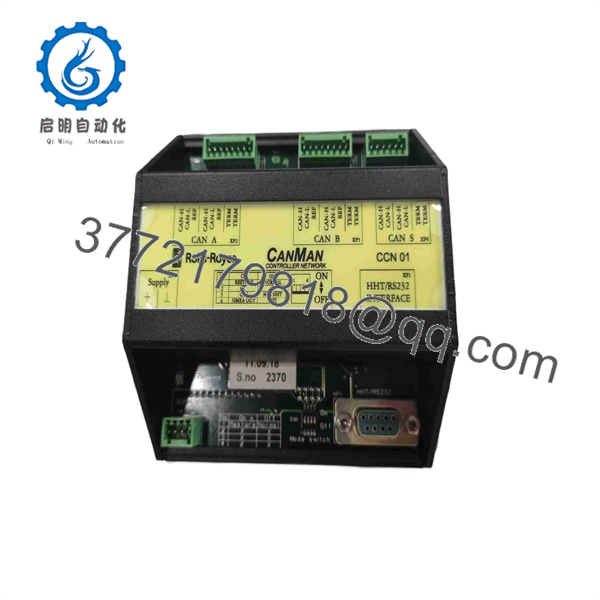
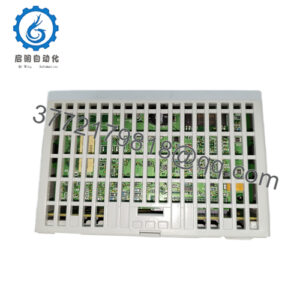
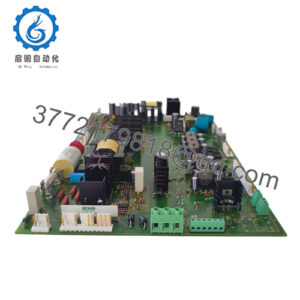
CCN-01
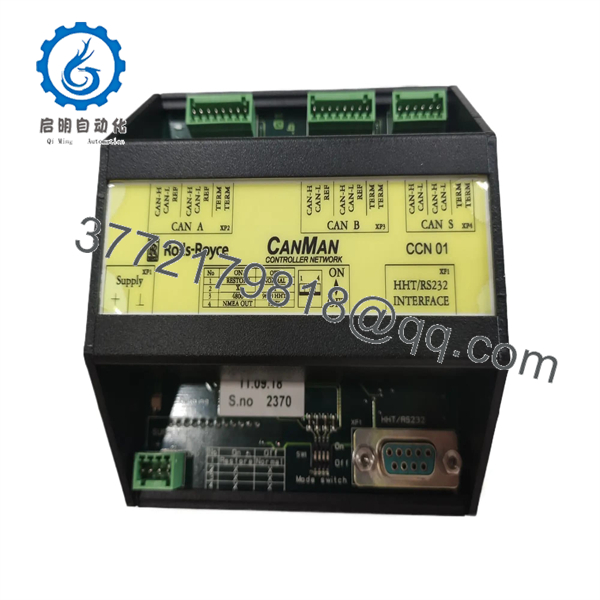
CCN-01
Installation & Configuration Guide
Stage 1: Pre-Installation (Prep & Safety)
- Execute full Lock-Out/Tag-Out (LOTO) procedures on the vessel’s propulsion control cabinet and 24 VDC supply breakers.
- Put on an anti-static wrist strap anchored to the cabinet chassis ground; CMOS circuits on the CCN-01 are highly sensitive to Electrostatic Discharge (ESD).
- Document all DIP switch configurations, jumper settings, and socketed EPROM labels on the existing board using a high-resolution photo.
Stage 2: Removal
- Unfasten the retaining screws securing the faceplate of the old CCN-01 card to the rack frame.
- Carefully pull the card ejector handles outward simultaneously to unseat the edge connectors from the backplane without bending pins.
- Slide the old board out along the guide rails and immediately place it into an ESD-shielded bag.
Stage 3: Installation (Clone & Seat)
- Verify that the DIP switch addresses and jumper layouts on the New Surplus CCN-01 match the removed board exactly to preserve node addressing on the CAN bus.
- If application logic is stored in socketed EPROMs, ensure the EPROM chips installed on the replacement board match the exact software release version specified in your vessel’s technical manual.
- Align the new card with the card cage guide rails and push firmly until the backplane edge connector snaps completely into place. Secure the faceplate retaining screws.
Stage 4: Power-On & Testing
- Measure the incoming 24 VDC power rails at the terminal block to verify line stability before restoring power.
- Re-energize the 24 VDC supply breakers. Observe the board LED indicators during power-on self-test (POST).
- Confirm that the status LED shifts from initialization to “RUN” (Green) and that no red “ERR” or bus-off conditions appear on CAN-A, CAN-B, or CAN-S networks. Connect a VT100 terminal via RS-232 to verify communication handshakes.
Firmware/Software Versions & Upgrade Notes
- System Logic Memory: Application routines (e.g., Pitch Control, Thruster Allocation, or MAN B&W Engine Interface) reside in socketed UV-EPROMs (ranging from 128 KB to 512 KB).
- Firmware Parity: Ensure the firmware revision flashed onto the EPROM matches the existing CANman system software version installed across adjacent node cards (e.g., SLIO 01 / SLIO 02).
- Revision B Upgrades: Revision B boards feature upgraded SMD components that handle higher vibration profiles and thermal stress. Rev B boards maintain backward hardware compatibility with Revision A backplanes, but non-volatile EEPROM parameter configurations must be audited prior to operation.
- Upgrade Risks: Avoid swapping EPROM chips between different system generations without performing a full parameter backup via the terminal communication port. Incompatible firmware can freeze the CAN bus or cause steering command timeouts.
Frequently Asked Questions (FAQ)
Q: This product is listed as New Surplus. What does that mean, and how can I be sure it isn’t used?
A: This product is a Brand New Surplus unit. It is not used, not pulled from a decommissioned plant, and not refurbished. All modules undergo rigorous quality verification to ensure OEM-level reliability. “New Surplus” means the unit was purchased directly through original factory-authorized distribution channels as an uninstalled vessel spare, remaining in its original ESD packaging with zero backplane wear and zero soldering repairs.
Q: Why is your price higher than rebuilt boards on eBay, but lower than historical OEM quotes?
A: Our pricing reflects the cost of securing genuine New Surplus inventory globally. It may be 20–30% higher than a refurbished gamble, but it is substantially less than OEM list prices, and it buys you 100% peace of mind. Buying a 300 refurbished board can easily turn into a 50,000 vessel downtime event if a faded relay or aged capacitor fails while unmooring.
Q: Is the ROLLS-ROYCE hot-swappable in a live CANman system?
A: No. While the board physical guide rails allow smooth Insertion, removing or inserting a card with live 24 VDC power on the backplane risks arcing the edge connector pins and disrupting active CAN bus communications across the entire network ring. Always isolate 24 VDC power before pulling or inserting the card.
Q: Will this module retain my vessel’s dynamic positioning and engine control parameters when unpowered?
A: Yes. The unit contains 32 KB of onboard EEPROM dedicated to non-volatile parameter storage. However, when installing a replacement module, node addresses and system parameters must be verified and mirrored from your technical documentation or via an RS-232 serial terminal session.
Q: What warranty coverage comes with this module?
A: We back this New Surplus ROLLS-ROYCE with a full 1-Year functional warranty. Every card passes visual pin inspection, insulation tests, and bench power-on verification before shipment, accompanied by a signed QC report.