 WhatsApp: +86 16626708626
 Email:
  Phone: +86 16626708626
Description
Key Technical Specifications
- Part Number: CP06-206
- Processor Type: Integrated 32-bit RISC Controller
- Input Voltage: 24 V DC (Isolated)
- Communication Ports: RS-485, CAN-Bus, and Ethernet (System Dependent)
- Memory: Flash-based firmware storage with non-volatile RAM for parameters
- Operating Temp: −15 to +55 °C
- Storage Temp: −25 to +70 °C
- Humidity: 95% Non-condensing (Marine Hardened)
- Mounting: Proprietary Rack / Backplane Mount
Product Introduction
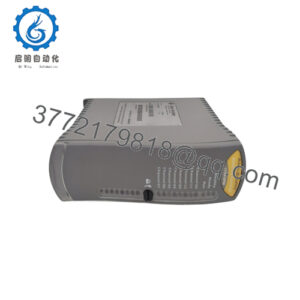
The Rolls-Royce CP06-206 is a high-performance central processor module designed for the demands of maritime automation and propulsion control. Integrated into the Ulstein and later Kongsberg-era control systems, the CP06-206 acts as the “brain” of the local control unit, executing complex PID loops, signal processing, and communication management between the bridge and the engine room hardware.
Engineered for safety-critical applications, this module features robust electromagnetic compatibility (EMC) and vibration resistance. It is commonly found in azimuth thruster controls, winch automation, and integrated vessel management systems where deterministic performance and high uptime are non-negotiable requirements.

- CP06-206
Installation & Configuration Guide
Stage 1: Pre-Installation Preparation
- ⚠️ Safety First: Ensure the system is in “Manual” or “Local” control mode. Isolate the 24V DC power to the target rack. Notify the ETO (Electro-Technical Officer) that the control bus will be interrupted.
- Tools Required: ESD wrist strap, needle-nose pliers (for jumpers), firmware upload cable (if applicable).
- Data Backup: CRITICAL. If the old module is still communicating, download the current parameter set and logic configuration using the system service tool. Document all physical DIP switch positions.
Stage 2: Removing the Old Module
- Verify the ESD strap is securely grounded to the cabinet.
- Disengage the locking tabs on the top and bottom of the CP06-206 module.
- Carefully pull the module straight out from the backplane. Avoid any rocking motion that could bend the high-density connector pins.
- Inspect the backplane socket for dust or signs of thermal stress (discoloration).
Stage 3: Installing the New Module
- Configuration Clone: Mirror the DIP switches from the old unit. These switches typically define the Node ID and Baud Rate. If these are incorrect, the module will fail to join the system network.
- Align the CP06-206 with the rack guide rails and push firmly until the connector seats and the tabs click.
- Re-secure any external communication cables (RS-485 or Ethernet) to the front ports.
- Self-Checklist: [ ] DIP switches match, [ ] Pins aligned, [ ] Module locked in place.
Stage 4: Power-On & Testing
- Restore 24V power to the rack.
- Observe the LED boot sequence. A “SYS” or “RUN” LED should turn solid green after initialization. A flashing red “ERR” LED indicates a configuration mismatch or missing firmware.
- Connect the service laptop and verify the firmware revision matches the system baseline.
- Reload parameters if the new module is “blank” from the factory.
- ⚠️ Troubleshooting Note: If the module is not detected on the bus, verify the Node ID switches. I’ve seen many “faulty” boards that were simply addressed incorrectly during installation.
Frequently Asked Questions (FAQ)
Does the CP06-206 come pre-loaded with software? Usually, these modules come with “Base Firmware” (BIOS/OS) but no application-specific logic. You will need to upload your vessel’s specific configuration file using the Rolls-Royce/Kongsberg service tool after installation.
Can I hot-swap this processor? Technically, some backplanes allow it, but I strongly advise against it. Swapping the CPU while the backplane is live can cause a “Bus Error,” potentially crashing other healthy modules on the same network. Always kill the power first.
Is there a battery on this board that needs maintenance? Yes, most CP06 series boards use a lithium backup battery for the NVRAM. If you are installing “New Surplus” stock that has been in a warehouse for years, check the battery voltage. If it’s below 3.0V, replace it before installation to avoid losing parameters during a power cycle.
What is the difference between CP06-206 and earlier CP06 versions? The -206 variant typically features an upgraded memory capacity and faster clock speeds to handle more complex automation tasks. While they look physically identical, always verify with your system manual before attempting to “upgrade” an older revision.
Why is this part so expensive compared to standard industrial PLCs? You aren’t just buying a processor; you’re buying Marine Type Approval. These units are tested to operate in high-vibration, salt-mist, and high-EMC environments where a standard PLC would fail in months. The 8344 and CP06 series are built for a 20+ year lifecycle.