 WhatsApp: +86 16626708626
 Email:
  Phone: +86 16626708626
Description
3. Key Technical Specifications
| Parameter | Value |
|---|---|
| Product Type | Engine Control Module (ECM) |
| Processor | 3× PowerPC cores (lockstep architecture) |
| Memory | 2 GB ECC RAM |
| Control Cycle Time | ~250 µs |
| Supply Voltage | 18–32 V DC (redundant) |
| Power Consumption | ~28 W @ 24 V DC |
| I/O Interfaces | Analog inputs |
| Communication | Modbus / Fieldbus / industrial protocols |
| Operating Temperature | −40°C to +105°C |
| Safety Rating | IEC 61508 SIL 3 |
| Certifications | DNV GL, ABS, Lloyd’s Register |
| Application | Marine propulsion / power generation |
4. Product Introduction & Supply Chain Strategy
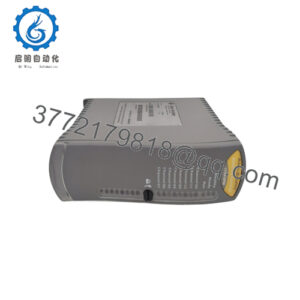
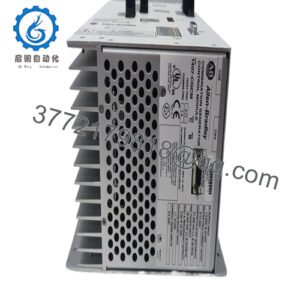
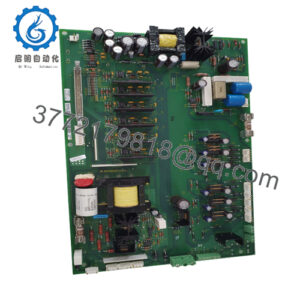
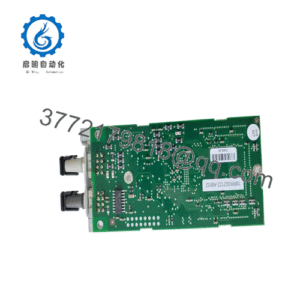
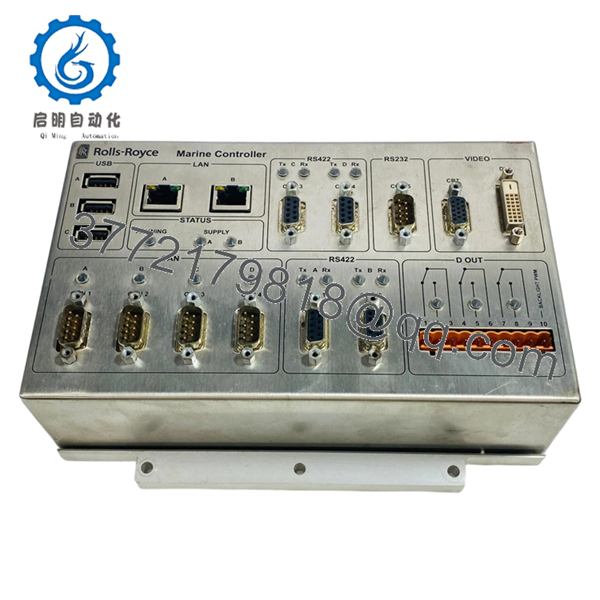
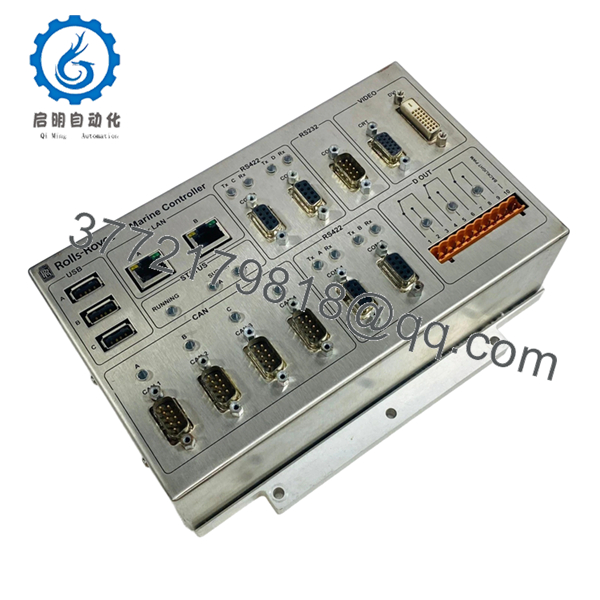
The Rolls-Royce H1111.0103 is a mission-critical engine control module used in marine propulsion systems, power generation units, and complex industrial automation. It executes real-time control logic for fuel regulation, speed governing, and protection sequences with sub-millisecond response times.
This product is a Brand New Surplus unit. It is not used, not pulled from a decommissioned system, and not refurbished. Given its discontinued status and role as a central control brain, procurement risk is high. A structured last-time-buy combined with buffer stock is essential to mitigate lead time variability and avoid operational shutdown scenarios. Refurbished alternatives introduce unacceptable failure risk in SIL3 environments.

- H1111.0103
- H1111.0103
5. Installation & Configuration Guide
Stage 1: Pre-Installation (Prep & Safety)
- Execute full lock-out/tag-out (LOTO) on engine or control system
- Isolate redundant 24 V DC supplies
- Use ESD grounding—high-density CPU boards are static-sensitive
- Backup configuration, firmware version, and parameter sets
- Photograph all connectors and network interfaces
Stage 2: Removal
- Disconnect communication buses (CAN, Fieldbus, Ethernet)
- Release module retaining hardware
- Extract evenly to avoid backplane connector damage
- Inspect for heat stress or connector oxidation
Stage 3: Installation (Clone & Seat)
- Verify exact model and firmware compatibility
- Insert module with even pressure—ensure full backplane engagement
- Reconnect all I/O and communication cables
- Confirm grounding and shielding integrity
Stage 4: Power-On & Testing
- Energize control supply (monitor current draw)
- Verify system boot sequence and diagnostic LEDs
- Confirm communication handshake with control network
- Run controlled startup test (engine simulation or low-load run)
6. Firmware/Software Versions & Upgrade Notes
- Always match firmware with the existing engine control ecosystem (e.g., MTU/Bergen platforms)
- Firmware mismatches can cause:
- Loss of synchronization
- Fault trips during startup
- Communication timeout errors
- Avoid upgrading firmware during emergency replacement
- Downgrading may be required for legacy systems—validate offline first
- Maintain documented firmware baselines for fleet consistency
7. Frequently Asked Questions (FAQ)
Q1: Is this module truly new or surplus from field systems?
It is New Surplus from OEM or authorized channels. No prior operation, no repairs, and no component aging.
Q2: Why is this priced higher than refurbished units?
Because this is a safety-critical SIL3 controller. Refurbished units often contain aged capacitors or unknown stress history. A failure here can shut down propulsion or power systems—costing far more than the price difference.
Q3: Is H1111.0103 still in production?
No. It is classified as discontinued/EOL in multiple supply channels.
Q4: What is the failure impact?
This is an A-class critical spare. Failure can result in:
- Engine shutdown
- Loss of propulsion
- Emergency safety trips
Q5: What stocking policy do you recommend?
- Minimum: 1 unit per vessel or critical system
- Fleet operators: 2–3 units with cross-site sharing
- Use buffer stock due to long and unpredictable lead times
Q6: Can this module be hot-swapped?
No. Always perform a controlled shutdown. Hot-swapping risks system faults and hardware damage.
Q7: What is the lifecycle advantage of New Surplus?
Expected service life: 10–15 years with stable performance.
Compared to short-life refurbished units, this significantly reduces Total Cost of Ownership (TCO) and avoids unplanned downtime.