WhatsApp: +86 16626708626
 Email:
  Phone: +86 16626708626
Description
Key Technical Specifications
| Parameter | Value |
|---|---|
| Manufacturer | SAACKE GmbH |
| Model | FSC-01 |
| Product Family | Se@vis burner management system |
| Product Type | Burner sequence controller / combustion controller |
| Primary Function | Executes burner startup, purge, ignition, flame-supervision, normal-operation, and controlled shutdown sequences |
| Safety Role | Monitors burner process conditions and initiates fault shutdown when configured safety conditions are not met |
| Applicable Equipment | Marine and industrial boilers, thermal-oil heaters, steam generators, drying systems, and combustion plants |
| Programming Basis | Programmable memory in accordance with IEC 61131 |
| Functional-Safety Basis | Described as a fail-safe control in accordance with IEC 61508 |
| Burner Control Scope | Fuel valves, ignition valve/control, ignition transformer, flame detector, air-pressure monitoring, and configured safety limiters |
| Expansion Capability | Can use FSC-IO assemblies to extend I/O via safeethernet, depending on system architecture |
| Motor/Actuator Integration | Can control SAACKE FSM motors for fail-safe fuel, air, and flue-gas compound control through safe Ethernet |
| Operating Modes | Se@vis compact literature describes four operating modes; confirm availability on the exact FSC-01 application and firmware |
| Safety Channels | Se@vis compact literature identifies eight fail-safe channels; confirm actual hardware/configuration before replacement |
| Version Control | Verify the complete label and software/firmware revision, such as FSC-01 V3.00 or FSC-01 V3.02, before ordering |
| Electrical Supply and I/O Ratings | Verify from the exact controller label, terminal drawing, and burner control-panel documentation; do not infer supply voltage or output capacity from a similar SAACKE module |
SAACKE documentation describes the FSC as the functional-safety core of the Se@vis burner management system. It controls burner operation from start request through fault shutdown, directly handles key burner valves and safety inputs, and is designed around IEC 61131 and IEC 61508 requirements.
Product Introduction
The SAACKE FSC-01 is a Se@vis combustion controller used in marine and industrial burner-management systems. It performs the approved firing sequence, supervises flame and combustion safety conditions, drives configured fuel and ignition functions, and commands shutdown when a safety interlock or burner fault occurs. It is found in boiler, thermal-oil heater, steam-generator, and drying-system controls.
This controller is a safety-related machine component, not a generic PLC. An FSC-01 replacement must match the exact version, firmware, program, I/O configuration, burner type, actuator arrangement, flame-detector interface, fuel train, and approved control-panel documentation. Treat any replacement as a controlled recommissioning activity.
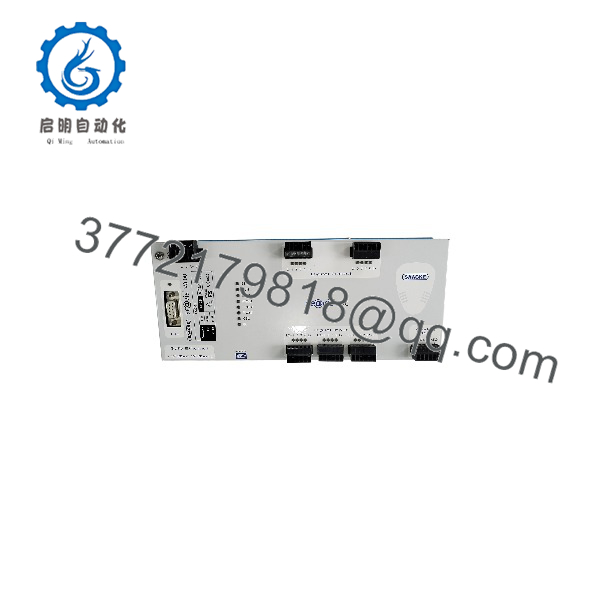
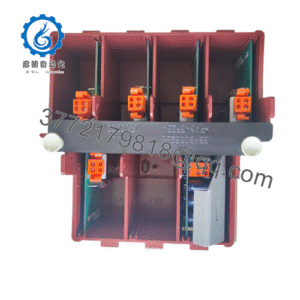
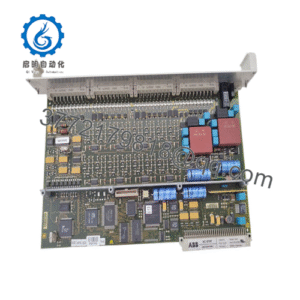
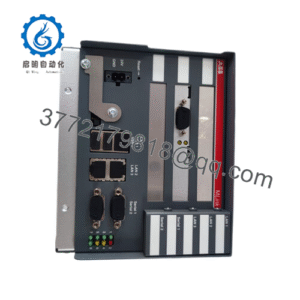
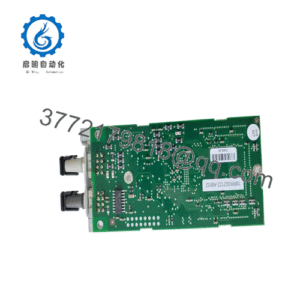
FSC-01
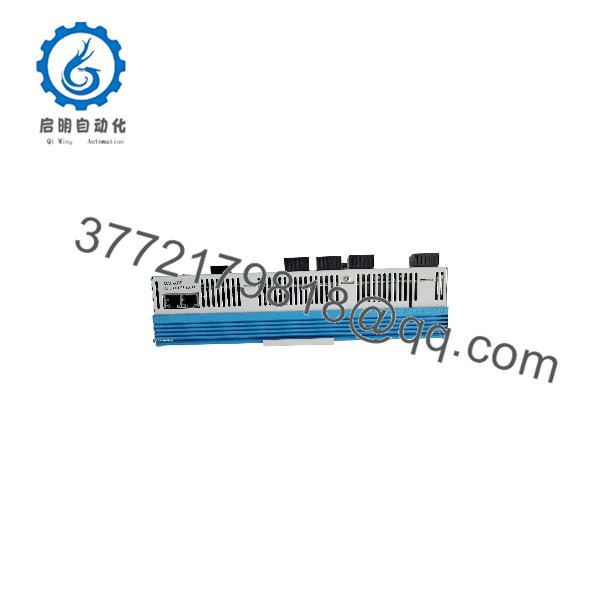
FSC-01
Troubleshooting Quick Reference
| Symptom | Possible Cause | Relevance to This Part | Quick Check Method | Recommendation |
|---|---|---|---|---|
| remains dark or does not boot | Missing controller supply, blown panel fuse, failed power supply, loose terminal, failed controller | ✅ Medium | Use the approved wiring diagram to measure the controller supply at the designated power terminals; check panel fuses, supply module, terminal torque, and protective earth | Confirm correct supply and panel wiring before replacing the |
| Burner will not start after a start request | E-stop active, burner permissive missing, fuel valve interlock open, low air pressure, limit switch open, active lockout | ❌ Usually low | Review the HMI sequence step and alarm text; check emergency stop, fuel pressure, combustion-air proving switch, furnace/boiler limits, and safety chain | Correct the missing permissive before treating the controller as defective |
| Burner trips during purge | Airflow too low, air-pressure switch setting, damper feedback fault, fan rotation issue, blocked air path | ❌ Usually low | Confirm fan rotation; measure or observe combustion-air pressure; check damper travel and feedback; compare actual purge timing to the approved sequence | Resolve the air-system fault. Do not bypass purge proving switches |
| No ignition spark or ignition sequence does not advance | Ignition transformer supply fault, ignition cable fault, interlock not satisfied, FSC output or configuration fault | ✅ Medium | Check the sequence state; verify the ignition-transformer command and supply with approved test methods; inspect ignition cable and electrode condition | Confirm all permissives and transformer hardware before replacing |
| Flame failure immediately after ignition | Dirty or failed flame detector, incorrect detector alignment, fuel supply issue, ignition problem, flame-signal threshold, controller input fault | ❌ Usually low | Read the flame-signal value at the HMI; inspect detector optics and wiring; verify fuel pressure and ignition quality under approved procedure | Service the flame-detection and fuel systems first. Never bypass flame supervision |
| Flame signal present but controller declares flame fault | Incorrect flame-detector interface, wiring/shielding fault, grounding issue, wrong configured threshold, FSC input fault | ✅ Medium | Compare measured flame signal and HMI indication; inspect detector cable shielding and termination; verify detector type matches the approved configuration | Check configuration and field wiring. Replace controller only after the input path is proven healthy |
| Fuel valves do not energize | Safety chain open, valve supply absent, external relay fault, output fuse open, failed controller output | ✅ Medium | Confirm the sequence permits fuel; measure valve supply and command output using approved electrical-safety methods; check output fuses and interposing relays | Prove external supply and relay operation before diagnosing an FSC output failure |
| Controller faults after replacement | Firmware mismatch, missing burner program, incompatible I/O expansion, parameter mismatch, incorrect safety configuration | ✅ High | Compare complete version markings, configuration backup, I/O map, burner type, actuator calibration, and safety parameters with the removed unit | Do not commission from memory. Restore only an approved, documented configuration |
| Burner operates erratically after service | Wrong actuator direction, incorrect air/fuel curve, sensor wiring error, damaged safe-Ethernet link, uncalibrated servo actuator | ✅ High | Verify actuator stroke/direction, feedback, fuel/air curve data, network connections, and burner commissioning records | Stop and recommission under the burner OEM’s approved procedure |
| Repeated lockouts with no clear hardware defect | Process instability, fuel-pressure fluctuation, poor flame quality, marginal flame signal, intermittent field wiring | ❌ Usually low | Trend alarm history, flame signal, fuel pressure, air pressure, and sequence state over several starts | Diagnose the field process first; replacement of the controller rarely fixes a marginal combustion condition |
Field warning: A burner controller trip is doing its job until proven otherwise. Most lockouts originate in flame detection, air proving, fuel pressure, valve feedback, ignition hardware, or an open safety permissive—not a failed .
❗ Never jumper or bypass flame supervision, fuel-valve safety circuits, airflow proving, or other burner interlocks to “get it running.” That shortcut can create an explosion, fire, toxic-gas, or boiler-pressure hazard. Use only the OEM-approved burner test and commissioning procedure.
If diagnosis is inconclusive, contact qualified burner-control support with the full label and version, HMI alarm history, firing-sequence state, flame-signal data, wiring drawings, photos of the panel, fuel/air pressure readings, and the approved burner configuration backup.
Frequently Asked Questions (FAQ)
What is the SAACKE used for?
The is the central combustion and burner-sequence controller within SAACKE’s Se@vis burner management system. It manages burner automation from start request through shutdown and directly handles key safety-related devices such as fuel valves, ignition functions, flame detection, and air-pressure monitoring.
Is the a standard PLC?
No. It contains programmable functionality, but it is a dedicated fail-safe burner management controller, not a general-purpose PLC. SAACKE describes the FSC as complying with IEC 61131 for programmable memory and IEC 61508 for functional-safety design. Its programming, safety configuration, and operating sequence must remain appropriate for the approved burner and fuel-train design.
Can I replace with another from surplus stock?
Only after exact verification. Match the complete model, front-label version, such as V3.00 or V3.02, installed firmware, approved application program, I/O configuration, HMI arrangement, safe-Ethernet nodes, burner type, actuator configuration, flame-detector interface, and panel wiring. A physically identical can still be unsuitable if its software or safety configuration differs.
Will the replacement retain burner parameters and fuel-air curves?
Do not assume it will. The installed burner application, safety parameters, actuator curve data, operating modes, and alarm configuration may be stored in the , HMI, other Se@vis components, or an engineering backup. Back up all accessible approved configuration data before removal. If no backup exists, replacement can require a complete recommissioning by qualified personnel.
Can I hot-swap the ?
No. Do not hot-swap a burner controller. Shut down the burner using the approved operating procedure, isolate the relevant electrical supplies, lock out/tag out the equipment, confirm safe conditions, and follow the plant’s burner-management change-control process. Removing an during operation can interrupt fuel-valve control, create an unsafe trip, or leave the combustion system in an unknown state.
Why does the show a flame fault when the burner is visibly lit?
The controller needs a valid flame signal, not simply visible flame. Common causes include a dirty or misaligned UV/IR detector, weak flame, damaged cable, poor grounding, incompatible detector type, incorrect flame-signal threshold, or an input-channel problem. Start with the displayed flame value and detector hardware. Do not bypass the flame input.
Why is a surplus less expensive than a current burner-control replacement?
Surplus pricing reflects legacy inventory, storage history, condition, test level, firmware/version status, and warranty rather than current factory production. For a safety-related burner component, price is secondary. Request actual unit photographs, exact version confirmation, terminal and connector inspection, functional power-up evidence, traceability, test records, warranty terms, and confirmation that no prior program or safety configuration will be represented as suitable for your burner.
What testing should a supplier perform on an ?
A supplier can perform visual and basic electronic checks: verify labels and serial markings, inspect for corrosion or rework, confirm boot behavior, test display/communications where possible, and verify output/input behavior on a suitable controlled test fixture. That does not certify the unit for operation on your burner. The final safety test, burner sequence validation, flame-safety test, fuel-valve proof, and combustion commissioning must be performed under the approved SAACKE/OEM procedure by qualified burner personnel.