WhatsApp: +86 16626708626
 Email:
  Phone: +86 16626708626
Description
Key Technical Specifications
| Parameter | Specification |
| Manufacturer | SAM Electronics (Wärtsilä / L3Harris) |
| Model | IOM402 (IOM 402) |
| System Architecture | MCS 2200 / NACOS Vessel Control & Alarm System |
| Operating Voltage | 24 V DC (18 V DC to 32 V DC marine battery bus range) |
| Power Dissipation | < 12 W (Typical backplane/power terminal draw) |
| Signal Inputs | Configurable binary (digital) and 4–20 mA analog inputs |
| Signal Outputs | Relay contact outputs and solid-state drivers |
| Operating Temperature | −15°C to +70°C (+5°F to +158°F) |
| Storage Temperature | −40°C to +85°C (−40°F to +185°F) |
| Enclosure Rating | Open PCB module for DIN-rail or card-cage mounting |
| Galvanic Isolation | Optically isolated I/O channels to bus backplane |
| Certifications | Major Class Societies (DNV, ABS, Lloyd’s Register) |
Product Introduction & Supply Chain Strategy
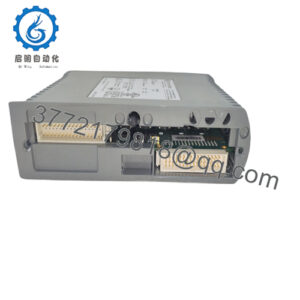
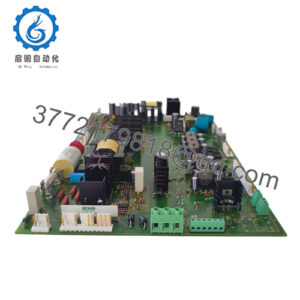
The SAM Electronics IOM402 is a marine-grade input/output processing module designed specifically for distributed shipboard automation, vessel monitoring, and engine room alarm systems (such as the MCS 2200 platform). Mounted directly within local control cabinets or central automation racks, the IOM402 conditions and converts discrete and analog signals from main propulsion sensors, auxiliary generators, ballast valves, and safety interlocks into high-speed CAN/system bus communications.
Carrying verified New Surplus stock of the SAM Electronics IOM402 is an essential risk-mitigation strategy for shipowners, fleet managers, and marine automation engineers. An unexpected I/O board failure while underway or at sea can trigger critical machinery alarms, disable propulsion monitoring, or cause costly port state control detentions. Sourcing genuine New Surplus inventory avoids the hidden risks of component corrosion, thermal fatigue, and dried electrolytic capacitors common in refurbished marine parts. Maintaining 1–2 verified spare units on-board or in shore-side storage ensures immediate mean-time-to-repair (MTTR) response, safeguarding vessel uptime and reducing Total Cost of Ownership (TCO).
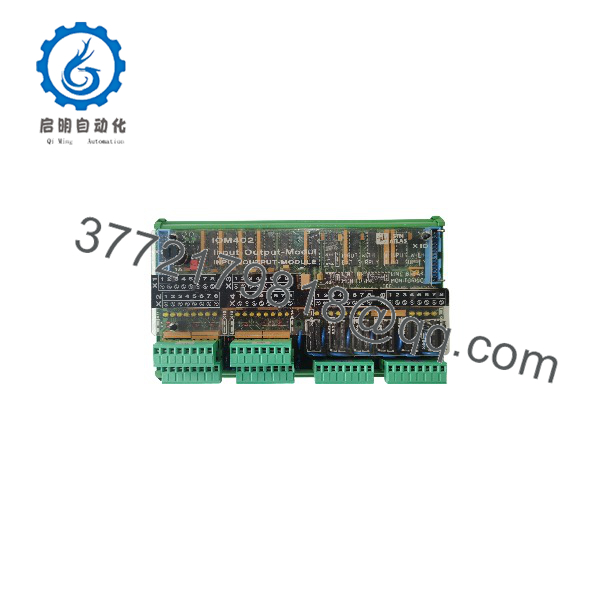
IOM402
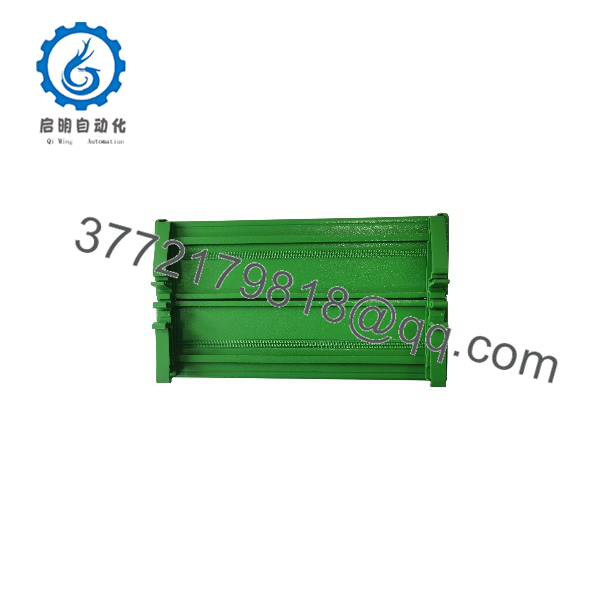
IOM402
Installation & Configuration Guide
Stage 1: Pre-Installation (Prep & Safety)
- Isolate the local automation cabinet power distribution panel using proper Lock-Out/Tag-Out (LOTO) procedures.
- Strap on a grounded ESD wristband connected to the vessel’s hull or cabinet earth ground before opening anti-static packaging.
- Take high-resolution photos of the existing IOM402 installation, recording terminal wiring connection points, ribbon cable routing, and board jumper/DIP switch addresses.
Stage 2: Removal
- Unplug screw-terminal block connectors or disengage wiring harnesses from the board face.
- Disconnect the system communication ribbon cable or bus plug by gently releasing the side locking tabs.
- Unclasp the DIN-rail retention clips or unbolt faceplate retaining screws, then lift the card straight out of the mounting rail. Place the removed card immediately into a static-shielding bag.
Stage 3: Installation (Clone & Seat)
- Unpack the New Surplus IOM402 and verify that edge contacts and terminal sockets are completely free of oxidation or debris.
- Mirror all hardware DIP switches and address jumper blocks on the new board to match the original unit exactly.
- Mount the module securely onto the DIN-rail or chassis cage, reattach communication cables, and firmly plug in all field terminal blocks.
Stage 4: Power-On & Testing
- Re-energize the 24 V DC power feeder to the control panel.
- Check board LEDs: Ensure power indications display solid green and system status indicators transition to normal RUN state without triggering FAULT lights.
- Perform signal verification on connected sensor points via the main bridge or engine control room workstation to confirm signal accuracy before clearing machinery for operation.
Firmware/Software Versions & Upgrade Notes
- Recommended System Baseline: Fully compatible with standard SAM Electronics MCS 2200 and NACOS software versions managing distributed I/O nodes.
- Address Match Requirement: The utilizes hardware-set node addresses via DIP switches or jumpers. Misconfigured address switches will prevent the central automation processing unit from establishing a communication handshake with the module on power-up.
- Firmware Swap Risks: Direct hardware replacement on an existing node address does not require system software re-flashing. However, replacing an older hardware revision with a newer index board should be verified against the system’s current software release to avoid CAN bus communication frame drops.
Frequently Asked Questions (FAQ)
Q: How can you guarantee this SAM Electronics module is “New Surplus”?
Every module we supply originates directly from excess OEM shipbuilder stock, canceled marine conversion projects, or strategic fleet reserves. The boards are supplied in factory anti-static packaging, showing pristine connector pins, zero thermal stress, and serial numbers traceable to original production lots.
Q: Why should we buy New Surplus instead of cheaper refurbished marine circuit boards?
Marine environments subject electronics to extreme vibration, thermal cycling, and salt-air humidity. Refurbished boards harvested from scrapped vessels often harbor micro-cracks and degraded solder points that fail under sea-going stress. Purchasing genuine New Surplus guarantees 100% factory-level operational lifespan and reliability at a lower cost than OEM direct lead times.
Q: Is the SAM Electronics module hot-swappable?
No. Replacing an board requires isolating 24 V DC control power and field sensor loops. Pulling or inserting an active board on a powered marine automation bus can generate voltage spikes, corrupt CAN communications, or trigger false engine room safety shutdowns.
Q: Does the hold system logic parameters on onboard flash memory?
The functions primarily as an I/O interface node. Operational parameters, alarm delays, and point mapping are stored in the main MCS 2200 system controller and pushed to the board during initialization. Physical address jumpers on the card must be manually configured before power-up.
Q: What warranty coverage comes with this module?
We support all New Surplus SAM Electronics boards with a full 1-Year / 12-Month replacement warranty. If any functional or communication defect occurs under normal operating conditions within the warranty period, we ship an immediate advance replacement from our stocked inventory.