 WhatsApp: +86 16626708626
 Email:
 Phone: +86 16626708626
Description
Key Technical Specifications
| Parameter | Value |
| Motor Series | BL Super P3 Series (AC Servo) |
| Rated Output Power | 100 W |
| Rated Voltage | 200 VAC Class |
| Rated Current | ~1.1 A |
| Rated Rotational Speed | 3,000 min-1 (RPM) |
| Phase Configuration | 3-Phase (\lambda) |
| Feedback Interface | Integrated optical encoder / resolver assembly |
| Ambient Temperature | 0 to +40 °C |
| Enclosure Protection | Standard industrial IP rating (foot/flange mount) |
| Weight | ~1.2 kg |
Product Introduction & Supply Chain Strategy
The Sanyo Denki P30B04010PCKSTA01 is a compact 100W AC servo motor belonging to the robust BL Super P3 series. Engineered for high-speed response, precise torque delivery, and exact positioning accuracy, it drives critical motion axes in automated assembly equipment, electronics manufacturing systems, and precision machine tools.
Securing this mature servo motor as a certified New Surplus item is a vital risk-mitigation strategy. Because aging automation platforms rely heavily on exact hardware revisions, sourcing genuine OEM stock prevents compatibility faults associated with unverified substitutes. Holding factory-new surplus units guarantees long-term operational continuity, preserving Total Cost of Ownership (TCO) without risking production uptime on degraded second-hand or rebuilt motors.
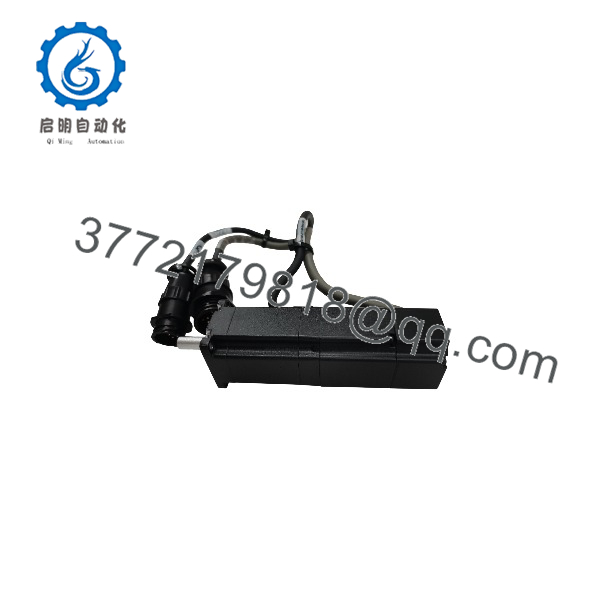
P30B04010PCKSTA01
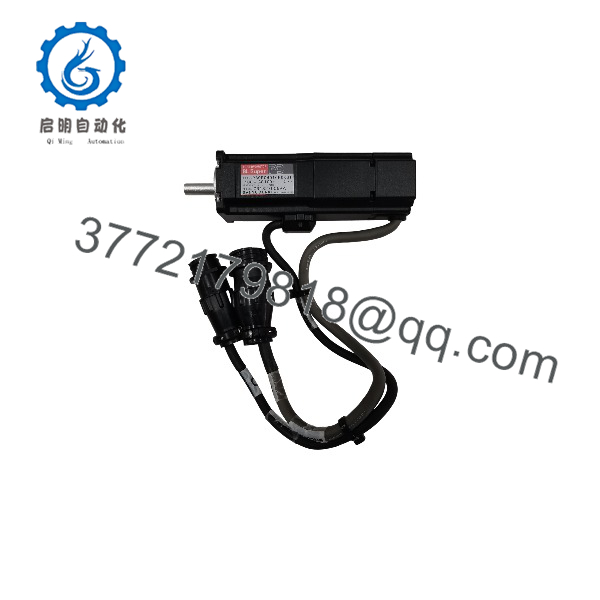
P30B04010PCKSTA01
Installation & Configuration Guide
1.Pre-Installation (Prep & Safety):Prerequisite.
Execute strict lock-out/tag-out (LOTO) protocols on the servo amplifier and main drive power feeds. Don ESD-safe grounding equipment. Verify complete discharge of the servo pack DC bus capacitors using a multimeter before touching power terminals or encoder cabling.
Verification: Confirm zero voltage on drive power rails and ensure all axis enable signals are disabled at the controller level.
2.Removal:Mechanical Extraction.
Disconnect the motor power plug and encoder feedback connector carefully, releasing locking latches without pulling on cable wires. Support the motor weight, loosen the mechanical mounting bolts on the flange, and pull the unit straight out to protect the output shaft and alignment spigot.
Verification: Check the machine mounting pilot and mating gearbox/coupling for signs of wear, oil contamination, or mechanical debris.
3.Installation (Clone & Seat):Hardware Setup.
Couple the Sanyo Denki P30B04010PCKSTA01 securely to the mechanical load, ensuring proper shaft alignment to prevent radial bearing side-load. Fasten flange bolts evenly to specified torque limits. Plug in the motor power and encoder feedback lines securely.
Verification: Verify that the encoder cable shield is properly grounded at the connector shell to eliminate high-frequency electrical noise interference.
4.Power-On & Testing:Commissioning.
Restore control power to the servo amplifier first, verifying that the display reads normal idle or ready status. Command a slow, low-speed jog axis move to confirm correct rotational direction, encoder feedback tracking, and absence of mechanical binding.
Verification: Monitor servo drive software telemetry to confirm position error stays within expected tuning tolerances during a dynamic motion test.
Firmware/Software Versions & Upgrade Notes
- Encoder Matching Baseline: Ensure that the servo amplifier parameter settings match the exact encoder pulse resolution built into this specific P30 series revision.
- Compatibility Warnings: Do not swap amplifier parameter sets blindly when moving across different firmware generations of Sanyo Denki servo drives, as loop gain scaling parameters can shift and cause motor oscillation.
- Maintenance Best Practice: Always secure parameter backups of the motion controller and servo amplifiers before executing physical hardware replacements on multi-axis synchronous lines.
Frequently Asked Questions (FAQ)
- Why is this Sanyo Denki motor categorized as New Surplus rather than current factory standard?
This unit is a genuine, original OEM-manufactured product procured from verified surplus channels after plant inventory rationalization. It has never been installed, coupled to a mechanical load, or operated in a live industrial environment.
- How can I verify that this servo motor is genuinely new and un-repaired?
We maintain a strict zero-tolerance policy against used, repaired, or refurbished components. Each unit arrives in original packaging featuring pristine output shafts, unblemished connector pins, and untouched factory bearings.
- What are the hidden dangers of installing a refurbished servo motor in high-precision axes?
Refurbished motors often feature worn bearings, degraded encoder optics, or heat-fatigued rotor magnets. These hidden defects lead to positioning jitter, unexpected thermal drift, and sudden axis failures that trigger costly emergency shutdowns.
- Is this exact part number affected by long factory lead times?
Yes, legacy Sanyo Denki BL Super series motors often experience extended manufacturing lead times. Securing verified New Surplus stock today acts as an essential buffer strategy against unexpected line stoppages.
- What warranty coverage comes with this New Surplus servo motor?
This unit is backed by a comprehensive 1-year replacement warranty, matching standard OEM reliability benchmarks and protecting your capital investment.