WhatsApp: +86 16626708626
 Email:
  Phone: +86 16626708626
Description
3. Key Technical Specifications
| Parameter | Value |
|---|---|
| Aperture | 14 mm |
| Angle transmitter | Digital encoder |
| Typical scan angle | ±0.35 rad (optical) |
| Positioning resolution | 20 bit (max.; ~0.7 µrad over ±0.36 rad) |
| Repeatability (RMS) | < 0.4 µrad |
| Nonlinearity | < 0.5 mrad / 44° |
| Tracking error | 0.15 ms (typical sharp-edge tuning) |
| Marking speed (f = 160 mm) | 2.0 m/s |
| Positioning speed (f = 160 mm) | 5.0 m/s |
| Writing speed (f = 160 mm) | 480 cps (high quality) / 680 cps (good quality) |
| Step response (1 % full scale) | 0.45 ms |
| Temperature drift (offset / gain) | < 15 µrad/K / < 8 ppm/K |
| Max. laser power (ref. 1064 nm) | 440 W (100 % duty cycle; 405 nm coating-dependent) |
| Control interfaces | SL2-100, XY2-100 Enhanced |
| Power supply | 30 V DC max. 3 A or 48 V DC max. 3 A |
| Weight (w/o objective) | approx. 3 kg |
| Dimensions (L × W × H) | 175 × 114 × 147 mm |
| Operating temperature | 25 °C ± 10 °C |
| Beam displacement | 16.42 mm |
4. Product Introduction
The SCANLAB intelliSCANde 14-405NM is a 14 mm aperture 2-axis galvanometer scan head equipped with digital encoders and optimized mirror coating for 405 nm lasers. It delivers beam positioning for micromachining, precision marking, drilling, and related industrial laser processes that demand low drift and high linearity.
Digital-encoder feedback yields <0.4 µrad RMS repeatability and 20-bit resolution while retaining the same dynamics as analog versions. Typical sharp-edge tuning supports 2.0 m/s marking and 5.0 m/s positioning (f = 160 mm). Pair it with SCANLAB RTC boards for full diagnostic access via iDRIVE. Verify exact laser power handling against the specific 405 nm coating datasheet before integration.
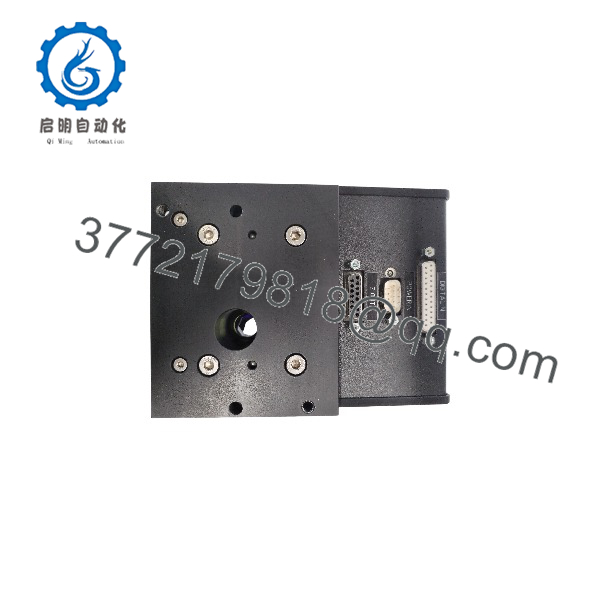
INTELLISCANDE14-405NM SCANLAB
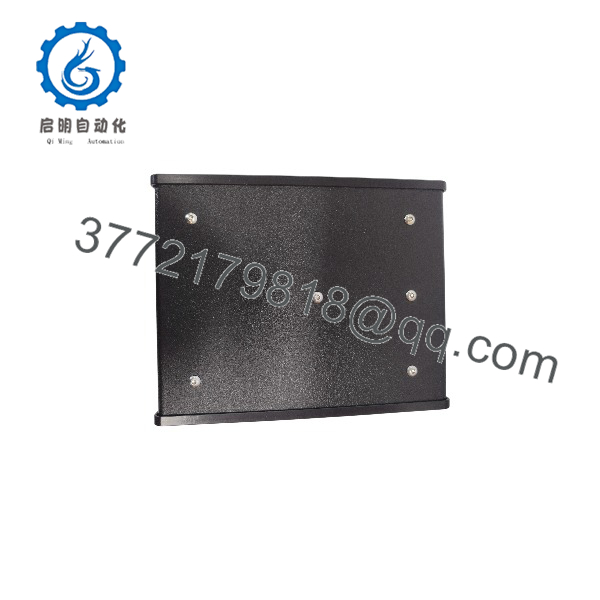
INTELLISCANDE14-405NM SCANLAB
5. Troubleshooting Quick Reference
| Symptom | Possible Cause | Relevance to this Part | Quick Check Method | Recommendation |
|---|---|---|---|---|
| No response / no LED activity on power-up | Missing or incorrect supply voltage | ✅ High | Measure 30 V or 48 V DC at power connector; confirm polarity and current capacity | Confirm PSU rating (max 3 A) and cable integrity before replacing head |
| Position error or large drift after warm-up | Thermal drift or missing cooling | ✅ Medium-High | Monitor temperature via iDRIVE diagnostics; check water/air cooling flow if equipped | Allow 30 min warm-up; verify cooling circuit; request test report for drift values |
| Communication timeout with RTC board | Interface mismatch or cable fault | ✅ High | Confirm SL2-100 or XY2-100 Enhanced setting; check cable and termination | Match interface type exactly; test with known-good RTC board |
| Distorted or offset scan field | Incorrect tuning, objective mismatch, or gain/offset error | ✅ Medium | Read current tuning and gain/offset via software; measure actual image field | Load correct tuning; verify F-Theta lens focal length and beam displacement (16.42 mm) |
| Intermittent tracking error or delayed settling | Excessive load, mirror contamination, or servo limit | ✅ Medium | Inspect mirrors for debris; monitor drive current and temperature | Clean optics per SCANLAB procedure; reduce duty cycle; check for mechanical binding |
| Spot size larger than expected | Wrong wavelength coating or focus error | ❌ Low (optical) | Confirm 405 nm coating label; measure focus with beam profiler | Issue is usually external (lens or laser); do not replace head first |
If diagnostics remain inconclusive, capture iDRIVE status logs, photos of connectors and mirrors, and contact technical support with the serial number.
6. Frequently Asked Questions (FAQ)
Q: Is this unit new original or refurbished?
A: New Original / New Surplus. Units undergo inbound visual and functional checks on a genuine SCANLAB-compatible test setup, including power-on, communication handshake, and basic positioning verification. Test reports and photos are available on request.
Q: What laser wavelength is the coating designed for?
A: 405 nm. Standard SCANLAB coatings cover UV, but this specific configuration is optimized for 405 nm. Do not assume it is suitable for 1064 nm or other wavelengths without confirming the coating code on the unit and datasheet.
Q: Can I hot-swap this scan head?
A: No. Power down the system completely before connecting or disconnecting. Hot-swapping risks damage to the digital servo electronics and backplane interfaces.
Q: Which control boards are compatible?
A: SCANLAB RTC boards (RTC5, RTC6 and equivalents) using SL2-100 or XY2-100 Enhanced interfaces. Confirm the exact interface version on both the head and the board before ordering cables.
Q: What is the difference between intelliSCAN and intelliSCANde?
A: The “de” version uses digital encoders instead of analog position detectors. Result: significantly lower drift and dither (<0.4 µrad RMS repeatability) with the same mechanical package and comparable dynamics. Choose de when long-term stability and high linearity matter more than absolute lowest cost.
Q: Do I need water cooling?
A: Optional for the 14 mm aperture. For continuous high-duty-cycle or elevated ambient conditions, water cooling improves thermal stability. Air cooling options also exist. Match the cooling configuration to your process load.
Q: What should I check before installing a replacement?
A: Photograph the old unit’s connectors, objective mount, and any labels. Confirm interface type, power voltage, beam displacement (16.42 mm), and objective focal length. Mirror the physical mounting orientation exactly. Verify firmware/tuning compatibility with your RTC board. A 20 % power-supply current margin is good practice.