WhatsApp: +86 16626708626
 Email:
  Phone: +86 16626708626
Description
Key Technical Specifications
| Parameter | Value |
| Rated Load (E_{\max}) | 400 kg (881.8 lbs) |
| Nominal Characteristic Value (C_n) | 2.0 mV/V |
| Accuracy Class | C3 / C3 MR (OIML R60) |
| Combined Error | \le \pm 0.02\% of full scale |
| Excitation Voltage (Recommended) | 5 to 12 V AC/DC |
| Excitation Voltage (Maximum) | 18 V AC/DC |
| Input Resistance | 380 \Omega \pm 10 \Omega |
| Output Resistance | 350 \Omega \pm 3 \Omega |
| Safe Overload Limit | 150% of rated capacity |
| Ultimate Overload Limit | 300% of rated capacity |
| Enclosure Protection Class | IP68 / IP69K (Hermetically sealed laser-welded bellows) |
| Operating Temperature Range | −30 to +70 °C (−22 to +158 °F) |
Product Introduction & Supply Chain Strategy
The Schenck Process FLB 0400 is a high-precision, stainless steel bending beam load cell engineered for platform scales, hopper weighing systems, vessel batching, and continuous belt weighers. Built with a welded metal bellows design, it provides superior resistance to dust, corrosive chemical washdowns, and thermal expansion while maintaining linear accuracy under high side-load conditions.
Sourcing this unit as New Surplus gives procurement managers an immediate pathway to bypass long factory lead times and rising OEM prices without compromising plant reliability. Acquiring factory-fresh New Surplus units eliminates the severe operational risks of using refurbished load cells, which frequently suffer from internal zero-point drift, degraded strain gauge adhesive, and compromised hermetic seals. Keeping 1–2 units as buffer stock ensures instant recovery during mechanical overload incidents.
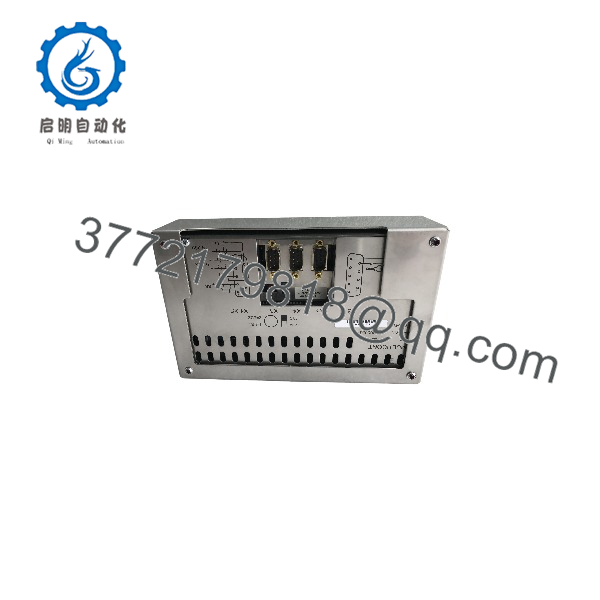
FLB 0400
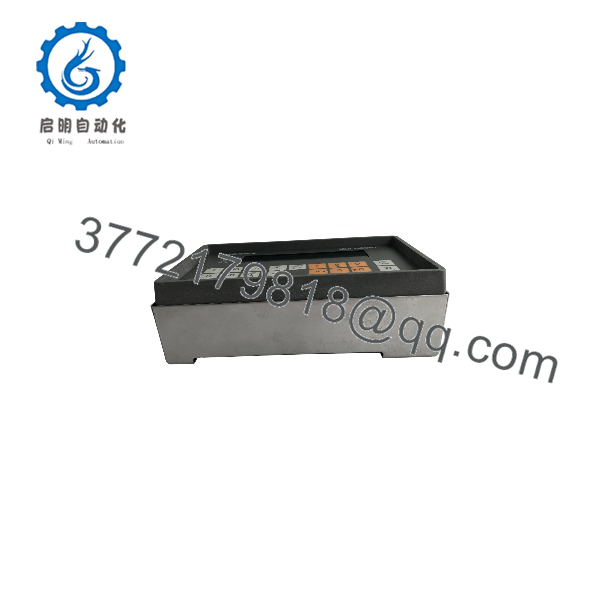
FLB 0400
Installation & Configuration Guide
Stage 1: Pre-Installation (Prep & Safety)
- De-energize the weighing terminal, junction box, and associated PLC I/O cards using proper Lock-Out/Tag-Out (LOTO) procedures.
- Put on an ESD wrist strap and clear all debris from the mounting baseplate and load receiver interface.
- Inspect the mounting surface for flatness (\le 0.05 mm variance) to avoid mechanical binding or angular misalignment.
- Document the existing wire color code and sense-line configuration inside the weighing junction box.
Stage 2: Removal
- Disconnect the load cell cable from the summing junction box terminal strips without pulling on individual conductor leads.
- Relieve all mechanical tare weight from the vessel or platform using external mechanical jacks or safety blocking.
- Remove the high-tensile mounting bolts securing the load cell base to the foundation frame.
- Carefully lift out the failed load cell, taking care not to twist or apply excessive shear forces to the cable entry gland.
Stage 3: Installation (Clone & Seat)
- Position the replacement FLB 0400 load cell, ensuring the direction-of-load arrow on the stainless steel housing points toward the applied force.
- Hand-tighten high-tensile mounting bolts (Grade 8.8 or stainless steel equivalent) before applying a calibrated torque wrench to manufacturer torque specifications.
- Check that the metal bellows is completely unconstrained and free from mechanical contact with surrounding guards or mounting frames.
- Route the integral shielded cable through conduit toward the junction box, maintaining a drip loop to prevent moisture ingress.
Stage 4: Power-On & Testing
- Check terminal resistance values (Input ~ 380 \Omega, Output ~ 350 \Omega) using a digital multimeter before connecting to live terminal boards.
- Re-apply power to the weighing indicator or INTECONT/MULTICONT transmitter and verify stable zero-point excitation voltage.
- Perform a preliminary corner-load test (eccentricity check) across all platform mounting points.
- Execute a zero calibration followed by a full-scale calibration using certified test weights.
Firmware/Software Versions & Upgrade Notes
- Transmitter Integration: The FLB 0400 is an analog strain-gauge load cell compatible with all standard Schenck Process weighing electronics (e.g., DISOMAT, INTECONT, MULTICONT) as well as third-party 2 mV/V strain gauge input modules.
- Sensitivity Calibration: Ensure the weighing terminal parameter for nominal sensitivity is set to 2.000 mV/V (or calibrated to the specific test report value supplied with the unit).
- Six-Wire Wiring Scheme: Use sense lines (+S, -S) whenever cable runs exceed 10 meters to compensate for voltage drops across temperature swings. Do not clip or modify factory cable lengths without recalibrating the measurement channel.
Frequently Asked Questions (FAQ)
Q: How can I be sure this unit is genuine New Surplus and not refurbished?
A: This product is a Brand New Surplus unit. It is not used, not pulled from a decommissioned plant, and not refurbished. All modules undergo rigorous quality verification to ensure OEM-level reliability. Every unit features its original, uncut factory cable, untarnished laser-welded stainless steel bellows, and clean mounting holes with zero bolt-clamping indentations.
Q: Why is New Surplus priced higher than refurbished load cells on the market?
A: Our pricing reflects the cost of securing genuine New Surplus inventory globally. It may be 20-30% higher than a refurbished gamble, but it is substantially less than OEM list prices, and it buys you 100% peace of mind. Refurbished load cells often suffer from micro-cracks in internal strain gauge bridges and degraded moisture seals, which lead to erratic weight readings and costly batching errors.
Q: Can I replace a single FLB 0400 load cell in a 4-cell scale platform, or do I need to replace all four?
A: You can replace a single unit as long as the replacement matches the 400 kg capacity and 2.0 mV/V rating. However, after installation, you must perform a corner-load balancing routine at the junction box using trim potentiometers to equalize signal outputs across all four channels.
Q: What happens if the load cell is subjected to a shock load during operation?
A: The FLB 0400 supports a safe overload limit of 150% (600 kg) without zero-point shift or loss of calibration accuracy. Overloads exceeding 300% (1,200 kg) will permanently deform the internal spring element, requiring complete replacement of the cell.
Q: What warranty coverage applies to this load cell?
A: All New Surplus units are backed by a comprehensive 1-Year functional warranty. This warranty guarantees that the load cell meets original Schenck Process factory specs for accuracy, linearity, and environmental sealing.