WhatsApp: +86 16626708626
 Email:
  Phone: +86 16626708626
Description
Key Technical Specifications
| Parameter | Value |
|---|---|
| Manufacturer | Schneider Electric / Modicon |
| Part Number | AS-B836-016 |
| Product Family | Modicon 800 Series |
| Application | Modicon 984 PLC I/O |
| I/O Type | Isolated discrete DC output |
| Number of Points | 16 |
| Operating Voltage | 12–250 VDC |
| Number of Groups | 16 |
| Outputs per Group | 1 |
| Maximum Point Current | 0.75 A typical @ 250 VDC; 1 A typical @ 125 VDC; 1.5 A typical @ 48 VDC |
| Maximum Module Current | 8 A DC cumulative |
| Surge Current | 5 A for 10 ms at 1-second repetition |
| OFF-State Leakage | 1 mA maximum @ 12 VDC |
| Minimum Output Current | 15 mA DC |
| ON-State Voltage Drop | 3 V maximum @ 1.5 A |
| OFF-to-ON Response | 1 ms maximum |
| ON-to-OFF Response | 5 ms maximum |
| Internal Power, +5 V | 50 mA |
| Internal Power, +4.3 V | 603 mA |
| Space Required | 1 slot |
| Weight | 2.55 lb (1.16 kg) |
| Terminal Connector | AS-8535-000 |
| Fusing | One 4 A fuse per output group |
| Output Mapping | 16-bit output or 1-register output |
| Output Format | Binary / BCD |
The technical documentation identifies the AS-B836-016 as a 12–250 VDC isolated output module with 16 independent output groups. Each group contains one output, which differs materially from grouped 8-channel AC output modules such as the AS-B808-016.
Product Introduction
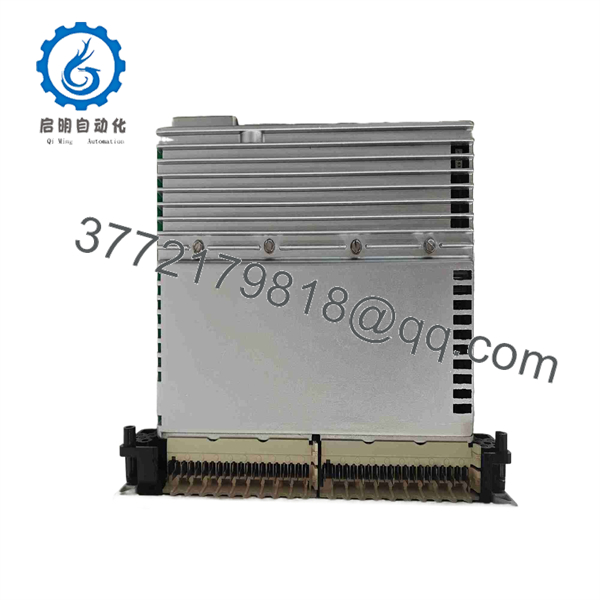
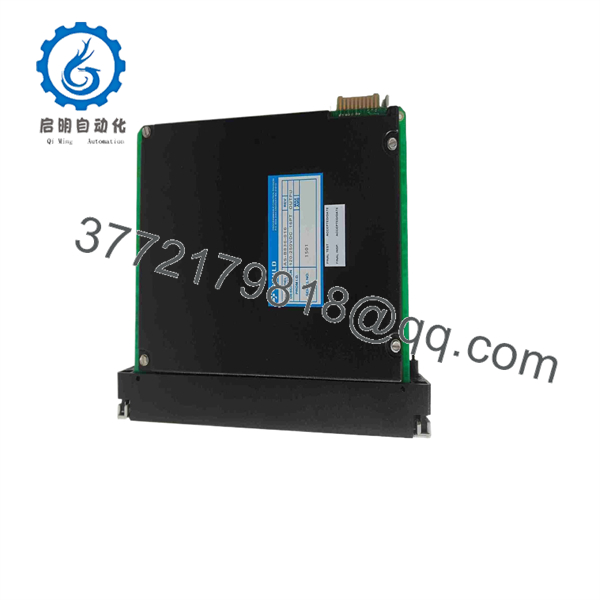
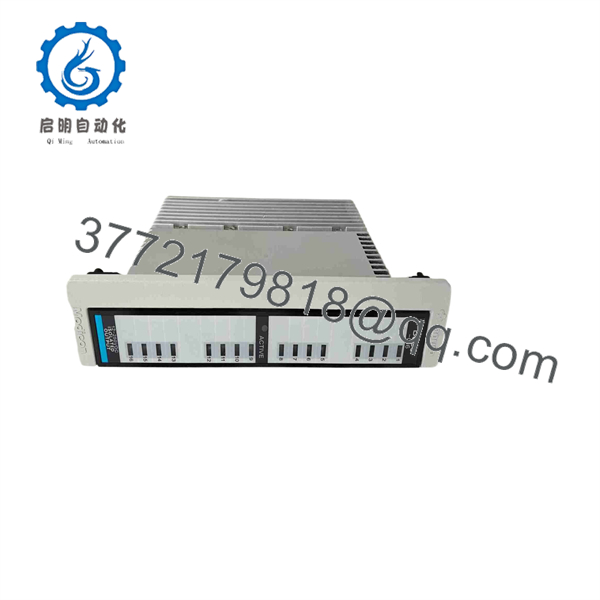
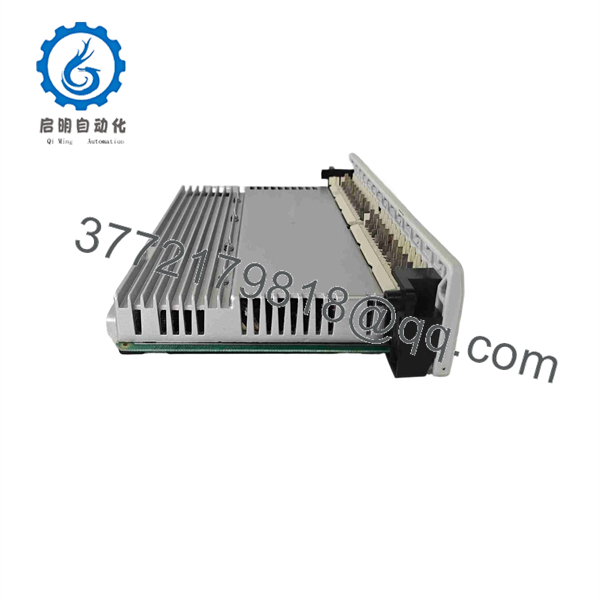
The Schneider Electric / Modicon AS-B836-016 is a 16-point isolated DC output module used with Modicon 800-series and 984 PLC systems. It switches field loads from 12 to 250 VDC and provides one independently isolated output per group. The module occupies one rack slot and uses the AS-8535-000 terminal connector.
Its main practical advantage in legacy installations is channel isolation. Each of the 16 output groups has one output, rather than sharing eight outputs on a common group. For replacement work, verify the field voltage, load current, terminal connector, rack keying, and existing I/O mapping before installation.
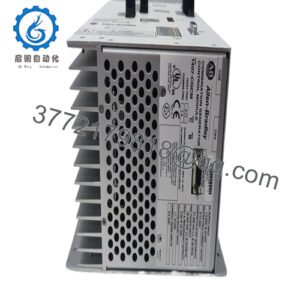
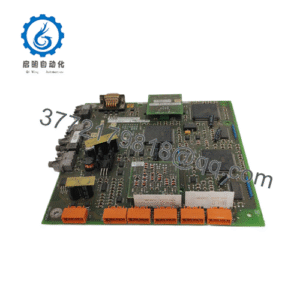
AS-B836-016
AS-B836-016
AS-B836-016
AS-B836-016
Installation & Configuration Guide
Stage 1: Pre-Installation Preparation — Approximately 10 minutes
⚠️ Safety First: The AS-B836-016 can switch circuits up to 250 VDC. Treat connected field wiring as hazardous until isolation has been verified.
- Notify operations and place the controlled process in a safe state.
- Apply the plant’s approved lockout/tagout procedure.
- Isolate both the control-system power and the external DC field supply where applicable.
- Verify absence of voltage with a properly rated multimeter.
- Use an ESD wrist strap and ESD-safe work surface.
- Prepare:
- PH1 screwdriver
- Properly rated multimeter
- Wire labels
- Smartphone/camera
- ESD strap
- Back up the PLC application and record the existing I/O configuration.
- Photograph the AS-B836-016 label, terminal wiring, slot position, and connector orientation.
❗ Do not confuse this module with the AS-B808-016. The AS-B836-016 handles 12–250 VDC isolated outputs, while the AS-B808-016 is a 230 VAC output module. The electrical interface is not interchangeable.
Stage 2: Removing the Old Module — Approximately 5 minutes
- Confirm zero field voltage before touching the terminal wiring.
- Remove the applicable front cover or retaining hardware.
- Label each field conductor.
- Photograph the complete terminal arrangement before disconnecting anything.
- Disconnect the wiring without pulling or twisting the terminals.
- Release the rack/module retention mechanism.
- Pull the module straight out to avoid stressing the backplane connector.
- Inspect the connector and housing for corrosion, contamination, bent contacts, or physical damage.
- Keep the removed module available as a wiring reference.
The AS- uses the AS-8535-000 terminal connector, and the published documentation provides dedicated terminal numbering and mechanical-keying information.
Stage 3: Installing the New Module — Approximately 5 minutes
- Verify the replacement label reads AS-.
- Compare the replacement’s mechanical keying against the original.
- Confirm the replacement uses the correct AS-8535-000 terminal arrangement.
- Compare the new module’s terminal markings with your photographs.
- Do not assume channel order from another Modicon output card.
- Insert the module into the correct rack position.
- Confirm that it is fully seated and mechanically locked.
- Reconnect each conductor to its documented terminal.
- Verify polarity for every DC load circuit.
- Check that no conductor is loose or shorted to an adjacent terminal.
Self-check:
- AS- verified
- Correct rack slot verified
- AS-8535-000 connector verified
- All 16 channels checked
- DC polarity checked
- Field wiring secured
- Module fully seated
Stage 4: Power-On & Testing — Approximately 10 minutes
- Perform a final short-circuit and polarity check.
- Energize the control rack according to the plant startup procedure.
- Verify that the PLC recognizes the installed I/O module.
- Confirm the configured output addresses.
- The documentation allows the module to be mapped as 16 individual output bits or one output register, depending on the programming environment. Verify the existing configuration rather than changing the mapping during a simple replacement.
- Test each output individually where process conditions permit.
- Confirm the commanded state at the field device.
- Test representative loads from all portions of the 16-channel module.
- Check for unexpected fuse operation or excessive load current.
- Return the equipment to automatic operation only after the I/O test has been accepted by operations.
⚠️ Inductive loads require attention. The technical documentation notes that certain large inductive loads may require an external reverse diode directly across the load for circuit protection. Do not add suppression components blindly; select them according to the actual load and circuit design.
Technical Pitfalls — What Usually Causes Rework
❗ 1. Wrong voltage class
The AS- accepts 12–250 VDC. It is not a substitute for an AC output module merely because both modules contain 16 channels.
❗ 2. Ignoring individual channel isolation
The module provides 16 groups with one output per group. Do not assume the common arrangement used by grouped Modicon output cards.
❗ 3. Exceeding cumulative current
The documented cumulative switched current is 8 A for the entire module. Individual point limits also vary with operating voltage. For example, the specified typical current is 0.75 A at 250 VDC and 1.5 A at 48 VDC.
❗ 4. Assuming another 800-series connector fits
The AS- uses AS-8535-000. Verify the connector before transferring a wiring harness.
❗ 5. Ignoring old configuration mapping
The module can be configured as 16-bit output mapping or one register output. A physical replacement should preserve the existing PLC application’s mapping unless you are deliberately modifying the control program.
Replacement QC Procedure
For surplus inventory, a technically meaningful inspection should include:
- Inbound inspection: Verify model marking, housing condition, terminal connector, mechanical keying, and evidence of rework or corrosion.
- Functional test: Test the module on a compatible Modicon 800/984 test rack and exercise representative output channels.
- Electrical checks: Verify applicable output behavior, isolation, and current limits using calibrated test equipment.
- Configuration check: Document the module revision and confirm the terminal configuration.
- Final QC: Record the test date, test equipment, test result, and inspector.
A current secondary-market listing distinguishes New Surplus, New, and Refurbished conditions for AS-, illustrating why the actual condition should be stated explicitly on a purchase order.
Frequently Asked Questions (FAQ)
1. What does the AS- do?
It is a 16-point isolated DC output module for Schneider Electric / Modicon 800-series and 984 PLC systems. It handles 12–250 VDC field circuits and provides one output per isolated group.
2. Is the AS- a 24 VDC output module?
Not specifically. Its documented operating range is 12–250 VDC. A 24 VDC load is within that range, but the module should not be described as a 24 VDC-only output card.
3. Can I use an AS- instead of an AS-B808-016?
No. They have materially different electrical characteristics. The AS- is a 12–250 VDC isolated output module, whereas the AS-B808-016 is designed for AC output service. Verify the field voltage before ordering a replacement.
4. What is the maximum output current?
The specified typical maximum per point is 0.75 A at 250 VDC, 1 A at 125 VDC, and 1.5 A at 48 VDC. The total cumulative switched current for the module is 8 A.
5. What terminal connector does the AS- use?
The documented terminal connector is AS-8535-000. Verify the connector and terminal assignment against the installed hardware before moving field wiring.
6. Is the AS- obsolete?
It is a legacy Modicon 800/984-series component, so procurement should be treated as legacy-spares sourcing rather than normal current-generation PLC purchasing. Secondary-market suppliers currently list new-surplus and refurbished units, but condition and remaining inventory vary by supplier.
7. Should I buy New Surplus or Refurbished?
For a critical production system, compare the actual condition, test documentation, warranty, and revision information rather than choosing solely by the label. A New Original/New Surplus unit avoids prior operational wear, while a properly documented Refurbished (tested) unit can be a practical legacy-spares option when new inventory is limited. Current listings demonstrate that both conditions exist for AS-.