WhatsApp: +86 16626708626
 Email:
  Phone: +86 16626708626
Description
Key Technical Specifications
| Parameter | Value |
|---|---|
| Product Type | Unity safety processor / hot standby CPU |
| Platform | Modicon Quantum automation platform |
| Product Variant | Pro XL safety processor |
| Clock Frequency | 266 MHz |
| Internal RAM | 1,024 kB; 512 kB allocated for data |
| Program Memory Expansion | Up to 7,168 kB with PCMCIA card |
| File Storage Expansion | Up to 8 MB with PCMCIA card |
| Safety Function | Unity safety processing; verify project-specific certification requirements |
| Hot Standby Function | Supported in compatible Quantum redundant architectures |
| Ethernet | Integrated Ethernet TCP/IP for supported hot standby architecture |
| Modbus | Integrated Modbus interface |
| Modbus Plus | Integrated Modbus Plus interface |
| USB | 1 local USB programming connection |
| Hot Standby Link | MT-RJ multimode fiber-optic connection; verify system distance and cable specification |
| Maximum Local Racks | 2 |
| Maximum Remote I/O Stations | 31 |
| Distributed I/O | Up to 63 stations across 3 Modbus Plus networks |
| Remote Discrete I/O | Up to 31,744 inputs and 31,744 outputs |
| Remote Analog I/O | Up to 1,984 inputs and 1,984 outputs |
| Bus Current Requirement | 2,500 mA |
| Battery | 3 V DC lithium battery; 1,200 mAh |
| Battery Life | Approximately 10 years |
| Display | 2-line by 16-character LCD |
| Operating Temperature | 0 to 60 °C |
| Storage Temperature | −40 to +85 °C |
| Relative Humidity | 95% non-condensing |
| Operating Altitude | Up to 5,000 m |
| Weight | Confirm against the exact hardware revision |
| Lifecycle | Discontinued September 24, 2022; end-of-service listed as December 31, 2029 |
Schneider Electric identifies the 140CPU67160S as a Unity safety processor for the Quantum Pro XL platform and lists the 1,024 kB, 266 MHz specification. Schneider’s regional product page records discontinuation on September 24, 2022, with end-of-service scheduled for December 31, 2029.
Product Introduction
The Schneider Electric 140CPU67160S is a Unity safety processor for Modicon Quantum Pro XL systems. It combines 266 MHz processing, 1,024 kB internal RAM, Ethernet, Modbus, Modbus Plus, USB, and hot standby capability for safety-related and high-availability control architectures.
This CPU is not an ordinary Quantum processor replacement. Safety project validation, paired-CPU compatibility, firmware, memory-card contents, and approved Quantum safety configuration must match the installed system. Confirm the exact application and certification requirements before purchase.
Troubleshooting Quick Reference
| Symptom | Possible Cause | Relevance to This Part | Quick Check Method | Recommendation |
|---|---|---|---|---|
| CPU has no status indication | Rack power, backplane fault, or poor CPU seating | ❌ Low to medium | Measure the Quantum backplane supply and verify the processor is fully seated | Check rack power and the backplane before replacing the CPU |
| CPU remains in STOP | Safety application fault, configuration mismatch, key-switch state, or watchdog event | ✅ High | Read Unity Safety diagnostics and the CPU event buffer | Correct the application or configuration fault before replacing hardware |
| Safety application will not validate | Project signature, firmware, safety configuration, or hardware mismatch | ✅ High | Compare the project target, CPU firmware, safety signature, and hardware configuration | Do not force the download; restore the approved project and matching hardware |
| Hot standby does not synchronize | CPU mismatch, firmware difference, fiber-link problem, or configuration error | ✅ High | Compare both CPU labels and firmware; inspect the MT-RJ fiber link and redundancy diagnostics | Match the paired processors and correct the redundancy configuration |
| Hot standby link reports an error | Damaged or contaminated fiber, wrong port, or improper cable routing | ✅ High | Inspect and clean the MT-RJ connectors; verify transmitter/receiver routing and cable specification | Repair the fiber path before replacing either CPU |
| Ethernet communications fail | IP conflict, network settings, cable fault, or CPU Ethernet fault | ✅ High | Check link/activity indications, IP address, subnet, switch port, and duplicate-address conditions | Correct the network first; replace the CPU only if the fault follows the processor |
| Modbus Plus devices disappear | Node address, trunk, termination, or communication-port fault | ✅ High | Verify the node address and inspect the Modbus Plus cable, connectors, and diagnostics | Isolate the network segment before condemning the CPU |
| Safety I/O is unavailable | Remote adapter, network, configuration, or safety-validation issue | ✅ High | Review remote I/O status and safety diagnostic words; test the network path | Do not bypass safety diagnostics; correct the documented fault condition |
| CPU resets unexpectedly | Voltage drop, watchdog, thermal stress, battery/memory issue, or internal fault | ✅ High | Trend rack voltage and review watchdog/reset logs; check temperature and battery status | Correct external causes first, then replace the CPU if resets continue |
| Program or retentive data is lost | Battery depletion, corrupted memory, or improper power-down procedure | ✅ High | Check the battery indicator and compare the backed-up application with CPU memory | Back up the application immediately and replace the battery or CPU as indicated |
| Replacement CPU rejects the project | Unity Safety version, firmware, project signature, or memory mismatch | ✅ High | Compare project version, firmware, safety signature, PCMCIA contents, and hardware target | Use only a verified compatible processor and approved project |
| Standard PLC logic works but safety logic faults | Safety configuration, certified firmware, or safety I/O mismatch | ✅ High | Read the safety diagnostic buffer and compare the validated system configuration | Treat the fault as safety-critical; follow the site’s functional-safety procedure |
Do not troubleshoot this processor like a standard PLC CPU. Put the machine or process into its approved safe state before testing. If the issue remains unresolved, contact technical support with the CPU label, firmware revision, safety signature, paired-CPU details, fiber photos, LED/LCD status, diagnostic logs, and project configuration.
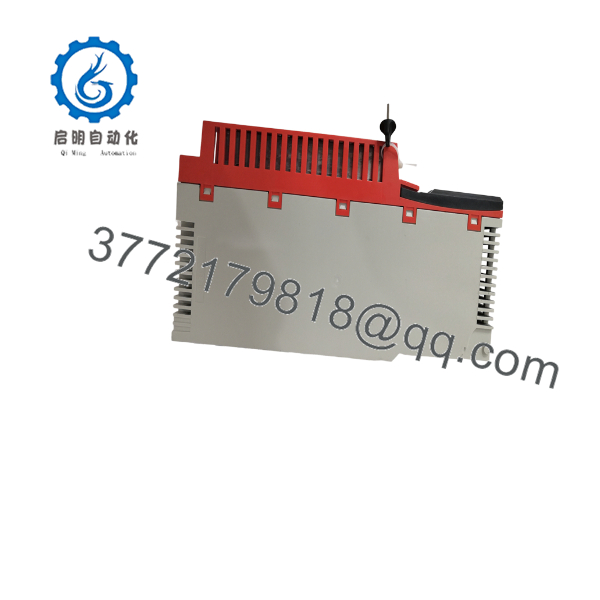
140CPU67160S
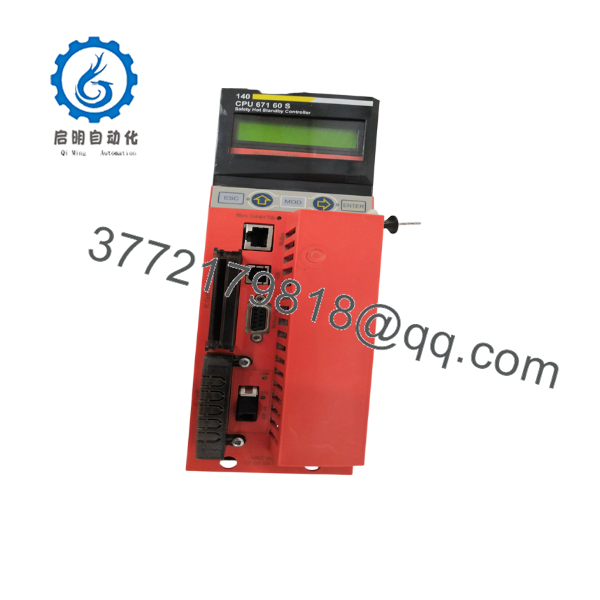
140CPU67160S
Frequently Asked Questions (FAQ)
What is the Schneider Electric 140CPU67160S?
It is a Unity safety processor for the Modicon Quantum Pro XL platform. The model supports 266 MHz processing, 1,024 kB internal RAM, Quantum communications, and compatible hot standby architectures.
Is the 140CPU67160S the same as the 140CPU67160?
No. The 140CPU67160S is the safety variant. The 140CPU67160 is a standard Unity hot standby processor with multimode Ethernet. Their safety certification, project requirements, firmware, and application use are not interchangeable simply because the part numbers look similar.
Is the 140CPU67160S still manufactured?
Schneider Electric lists the model as discontinued on September 24, 2022, with end-of-service scheduled for December 31, 2029. Remaining supply may consist of New Surplus, opened stock, or Refurbished and Tested units.
Can I use a standard Quantum CPU as a replacement?
Not for a validated safety application without an approved engineering change. A standard CPU may lack the required safety processing, project validation, diagnostics, or certification path. Confirm any replacement through Schneider Electric safety documentation and your site’s functional-safety process.
Does replacing the CPU preserve the safety program?
Do not assume so. Back up the Unity Safety project, hardware configuration, safety signature, firmware information, retentive data, and memory-card contents before removal. The replacement must be loaded with the approved application and validated before returning the process to operation.
Can I hot-swap the 140CPU67160S?
Do not assume hot swapping is allowed. Shut down and isolate the system unless the specific Quantum safety architecture and site procedure explicitly authorize live replacement. A hot standby system may continue operating, but that does not automatically make every CPU-removal procedure safe or permitted.
What should I verify before ordering a surplus unit?
Confirm the exact suffix 140CPU67160S, safety variant, firmware revision, battery condition, LCD/LED operation, Ethernet and Modbus communication, hot standby fiber interface, and memory-card compatibility. Request the unit’s serial-label photos, safety-processor test report, warranty terms, and return conditions.
Why is this CPU more expensive than a standard Quantum processor?
It is a specialized safety and hot standby processor rather than a general-purpose Quantum CPU. Replacement cost reflects limited availability, application-specific compatibility, safety validation requirements, and the risk of using an incorrect processor in a certified system. Never select it by clock speed and RAM alone.