WhatsApp: +86 16626708626
 Email:
  Phone: +86 16626708626
Description
3. Key Technical Specifications
| Parameter | Value |
|---|---|
| Temperature Range (Std) | 10 °C to 60 °C |
| Temperature Accuracy | ±0.2 °C of setpoint |
| Temperature Stability | ±0.1 °C |
| Readout Resolution | 0.1 °C |
| High-Temp Cutout (Std) | 70 °C |
| Container Options | 1500 cc quartz or 1.2 L stainless steel |
| Level Sensing | Discrete sensors at 100 %, 50 %, 25 %, 15 % |
| Control | Microprocessor-based |
| Interface | DDC for remote control and monitoring |
| Safety Features | Full interlocks, over-temperature cutout |
| Design | Modular, front-access removable source cup |
| Typical Applications | Semiconductor liquid source chemical temperature control |
Note: Variant models exist (ATCS-15-SS, ATCS-15HT, ATCS-15TLC) with different temperature ranges and container materials. Confirm exact configuration against the unit nameplate.
4. Product Introduction
The Schumacher ATCS-15 is part of the ABSOLUTE Temperature Control System family. It delivers stable, accurate temperature control for liquid source chemicals used in semiconductor processing. The unit maintains chemical temperature within ±0.2 °C of setpoint and ±0.1 °C stability across the standard 10–60 °C range.
Engineers select the ATCS-15 when they need reliable front-access chemical handling, discrete level sensing, and remote DDC monitoring in existing process tools. The modular design and removable source cup simplify container changes while the built-in interlocks protect both the process and the operator.
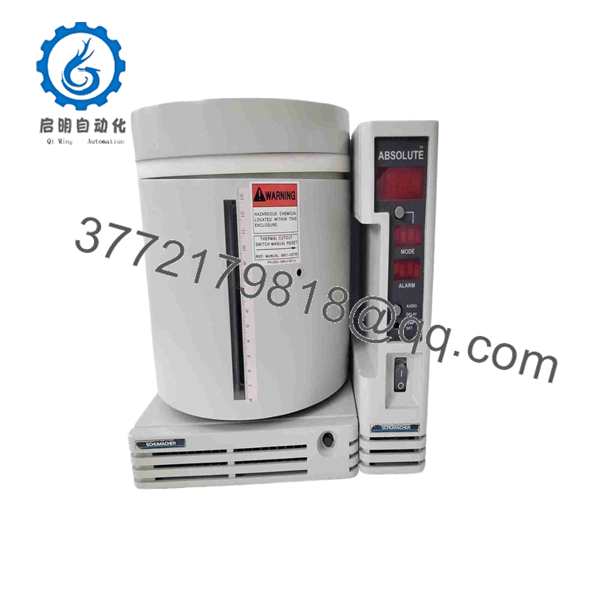
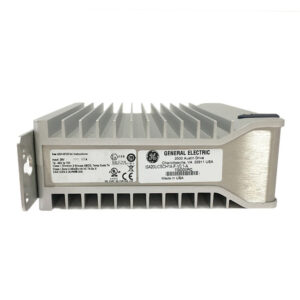
ATCS-15
5. Troubleshooting Quick Reference
| Symptom | Possible Cause | Relevance to this Part | Quick Check Method | Recommendation |
|---|---|---|---|---|
| Temperature not reaching setpoint | Sensor fault, heater failure, or low level | ✅ High | Verify level sensors; measure actual bath temperature with calibrated probe | Check sensor and level first; replace unit if heater circuit fails |
| Temperature unstable or oscillating | Controller tuning or poor thermal contact | ✅ High | Confirm container is properly seated; check for air gaps | Reseat container; verify thermal paste or contact if applicable |
| Level alarm active | Low chemical or failed level sensor | ✅ High | Visually confirm level via sight glass; test sensor continuity | Refill chemical or replace faulty level sensor |
| Over-temperature cutout trips | Sensor drift or heater stuck on | ✅ High | Measure actual temperature vs. displayed value | Calibrate or replace temperature sensor; inspect heater control |
| No remote communication (DDC) | Interface wiring or configuration error | ✅ Medium | Check DDC cable and address settings | Verify wiring and configuration before replacing unit |
If symptoms persist, record the displayed temperature, setpoint, level status, and any alarm codes, then contact technical support with photos of the unit and container.
6. Frequently Asked Questions (FAQ)
Q: What is the difference between the standard ATCS-15 and the TLC version?
A: The standard ATCS-15 covers 10–60 °C. The ATCS-15TLC (Trans-LC) is limited to 10–22 °C and is designed to eliminate spark sources for lower-temperature, more sensitive chemistries.
Q: Can I use a stainless-steel container in a standard ATCS-15?
A: The standard unit is designed for 1500 cc quartz containers. Stainless-steel versions (-SS) are a separate model with integrated level sense and lid heater. Confirm the exact model before installing a different container type.
Q: Does the unit include the chemical container?
A: No. The is the temperature control base. Quartz or stainless-steel source containers are ordered separately and must match the model (BK3D1 / BK3S series or equivalent).
Q: How accurate is the temperature control in practice?
A: Specified accuracy is ±0.2 °C of setpoint with ±0.1 °C stability under normal operating conditions. Always verify with a calibrated reference probe during commissioning.
Q: Is remote monitoring supported?
A: Yes. The unit includes a DDC interface for remote control and monitoring of temperature, level, and alarm status.
Q: What safety interlocks are present?
A: The system includes over-temperature cutout, liquid-level alarms, and additional process interlocks. The Trans-LC version further reduces spark risk and adjusts the cutout threshold.
Q: Why are refurbished units commonly used?
A: These controllers are specialized semiconductor tools. Fully tested refurbished units restore process capability quickly while carrying a warranty, avoiding the long lead times of scarce new-surplus stock.