 WhatsApp: +86 16626708626
 Email:
  Phone: +86 16626708626
Description
Product Introduction
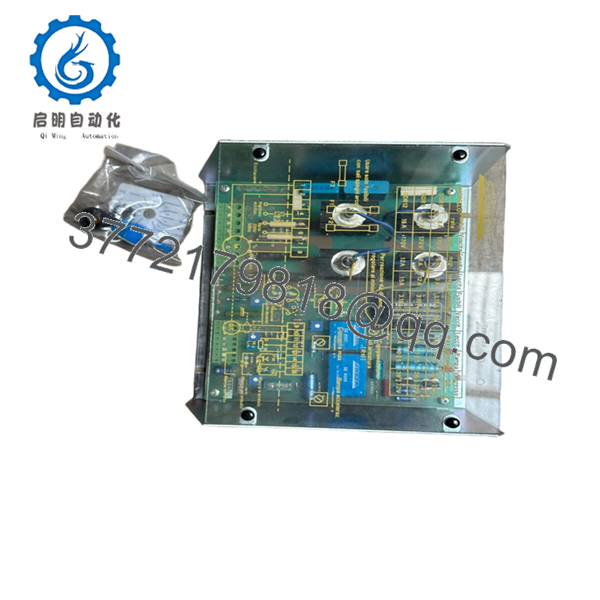
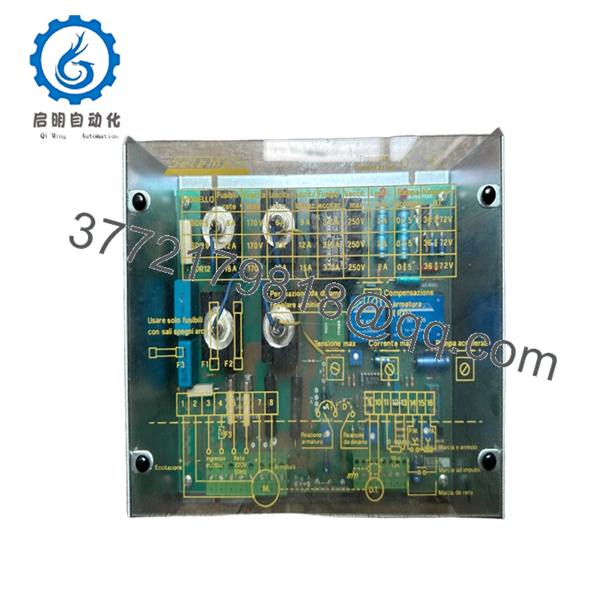
The Selema ATH 216 is a versatile digital servo drive engineered for high-dynamic motion control applications. Recognized for its reliability in CNC machinery and automated assembly lines, the ATH 216 provides precise torque, speed, and position control for brushless synchronous motors. Its compact “book-style” design allows for high-density mounting in control cabinets where space is at a premium.
What sets the ATH 216 apart is its robust internal power stage and sophisticated firmware that handles complex motion profiles with minimal jitter. It features integrated protection against overvoltage, short circuits, and thermal runaway, making it a “workhorse” for plant engineers who cannot afford unexpected downtime in their motion loops.
Installation & Configuration Guide
Stage 1: Pre-Installation Preparation (Estimated Time: 15 mins)
- ⚠️ Safety First: Disconnect all AC power sources. Industrial servo drives hold significant residual energy. Wait at least 10 minutes for the internal capacitors to discharge. Verify with a multimeter at the DC bus terminals (+/-) that the voltage is below 50V.
- Tools Required: 3 mm flathead screwdriver (for terminals), ESD wrist strap, and Selema configuration software (if modifying parameters).
- Data Backup: If replacing a failed unit, try to extract the parameter set via the serial port. If the unit is “dead,” ensure you have the original machine manufacturer’s parameter backup disk or file.
Stage 2: Removing the Old Module (Estimated Time: 10 mins)
- Properly label every wire. Pay extreme attention to the motor phases (U, V, W) and the resolver/encoder feedback cable. Reversing feedback phases will cause an immediate “Runaway” fault or “Overcurrent” on power-up.
- Unplug the control signal connectors (CN1/CN2).
- Loosen the top and bottom mounting bolts and slide the unit out of the cabinet.
Stage 3: Installing the New Module (Estimated Time: 15 mins)
- Mounting: Ensure at least 50 mm of vertical clearance for proper airflow. These units rely on convection and internal fans; blocking the vents will lead to premature failure.
- Configuration Clone: If the drive was pre-configured, verify the DIP switch settings for the station address (if used in a bus system).
- Wiring: Connect the ground (PE) terminal first. Reconnect motor phases and feedback. Ensure the shielding on the feedback cable is properly clamped to the chassis to prevent EMI-induced position errors.
Stage 4: Power-On & Testing (Estimated Time: 20 mins)
- Cold Check: [ ] Motor phases checked for shorts to ground. [ ] Power input voltage matches drive rating.
- Initial Power: Apply logic power first. Observe the display/LEDs. It should show “RDY” (Ready) or a similar status code.
- Commissioning: Connect via RS232. Upload the parameter file.
- Jog Test: Perform a low-speed jog without the mechanical load coupled, if possible. Verify the direction of rotation.
- ⚠️ Troubleshooting Note: If the motor “growls” or vibrates aggressively upon enabling, the commutation angle or feedback resolution is likely misconfigured.

- ATH 216
Frequently Asked Questions (FAQ)
Q: Can the ATH 216 replace an older Selema ATH 208 or 212? A: Generally, yes. The ATH 216 has a higher current rating (16A) than the 208 or 212, meaning it can handle the load. However, you must verify that the physical dimensions and the connector pinouts match your specific hardware revision, as Selema made minor changes over the years.
Q: I have a “Resolver Error” immediately on startup. Is the new drive DOA? A: Unlikely. In 90% of cases, this is due to a wiring mismatch or a parameter setting that doesn’t match the resolver’s transformation ratio. Check if your motor uses a 2-pole or multi-pole resolver and ensure the drive parameters reflect this.
Q: Do I need special software to program this drive? A: Yes, Selema drives typically require their proprietary configuration tool for full parameter access. While some basic settings can be tweaked via serial commands, the software is essential for tuning the PID loops and setting limit switches.
Q: Is the internal EMC filter sufficient for CE compliance? A: The ATH 216 includes an internal filter, which is usually sufficient for standard industrial environments. However, if you are running very long motor cables (>20 meters), we recommend an external line filter and output reactors to prevent nuisance tripping and noise interference.
Q: What is the warranty on “New Surplus” Selema units? A: We provide a full 1-year warranty from the date of shipment. While the OEM warranty may have expired, we stand behind our hardware with a full replacement or repair guarantee if the unit fails under normal operating conditions.