WhatsApp: +86 16626708626
 Email:
 Phone: +86 16626708626
Description
Core Product Summary
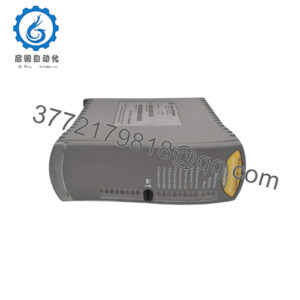
The SHINKAWA VM-5T-21010-111-111-011-0EX5 is a dual thrust monitor module from the Shinkawa VM-5 series machinery monitoring platform. The VM-5T monitors thrust bearing position and axial shaft displacement in rotating machinery, making it the protection and indication point for axial movement in turbine supervisory instrumentation (TSI) applications. The full model code identifies the module’s specific factory configuration within the VM-5T dual thrust monitor family.
The VM-5 series is designed in accordance with the American Petroleum Institute (API) standard 670 for machinery protection systems. A VM-5 system is built from monitor modules, relay modules, a power supply unit, and a rack, and all settings and checks can be performed from the module front panel without disturbing operation. The series accepts signals from Shinkawa eddy-current displacement sensors and other transducer families, and the VM-5T is covered by the series’ marine certification options and CE marking provisions.
Key Technical Specifications
| Parameter | Value |
|---|---|
| Product type | Dual thrust monitor module (machinery protection) |
| Monitoring function | Thrust bearing position and axial shaft displacement |
| Platform | Shinkawa VM-5 series rack-based machinery monitoring system |
| Design standard | API Standard 670 |
| Full model code | VM-5T-21010-111-111-011-0EX5 |
| Operation and configuration | All settings and checks performed from the front panel without disturbing operation |
| Supported system input sensors (VM-5 series) | FK/VK series, CV/CA series, LVDT, RD series, MS series transducers |
| Mounting | VM-5 rack-based system; also configurable in standalone form for small to medium rotating machinery |
| Certification options applying to the VM-5T | Marine certifications (NK, KR, LR); CE marking for VM-5 series monitor units |
Engineering Selection Highlights
- Thrust position monitoring role — the VM-5T is the module type within the VM-5 platform assigned to axial shaft displacement and thrust bearing position, complementing other VM-5 module types for vibration, eccentricity, differential expansion, and rotational speed in a complete TSI system.
- API 670 alignment — the VM-5 series is designed in accordance with API Standard 670, the machinery protection standard typically required for critical rotating equipment in process and power applications.
- Full model code configuration — this exact code (VM-5T-21010-111-111-011-0EX5) represents a specific factory configuration of the VM-5T; when replacing or expanding a rack, the complete code should be matched, since the code groups define the module’s delivered configuration.
- Rack and companion dependencies — a functioning VM-5 installation requires the rack, power supply, and relay modules of the VM-5 platform; the thrust module alone is not a complete monitor.
- Sensor family compatibility — the VM-5 platform is specified to work with Shinkawa FK/VK eddy-current displacement sensors and CV/CA, LVDT, RD, and MS series transducers; the sensor arrangement for thrust measurement must be selected with the monitor configuration.
- Marine and CE options — the VM-5T is among the VM-5 modules covered by NK, KR, and LR marine certification options, and by CE marking; installations with classification-society or CE requirements should verify these options were specified in the original order code.
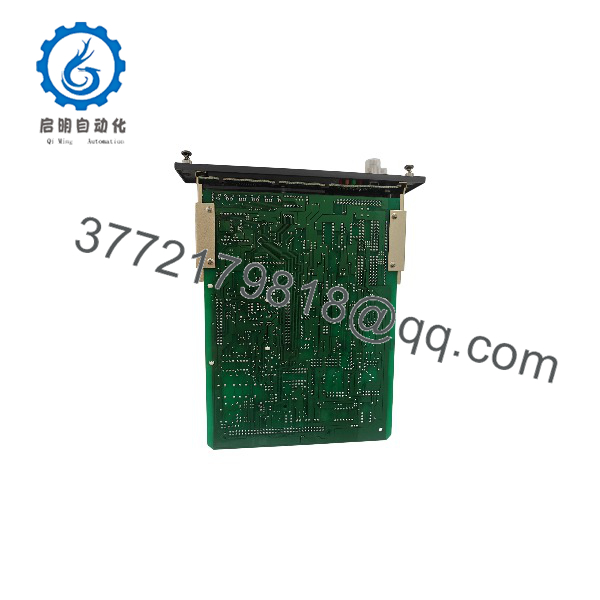
VM-5T-21010-111-111-011-0EX5
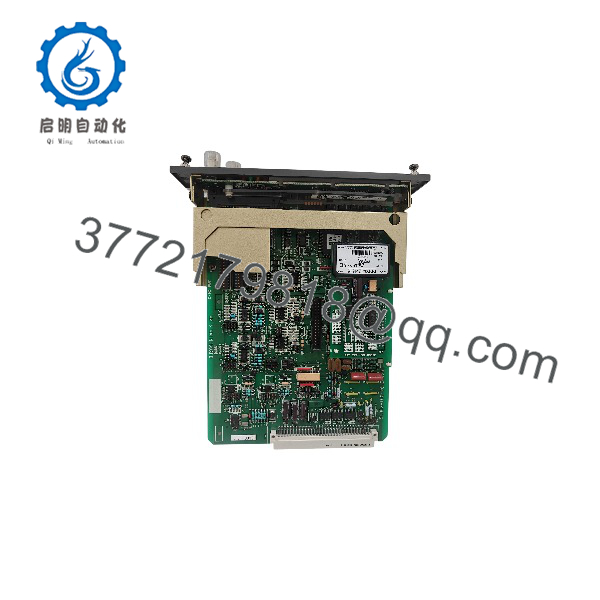
VM-5T-21010-111-111-011-0EX5
System Compatibility & Integration Requirements
| Item / Dependency | Verified Compatibility or Requirement | Practical Note |
|---|---|---|
| Platform | Shinkawa VM-5 series machinery monitoring system | The VM-5 series offers flexible 10- and 8-slot rack-mount configurations with built-in power source, and standalone configurations for small to medium rotating machinery. |
| System composition | Monitor unit, relay module, power supply unit, and rack | Relay modules (such as VM-5Y1 and VM-5Y7 types), power supply units (VM-5Z1 type), and racks (VM-5W1 and related rack models) are ordered as part of the system. |
| Rack options | Multiple-unit racks and single-unit rack types | Rack selection is made according to the number of monitoring modules and application scale. |
| Input sensors | FK/VK, CV/CA, LVDT, RD, and MS series transducers | These transducer families supply signals to VM-5 series monitors; eddy-current displacement sensing is used for axial position measurement. |
| Monitoring scope of platform | Vibration, displacement, rotational speed, axial position, eccentricity, differential expansion, and related parameters via 16 monitoring unit types | The VM-5T covers the thrust/axial position portion of this range. |
| Configuration and checks | Front-panel based | Settings and checks can be performed without disturbing operation. |
| Certification options | Marine certifications (NK, KR, LR) and CE marking apply to the VM-5T and other VM-5 monitor units | Required when the module serves as a condition monitor for marine rotating equipment or where CE marking is needed. |
Detailed Product Overview
Shinkawa Electric Co., Ltd. of Tokyo builds eddy-current displacement transducers, vibration sensors, and rack-based monitors for rotating machinery protection, and the VM-5 series is its modular monitoring platform. Within the 16 monitoring unit types of that platform, the VM-5T is the dual thrust monitor: the module that turns axially oriented displacement sensor signals into measured thrust position, alarm status, and trip outputs.
The full order code matters with this product family. VM-5T-21010-111-111-011-0EX5 is one specific factory configuration of the dual thrust monitor, and the digit groups encode the delivered option set. Comparable VM-5T codes with different digit groups are different configurations, so engineers specifying a replacement or an additional rack slot should work from the complete code rather than the VM-5T designation alone.
Architecturally, the module only functions as part of a VM-5 system. A working installation combines the monitor modules with relay modules (which provide the alarm and trip contacts), a power supply unit, and the rack that carries and interconnects them. The series supports multi-slot racks for larger TSI cabinets as well as single-unit and standalone arrangements for smaller assets, which is how one module family scales from a single compressor train to a large turbine generator set. A practical consequence for maintenance planning: the module is a field-replaceable unit within the rack, but its alarm and trip behavior depend on the configuration held by the system.
On the sensing side, the VM-5 platform is specified to accept signals from Shinkawa’s FK and VK eddy-current displacement sensor families along with CV/CA, LVDT, RD, and MS series transducers. For thrust monitoring, the eddy-current probes observe the shaft end or a thrust collar, and the module evaluates the gap-varying signals against configured alarm and trip thresholds. Configuration and verification are performed from the module front panel, and the platform is designed so these operations can be carried out while the machine continues to run — a deliberate feature for protection systems that cannot be taken offline casually.
Two certification paths are relevant to selection. The VM-5T is within the set of VM-5 modules eligible for marine certifications from the classification societies NK, KR, and LR, which matters when the monitor protects marine rotating equipment. CE marking is likewise applicable to VM-5 series monitor units, including the VM-5T, for installations that require it. Both are ordering options tied to the delivered configuration, so procurement for regulated installations should confirm that the required certification option is part of the specific code being purchased.
Applications & System Role
The VM-5T sits in the protection layer of a rotating machinery monitoring installation. Its engineering function is to continuously measure the axial position of a shaft relative to its thrust bearing and to act on excessive axial displacement — the condition that precedes thrust bearing damage. Within a Turbine Supervisory Instrumentation (TSI) scheme, the thrust module operates alongside other VM-5 monitoring units covering shaft vibration, eccentricity, differential expansion, and rotational speed, with the platform designed per API 670 for large rotating machinery such as turbine generators.
The thrust measurement chain consists of axially sensing displacement transducers, the VM-5T monitor module that conditions and evaluates their signals, and the platform’s relay modules that carry alarm and trip actions to the machine’s control and shutdown circuitry. Monitor outputs also serve engineering staff as real-time indication of axial shaft behavior.
The platform’s flexibility supports both rack-mounted TSI cabinets for large machinery trains and standalone configurations for smaller rotating equipment, so the VM-5T’s deployment context ranges from full turbine supervisory systems to compact single-machine protection sets.
FAQ
What is the SHINKAWA VM-5T-21010-111-111-011-0EX5?
It is a specific factory configuration of the Shinkawa VM-5T, a dual thrust monitor module for the VM-5 series machinery monitoring platform.
What does the VM-5T monitor?
It monitors thrust bearing position and axial shaft displacement in rotating machinery, providing the axial-position protection function within a machinery monitoring or turbine supervisory instrumentation system.
Which system does it belong to?
It belongs to the Shinkawa VM-5 series, a rack-based machinery protection platform designed in accordance with API Standard 670, built from monitor modules, relay modules, a power supply, and a rack.
Which sensors does the VM-5 platform accept?
The VM-5 series accepts signals from Shinkawa FK/VK series, CV/CA series, LVDT, RD series, and MS series transducers; eddy-current displacement sensing is used for axial position measurement.
What other components are required to use this module?
A VM-5 installation requires the rack, a power supply unit, and relay modules; the monitor module works as part of this system rather than as a stand-alone device.
How is it configured and checked?
All settings and checks can be performed from the module front panel without disturbing the operation of the monitored machine.
Do certification options apply?
Yes — the VM-5T is within the scope of the VM-5 series’ marine certification options (NK, KR, LR) and CE marking, both of which are ordering options tied to the delivered configuration.
Why does the full model code matter?
The digit groups in VM-5T-21010-111-111-011-0EX5 encode the module’s delivered configuration, so replacements and rack expansions should be matched by the complete code rather than by the VM-5T designation alone.