WhatsApp: +86 16626708626
 Email:
 Phone: +86 16626708626
Description
Key Technical Specifications
| Parameter | Value |
|---|---|
| Motor type | Brushless, rotary, rare-earth permanent magnet |
| Frame size | NEMA 23 (57 mm face) |
| Input voltage | 20–90 VDC |
| Continuous input current | 7.6 A (per Teknic M-2330 family data) |
| Encoder | 8000 count/rev quadrature encoder (differential output on configured models) |
| Rotor configuration | 30° rotor (per Teknic model numbering for this family) |
| Winding insulation | Class H, rated to 155 °C |
| Bearings | Oversized single-row deep-groove radial bearings, held to 15 millionths of an inch |
| Weight | Approx. 1.25 lb (0.57 kg) — same-family M-2330 units |
| Connector | MIL-C-26482 specification circular connector (per Teknic industrial motor documentation) |
| Status | Discontinued by manufacturer |
⚠️ Verify exact winding constant, torque-speed curve, and connector pinout against the Teknic M-2330 datasheet (product_info/2330_V3.5.pdf) for your specific revision before installation. Revisions (e.g., REV:H1) can differ in winding details.
Product Introduction
The TEKNIC M-2330-109 is a NEMA 23 brushless DC servo motor from Teknic’s industrial-grade rotary motor line, built for OEMs in packaging machinery, medical devices, semiconductor handling, and general automation. It runs on a 20–90 VDC bus and pairs with a third-party servo drive or Teknic’s legacy drive electronics.
The motor uses a rare-earth permanent-magnet rotor, Class H winding insulation rated to 155 °C, and an 8000 count/rev quadrature encoder for closed-loop positioning. Its oversized single-row deep-groove bearings, held to 15 millionths of an inch, give it a service life that cheap import replacements don’t match — which is exactly why OEMs keep hunting for this part number now that Teknic has discontinued it.
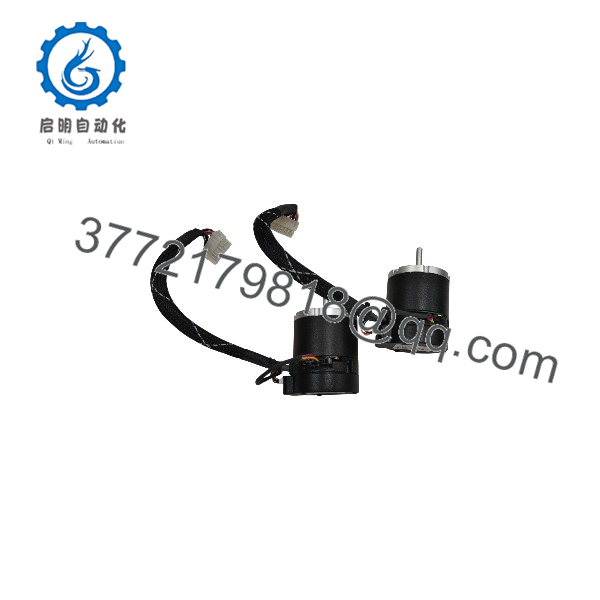
M-2330-109
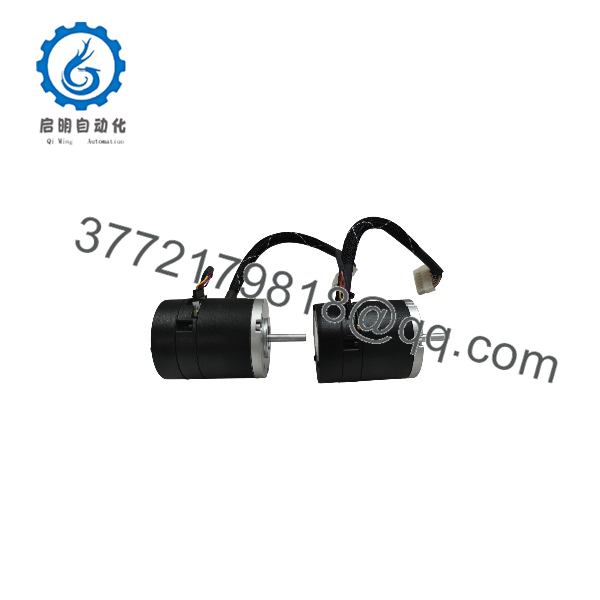
M-2330-109
Installation & Configuration Guide
Stage 1: Pre-Installation Preparation (10 minutes)
⚠️ Safety First: Notify operations of planned downtime, verify the machine is in a safe state, lock out/tag out the drive cabinet, and wait 5 minutes for the DC bus capacitors to discharge. A 90 VDC bus bites — measure it with a meter before touching anything.
Tools Required: Grounded ESD wrist strap, Phillips PH1 screwdriver, Fluke 115 (or equivalent) multimeter, torque wrench, thread-locker, cable labels, smartphone for photos.
Data Backup:
- Record the drive’s tuning parameters (gain settings, current limits, following-error window) before disconnecting anything.
- Photograph the encoder and power connector pin assignments, cable routing, and any drive-side DIP switch settings.
- Document the bus voltage setting and encoder line count configured in your drive (8000 count/rev quadrature).
Stage 2: Removing the Old Motor (10–15 minutes)
- Kill drive power and verify zero volts on the motor power and encoder connectors.
- Label and disconnect the MIL-C-26482 circular connectors — do not twist the cable itself; turn the coupling nut only.
- Remove the four NEMA 23 mounting screws. Support the motor if it’s shaft-coupled; don’t let it hang on the coupling.
- Inspect the mounting flange and coupling for wear, misalignment, and metal dust (a sign of coupling runout).
⚠️ Note: Keep the old motor until the replacement is running. You’ll want it for pinout comparison and fault isolation.
Stage 3: Installing the New Motor (10 minutes)
- ESD prep: Strap on before handling. The encoder board is static-sensitive.
- Verify the model number matches exactly — M-2330-109, including revision (e.g., REV:H1). Suffixes in this family indicate winding and rotor variants; -109 is not interchangeable with -FH or -XH variants without re-tuning the drive.
- Mount the motor to the flange with the four screws, torque to spec, and apply thread-locker. Check coupling alignment with a dial indicator if precision matters (it usually does).
- Connect the power and encoder connectors. Verify pin-for-pin against your photos — encoder wiring from memory is how you blow a drive input stage.
- Route cables away from the 90 VDC power runs; keep shield drain wires terminated at the drive end only.
Self-Checklist: [ ] Model and revision match · [ ] Coupling aligned · [ ] Connectors seated and locked · [ ] Shielding terminated correctly
Stage 4: Power-On & Testing (15–20 minutes)
- Pre-power check: Measure continuity between motor phases and from phases to frame — anything under 10 MΩ to ground means stop and investigate.
- Power the drive with the motor unenabled. Confirm the drive detects the encoder (no fault LED).
- Enable the drive and jog at low speed in both directions. Listen for bearing noise or cogging — a healthy M-2330 runs smooth and quiet.
- Run the full tuning or load your saved parameters, then execute a commissioning run of the actual motion profile.
- Let the machine run one full production cycle and check motor temperature. Class H insulation tolerates heat, but a hot motor after a light cycle usually means tuning problems or mechanical binding.
⚠️ Troubleshooting Note: If the drive faults on “encoder loss” immediately, suspect the encoder connector seating first — the MIL-C-26482 coupling must click fully home. If the motor runs rough or loses position under load, re-verify the 8000 count/rev setting matches your drive configuration before blaming the motor.
Frequently Asked Questions (FAQ)
Q1: Can I hot-swap this motor under power?
No. Disconnect the drive bus before unplugging the motor or encoder. Pulling the encoder connector live can inject transients into the drive’s input stage, and disconnecting motor phases under load generates back-EMF spikes that have killed more drives than I can count. Lock out, verify zero volts, then disconnect.
Q2: Is this model obsolete, and is it genuinely new?
Yes, Teknic discontinued the M-2330 industrial motor line — Radwell and other distributors list these variants as “discontinued by manufacturer.Our stock is honest about condition: some units are New Original in factory-sealed Teknic packaging, others are New Surplus (original, never deployed, packaging opened for inspection) or refurbished units that passed live functional testing. We state the exact condition per serial number before you pay. Test photos and videos are available on request.
Q3: Will an M-2330-FH or M-2330-XH work as a direct replacement?
Not without due diligence. They share the M-2330 frame, 20–90 VDC rating, and the 8000 count/rev encoder, but the suffix defines winding and rotor configuration — the -109 carries a 30° rotor per Teknic’s model numbering. A different winding means different torque constants, so your drive tuning won’t transfer cleanly. If you must substitute, expect to re-tune and re-validate the motion profile. Verify against the Teknic datasheet for your specific revision before ordering anything.
Q4: Will I lose my drive programming when I swap the motor?
No. The tuning and motion programs live in the drive, not the motor. The motor carries no stored configuration. That said, always back up the drive parameters before starting the swap — if the drive throws a fault during commissioning, you want the known-good parameter file on your laptop, not in your memory.
Q5: What should I check for counterfeit units?
Check the nameplate engraving quality, verify the serial number with Teknic (they’re a U.S. company in Victor, NY, and responsive about legacy product verification), and weigh the motor — same-family M-2330 units run about 1.25 lb, and counterfeits are often noticeably lighter. Our inbound QC verifies serial numbers against OEM packing lists and photographs every unit.
Q6: Why is your price lower than what OEM surplus distributors charge?
Because we buy obsolete stock in lots from OEM spares liquidations and test it in-house, rather than pricing off scarcity one unit at a time. The motor is the same genuine Teknic part. What you give up is the manufacturer’s factory warranty on a discontinued line — Teknic won’t warranty it either way. We back it with our own 1-year replacement warranty and a documented 24-hour load test report instead.
Q7: What’s the biggest installation mistake with this motor?
Assuming the encoder pinout is the same across revisions. Teknic revised this motor family over its production life, and I’ve seen a tech wire an encoder from an old schematic into a later-revision motor and kill the drive’s encoder input within seconds. Photograph your existing connector pin-for-pin, verify against the datasheet for your revision, and meter it before power-up. That discipline saves 90% of typical rework time.