WhatsApp: +86 16626708626
 Email:
 Phone: +86 16626708626
Description
Core Product Summary
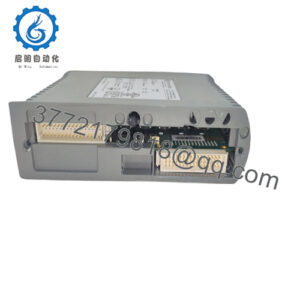
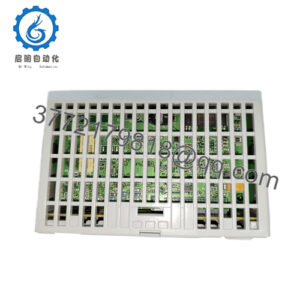
The Teknic SST-1500-XCX is a servo drive from Teknic’s SSt series — a DSP-driven, sinewave-commutated brushless servo drive whose defining trait is that it does not stop at torque and velocity control: it controls position as well, by taking digital step and direction pulses as its command input. That makes the SSt-1500 a closed-loop servo engineered to drop into machines designed around stepper motor systems — the same step-pulse interface, but with a servo’s torque, speed and the ability to never lose a step, since the closed loop catches up if the axis falls behind.
The drive runs from unregulated DC supplies of 24 to 75 volts (the system manual covers the companion SST-3PS12-75 and SST-EMF75 power supplies), switches its motor output at 20 kHz, and delivers 7 to 11.5 A RMS depending on the mounting configuration. Its control architecture is unusually explicit: PIV control with dual feedforward terms rather than PID, fully digital current loops, and adaptive control features implemented in DSP firmware, configurable through the SST-QuickSet PC software. Self-protection covers motor cable shorts (phase-to-phase and phase-to-ground), thermal overload, motor RMS capability limits and jams. The “-XCX” suffix identifies the drive’s option configuration within the SSt-1500 range and must be matched when replacing a unit in an existing machine.
Key Technical Specifications
| Parameter | Value |
|---|---|
| Product type | Brushless servo drive with digital position, velocity and torque control |
| Product series | Teknic SSt servo system (SST-1500 servo drive) |
| Model | SST-1500-XCX (option suffix identifies the drive’s interface configuration) |
| Commutation | Sinewave commutation, closed-loop vector torque control, DSP-driven |
| Position command interface | Digital step and direction pulse input (in addition to torque/velocity control) |
| Control algorithm | PIV control with dual feedforward terms; fully digital current loops; adaptive control features in DSP firmware |
| Power supply input | Unregulated DC, 24 to 75 V; companion power supplies SST-3PS12-75 and SST-EMF75 |
| Output PWM frequency | 20 kHz |
| Output current capability | 7 to 11.5 A RMS, depending on mounting configuration |
| Feedback | Incremental encoder feedback (single-ended or differential wiring; encoder signals can alternatively be routed to the indexer/controller) |
| Configuration | SST-QuickSet configuration and integration software (PC) |
| Self-protection functions | Motor cable short (phase-to-phase and phase-to-ground), thermal overload, exceeding motor RMS capability, motor jams; protected +5 V output with short-cycling shutdown |
| Operating behavior | Closed-loop operation — step pulses are never lost; if the drive falls behind, it catches up |
| Companion components | Teknic SSt servo motors (M-series); SSt-CC cable for controller connection; SSt power supplies |
Engineering Selection Highlights
- The step/direction interface defines the use case. Because the drive takes standard step and direction pulses as its position command, machines built around open-loop steppers can adopt servo performance without rewriting motion software or retooling the mechanics — the defining selection reason for this drive family.
- Closed loop changes the failure mode of a positioning axis. The manual’s core promise is that the drive never loses a step: any number of steps can be commanded at virtually any rate or acceleration, and if the drive falls behind it catches up. Where a stepper stalls silently, this drive either follows or shuts down on tracking error — a diagnosable failure instead of a silent positional error.
- 24–75 VDC unregulated input suits linear supplies, not plant DC. The drive is designed around unregulated DC sources such as the companion SST-3PS12-75 and SST-EMF75 supplies; the power architecture of the machine should follow the SSt system manual rather than assuming an arbitrary 24 V or 48 V rail is equivalent.
- Current rating is mounting-dependent. The 7–11.5 A RMS capability varies with the mounting configuration, so the thermal path — heatsink surface, enclosure, orientation — is part of the electrical selection, not just a mechanical detail.
- PIV with dual feedforward is the tuning baseline. The compensator architecture differs from the conventional PID found in most drives of this class, and tuning through SST-QuickSet follows the manual’s own procedures; PID tuning intuition transfers imperfectly.
- Encoder wiring is a design decision at install time. Encoder signals can be consumed by the drive or routed to the indexer/controller, with termination resistor values specified in the manual — the wiring layout must be decided when the axis is built, including the SSt-CC cable for controller connections.
- Self-protection coverage defines the failure diagnosis. Shutdowns for motor cable shorts, thermal overload, motor RMS limits and jams mean most drive-level faults are announced and classifiable using the manual’s troubleshooting sections — useful when spares planning for a fleet of identical axes.
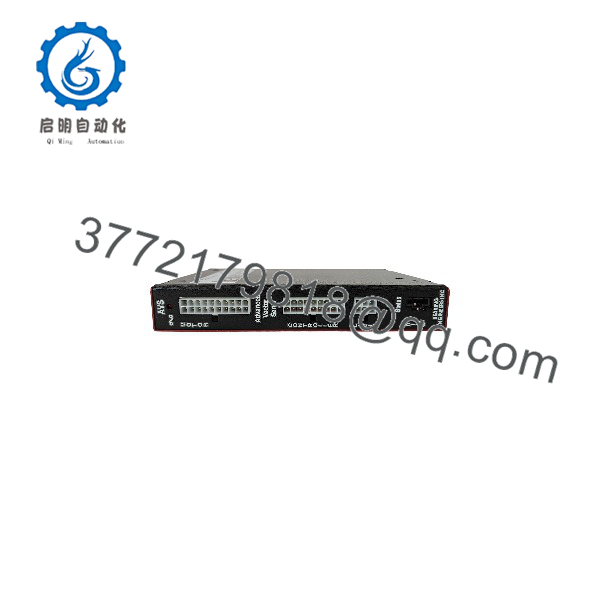
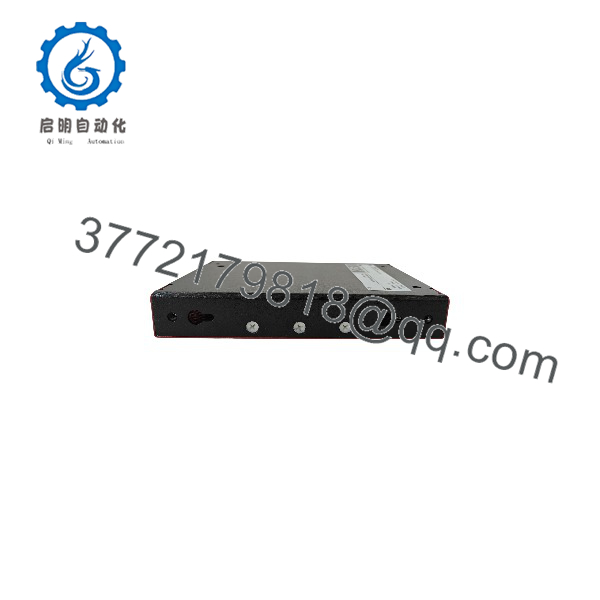
SST-1500-XCX
SST-1500-XCX
System Compatibility & Integration Requirements
| Item / Dependency | Verified Compatibility or Requirement | Practical Note |
|---|---|---|
| Power supply | Unregulated DC, 24 to 75 V; SSt system power supplies SST-3PS12-75 and SST-EMF75 | Follow the manual’s power supply section; do not substitute arbitrary regulated supplies |
| Command source | Step and direction pulse generator (indexer/controller) | Interface compatible with stepper-oriented controllers; connect via the SSt-CC cable or equivalent |
| Motor | Brushless servo motors of the Teknic SSt system (M-series motors) | Motor, encoder and drive are configured as a matched axis through SST-QuickSet |
| Feedback wiring | Incremental encoder, single-ended or differential; termination resistors per manual values | Decide at design time whether the encoder feeds the drive or the controller |
| Grounding | Electrical isolation and grounding per the manual’s installation rules | The manual prescribes specific grounding practice for the isolated grounds |
| Configuration | SST-QuickSet configuration and integration software on a PC | Required hardware and installation steps are documented in the manual |
| Mounting | Mounting configuration affects the 7–11.5 A RMS current capability | Verify thermal path and orientation against the drive’s mechanical drawings |
| Option suffix | The -XCX suffix identifies the unit’s option configuration | Match the full model string, not just SST-1500, when replacing a drive |
Detailed Product Overview
Most servo drives are analog-commanded organs of a larger control system: torque mode here, ±10 V velocity mode there, position handled by the controller. Teknic’s SSt-1500 series takes a different position in the ecosystem. It accepts the most ubiquitous motion command format in light automation — digital step and direction pulses — and does its own position control. That single design choice explains both what the drive is and who buys it.
The immediate beneficiary is the OEM with a stepper-based machine. Steppers are cheap and simple, but they fail silently: overload them and they stall without announcement, corrupting every subsequent position. A closed-loop servo that takes the same pulse stream changes that failure mode fundamentally. The SSt drive tracks its commanded position; if the load momentarily exceeds capability, it catches up when it can, and if the error grows past limits, it shuts down with a diagnosable condition. Position integrity becomes a property the axis guarantees rather than a hope.
Electrically, the drive is built around unregulated DC inputs of 24 to 75 volts, which places it in the low-voltage servo class used on desktop-to-mid-size machinery. Teknic supplies the matching power supplies (SST-3PS12-75 and SST-EMF75), and the system manual’s power supply section — including its cautions about supply types — should be followed literally; the drive’s current capability of 7 to 11.5 A RMS also depends on the mounting configuration, meaning the heatsink and installation are part of the electrical rating.
The output stage switches at 20 kHz, above audible frequency, driving the brushless motor with sinewave commutation rather than block commutation — the difference between smooth low-speed torque and the cogging, noise and ripple that six-step drives exhibit. Feedback comes from an incremental encoder on the motor; the wiring decision (encoder to drive, or encoder signals passed through to the controller) is made at design time, with the manual specifying termination resistor values for both single-ended and differential wiring.
Control-wise, the drive’s compensator is PIV — position, integral, velocity — with two feedforward terms, rather than the familiar PID. The practical meaning: tuning is done in SST-QuickSet, Teknic’s PC configuration and integration software, following the manual’s structured tuning procedures rather than transplanting PID intuition. The digital signal processor also runs the current loops entirely in firmware, and carries adaptive control features that Teknic describes as increasing control robustness and permitting higher integral gain. Published bandwidth figures for the family are a velocity bandwidth above 420 Hz and a position bandwidth above 115 Hz — the numbers behind the fast settling behavior the manual demonstrates.
Protection is comprehensive for a drive this size: the power stage survives phase-to-phase and phase-to-ground motor cable shorts, the drive monitors its own temperature, enforces the motor’s RMS current capability, detects jams, and even protects its +5 V auxiliary output by cycling off on a short. Each of these has a corresponding troubleshooting entry in the manual, which is what makes the drive serviceable in the field rather than only replaceable.
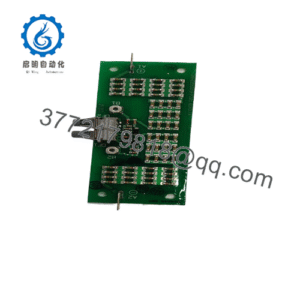
For identification and procurement, the model string matters. The SST-1500 was produced in several option suffixes — the -XCX of this unit among others such as -RCX and -ACX — identifying the interface and option configuration of the drive. Replacements should match the complete designation. These drives are now legacy items circulating through the industrial spares and repair market, where board-level repairs (output FETs, driver ICs, capacitors) are common practice; for a machine builder or maintenance team, the practical buying criteria are the full model string, confirmation of the unit’s condition, and awareness that configuration of a replacement drive is done through SST-QuickSet, not plug-and-play.
Applications & System Role
The SST-1500-XCX is an axis-level component: it sits between a step-pulse motion controller and a brushless servo motor, closing the position, velocity and current loops that turn pulse commands into controlled shaft rotation. Its system role is unique among servo drives in that it accepts the command format of an open-loop stepper system — step and direction pulses — while performing as a closed-loop servo.
The engineering consequence is a specific migration path. Any machine whose motion controller issues step and direction pulses — packaging machinery, pick-and-place units, CNC retrofits, lab automation, semiconductor handling equipment — can move from steppers to closed-loop servo control without touching the controller or command software. The SSt drive family was designed and marketed for exactly this OEM scenario: stepper economics and interface, servo performance. The manual’s own illustration is high-speed IC chip handling, where the drive’s bandwidth and settling behavior matter; the more general fit is any stepper axis whose throughput, torque or reliability has become the limiting factor.
Within the drive itself, the DSP firmware carries most of the engineering value: sinewave commutation for smooth torque, digital current loops, PIV position control with feedforward, and adaptive features tuned through SST-QuickSet. The drive also watches its own health — cable shorts, overtemperature, motor RMS limits, stalls — and shuts down on tracking error rather than silently losing position, which is the behavioral difference between this and the open-loop systems it replaces.
FAQ
What is the Teknic -XCX?
It is a DSP-driven brushless servo drive from Teknic’s SSt series that controls position, velocity and torque, accepting digital step and direction pulses as its position command — making it a closed-loop drop-in alternative to stepper drive systems.
What makes the SSt-1500 different from a normal servo drive?
It commands position directly from step and direction pulses, so machines built for open-loop steppers can gain closed-loop servo performance without changing the controller or the command software.
What power supply does it need?
An unregulated DC supply of 24 to 75 volts; Teknic’s companion supplies for the system are the SST-3PS12-75 and SST-EMF75, and the system manual’s power supply guidance should be followed.
How much current can it deliver?
The drive delivers 7 to 11.5 A RMS to the motor, with the capability depending on the mounting configuration — so the heatsinking and installation are part of the drive’s rating.
Can the SST-1500-XCX lose steps like a stepper motor?
No — the closed loop guarantees that commanded steps are never lost; if the drive falls behind, it catches up, and it shuts down on tracking error rather than continuing with a corrupted position.
What control algorithm does it use?
PIV control with dual feedforward terms, fully digital current loops, and adaptive control features implemented in DSP firmware — a different tuning procedure from conventional PID drives.
How is the drive configured?
Through the SST-QuickSet configuration and integration software on a PC, following the tuning and setup procedures in the SSt system manual.
What protections are built in?
Protection against motor cable shorts (phase-to-phase and phase-to-ground), thermal overload, exceeding the motor’s RMS current capability, motor jams, and shorts on the drive’s +5 V output.
How do I identify the correct replacement unit?
Match the complete model string including the option suffix — SST-1500 drives were produced in several suffix configurations (such as -XCX, -RCX, -ACX), and the suffix identifies the drive’s interface configuration.